
Combining Two Households in Retirement: A Practical Guide for Greater Victoria

Andrew Holenchuk
Victoria Property Group · eXp Realty
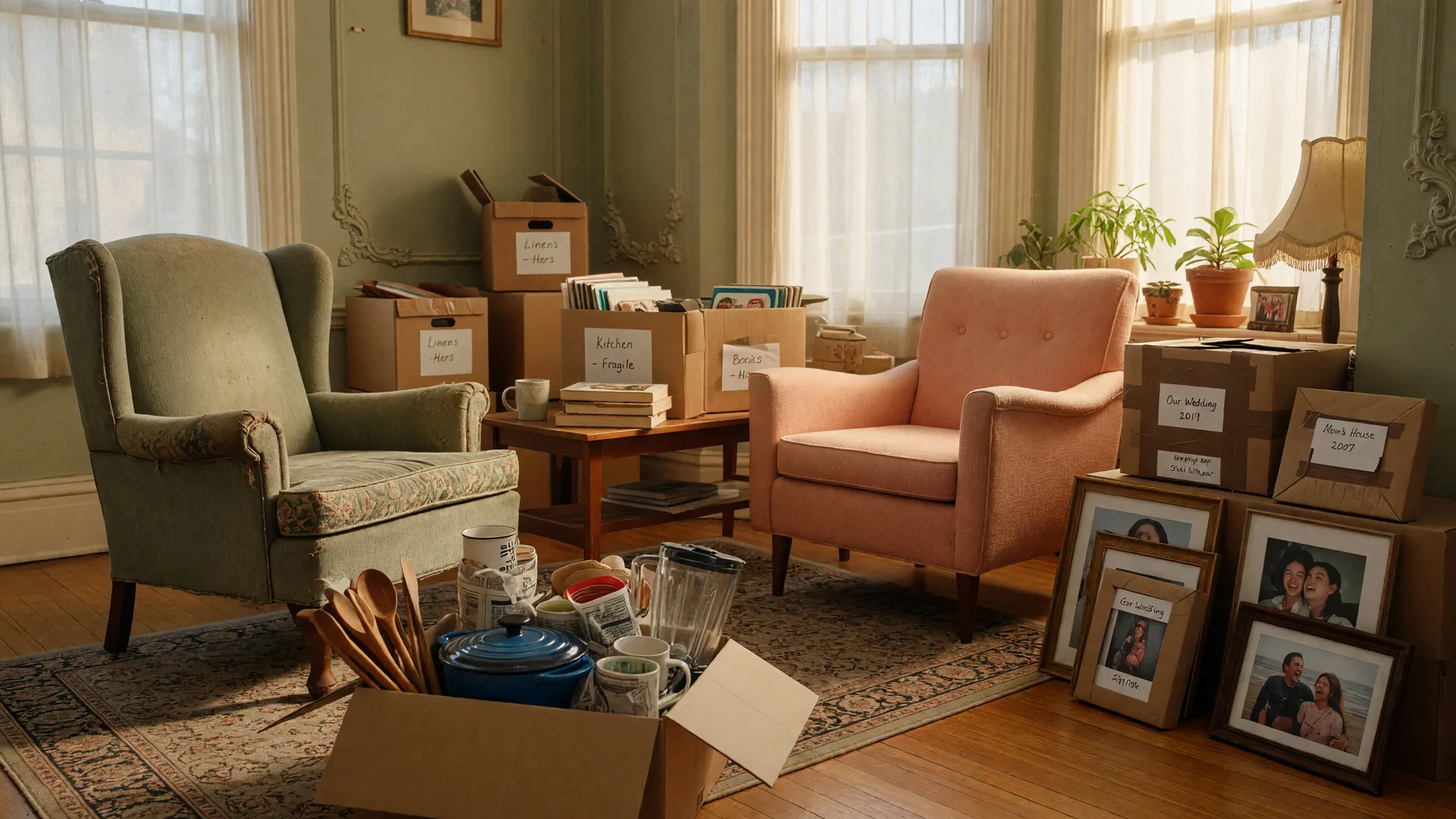
When two people in the second half of life decide to share a home, the move is about far more than packing boxes: two full households, two sets of furniture, two life stories, and two ways of managing money are becoming one. In Greater Victoria, this happens when a couple marries or remarries, when siblings decide to live together, or when close friends buy a place as housemates. This guide walks through the decisions that make a combined household work, from which home to keep or sell to how to share belongings and money with fairness and care.
A combined move is different from one person downsizing alone, because two people are each leaving a home and each bringing a lifetime of things. Done well, it can cut housing costs, reduce isolation, and create a richer daily life. Done carelessly, it can strain even the strongest relationships. The difference usually comes down to talking early, deciding clearly, and writing down the important agreements.
Why combining households is different from a typical downsizing move
Most downsizing guidance assumes one household is shrinking into a smaller version of itself. A combined move has the opposite shape: two separate households are becoming one, and together they often have more furniture, more dishes, more tools, and more memories than either home could hold. This is part of why it feels so much harder than it should, and why couples tell me the sorting phase takes twice as long as they expected.
There is also an identity shift. Each person is giving up their own home, their own kitchen, their own routines. That deserves gentleness and time, not a single weekend of decisions. Our guide to rightsizing versus downsizing and the emotional side of downsizing covers the feelings that come up, and they are the same ones here, doubled.
First decision: whose home, or a new home for both
There are three shapes for a combined household, and each has trade-offs:
- Move into one person's existing home. Lowest cost and least disruption, but one person is a guest in the other's space, and it can be hard to make the home feel shared. Rooms, kitchen layout, and neighbourhood attachments all belong to one person already.
- Sell one home and buy the other person's dream home together. This works well when the home being sold is the larger or older one, but the person whose home is sold carries the bigger emotional and financial transition, so fairness needs to be discussed openly.
- Sell both homes and buy one new home together. The most balanced option, and often the most expensive once closing costs and moving costs are counted. Buying new means both people start equal and every wall is genuinely shared. Many couples tell me this is the only option that truly felt like "ours."
Geography matters as much as the building itself. Where does each of you want to be for family, doctors, transit, and the activities you love? Greater Victoria offers everything from the walkable core of Victoria and the quiet streets of Oak Bay to the newer, ground-level homes in Langford and the waterfront pace of Sidney. Our guide to the best neighbourhoods for downsizers helps you compare communities on the things that matter after 60.
The money conversation: have it early and in the open
Money is the quiet dealbreaker in combined households, and it is much easier to discuss before a move than after one. Start with the simple facts, not the feelings: how much equity each person has, what each receives monthly from pensions, CPP, OAS, and other income, and what each is comfortable contributing to a shared household. Nobody needs to hand over their whole financial life on day one, but both people need enough honesty to plan.
Practical questions to settle together:
- Ownership. If you buy together, will you hold the home as joint tenants or as tenants in common with defined shares? The choice affects what happens if one person passes away, so it belongs in a conversation with a lawyer, not just between you.
- Expenses. Will household costs be split 50/50, in proportion to income, or by what each person owns? Proportional splits are common and fair when incomes differ.
- What stays separate. Pensions, RRSPs, and inheritances often stay separate by agreement. A written cohabitation or marriage agreement can protect both of you and your children, and it is far less awkward to draft before the move than during one.
- Estate plans. Combining households is the moment to update wills, beneficiary designations, and powers of attorney. Our guide to coordinating your estate plan with a housing change explains why a move is the perfect trigger for a review.
If you are selling one or both homes, our article on downsizing budgets and closing costs will help you see the real numbers, including the costs that surprise people, like legal fees, moving, and setting up the new home.
Two of everything: the great sorting
Two households mean two sofas, two dining tables, two full sets of dishes, and often three toasters. The sorting phase works best when it is a shared project with a clear goal: one of everything you both genuinely love, arranged in a home that belongs to both of you.
- Keep the best, not your own. Ask "which of these do we love more?" rather than "which is mine?" This small reframe turns the sorting into teamwork instead of a tug of war.
- Give each person veto-free zones. A chair, a desk corner, a shelf of personal treasures. Everyone needs a few things that are simply theirs, no negotiating required.
- Sort by category, not by room. Gather all the kitchen items, then all the linens, then all the tools, and sort each pile once. Sorting room by room doubles the effort and the arguments.
- Do not decide everything on moving day. Plan one or two sorting weekends before the movers arrive, then allow a grace period afterward. Our room-by-room decluttering guide works just as well for two people as for one.
The surplus deserves a plan too: charity pickups, consignment, an estate sale company, or gifts to children and grandchildren. Our guide to finding new homes for a lifetime of possessions covers the local options in Greater Victoria.
The practical timeline for merging two homes
Give the project a generous timeline, and let the phases overlap. A workable shape looks like this:
- Three to six months out: the money conversation, the cohabitation or legal conversation, and the first honest tour of both homes. Book a valuation of each property so you know where you stand.
- Two to three months out: begin the sorting of one category per weekend, decluttering both homes, and shortlisting new neighbourhoods if you are buying together.
- One to two months out: finalize the home decision, prepare both homes for listing if needed, book the move, and transfer utilities, mail, and memberships. The downsizing move timeline gives a month-by-month template you can adapt.
- Moving week: pack by priority, keep essentials in clearly labelled boxes, and plan a first night that includes both people's favourite takeout and at least one unpacked box of personal treasures.
If the sale and purchase dates do not line up, a short bridge between homes is normal. Our guide to the timing gap between selling and buying explains the options, including renting temporarily or storing belongings for a few weeks.
Family dynamics: children on both sides
Adult children often have strong feelings about a parent's new living arrangement, and both sides deserve to be heard. Tell your children early, frame the news around your own happiness and security, and be ready for worry that looks like criticism. Reassure them about the practical things that matter to them: the home will be looked after, visits have a place, and inheritance plans are being reviewed with professional help.
Blended-family financial questions deserve particular care. If each of you has children, decisions about the home and the estate affect two families, and a written plan prevents painful surprises. Our articles on gifting or transferring a home to family and multigenerational downsizing are often just as relevant to combined households, because the same questions of fairness and legacy come up.
Making the new home feel like home for both of you
The shared home works when both people can point to places that are theirs. Put both sets of family photos somewhere visible, not just one. Hang art from both households. Cook each other's signature meals in the first month. Build the small rituals, the morning spot, the evening walk, that make a house feel lived in by two people.
A combined household is a real estate transition with a relationship at its centre. When the practical side is handled with fairness, the emotional side usually follows, and the result is often the best housing decision either person has made in years.
Frequently asked questions
Should we get a cohabitation agreement before moving in together?
If you are not married, a cohabitation agreement is worth serious consideration. It can set out ownership of the home, how household expenses are shared, and what happens to the home if you separate. Drafting it before you move in is far easier and less emotional than negotiating after problems arise, and it protects both your finances and your children's expectations.
Whose home should we sell, or should we buy a new one together?
There is no single right answer. Moving into one existing home is the least expensive and most convenient, but it can leave one person feeling like a guest. Selling both and buying together is more balanced and often feels more like a shared home, at the cost of more moving and closing expenses. Compare the real numbers for all three options with a REALTOR before you decide.
How should we split the costs of the new household?
Many couples split housing costs in proportion to income, or agree that each owns what they brought in and shares ongoing expenses equally. What matters is that the agreement is explicit, written down, and reviewed when circumstances change. A small monthly conversation about money prevents large surprises later.
What happens to the home if one of us passes away first?
It depends on how the title is held and what your estate documents say. Joint tenants inherit each other's share automatically through survivorship, while tenants in common leave each person's share to their own beneficiaries. An updated will, and sometimes a life estate or trust, can protect the surviving partner's right to stay in the home while still respecting each person's children. This is exactly the conversation to have with a lawyer before you move.
How do we handle two full sets of furniture and belongings?
Sort by category, keep the best of both rather than your own, and give each person a few no-negotiation personal zones. Plan one or two sorting weekends before the move, then let the surplus go to family, charity, consignment, or an estate sale company. Trying to squeeze everything into one home is the most common mistake, and it usually ends with a second move a few years later.
Combining two households? This is one of the happiest housing transitions I get to guide.
I have helped many Greater Victoria couples and families sell one home or two, find a new place that truly belongs to both, and time the move so the stress stays manageable. I would be glad to talk through your situation honestly and without pressure. Helping people confidently navigate one of life's biggest housing transitions is what I do every day.
Let's Talk About Andrew Holenchuk
Andrew is Team Leader of Victoria Property Group at eXp Realty and has been helping people buy and sell homes throughout Greater Victoria since 2006. Together with his team, they have facilitated more than $1 billion in real estate sales while helping families navigate downsizing, estate transitions, and housing moves.