What to Do with a Lifetime of Possessions: Donation, Consignment, and Estate Sale Options in Greater Victoria

Andrew Holenchuk
Victoria Property Group · eXp Realty
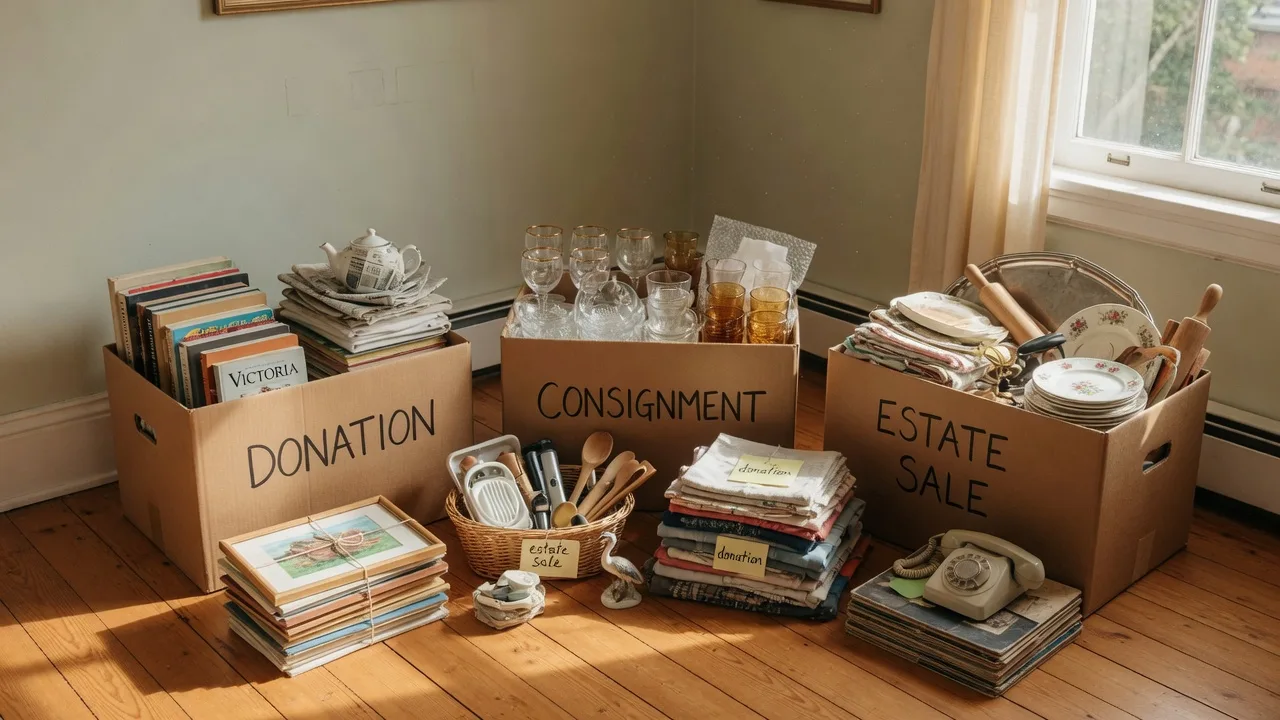
When you have lived in a home for decades, the contents tell a story. Furniture, artwork, china, collectibles, books, tools, linens, and kitchenware accumulate over years of family life, travel, and special occasions. When the time comes to downsize, one of the most practical questions homeowners face is: what do I do with all of this?
The good news is that Greater Victoria has a wealth of options for finding new homes for your belongings. The right approach depends on what you are letting go, how much time you have, and whether you are hoping to generate income from certain items or simply want them to go to good use.
Start with a sorting system
Before deciding where items should go, sort everything into four categories:
- Keep — items moving to your new home
- Pass down — items family members have asked for
- Sell — items with enough value to justify the effort
- Donate or discard — everything else
This first pass makes the downstream decisions much easier. You will know what you are working with, and you can choose the right channel for each category.
Donation: giving items a second life
Donation is often the simplest and most satisfying option for items in good condition. Greater Victoria is home to several well-regarded charities that accept household donations:
- The Salvation Army — Multiple thrift store locations across Greater Victoria accept furniture, clothing, kitchenware, and small appliances. They offer free pickup for larger items in many areas.
- WIN (Women in Need) — Supports women and families in transition. Accepts gently used furniture, housewares, and clothing at their Victoria and Langford locations.
- Habitat for Humanity ReStore — Ideal for building materials, tools, furniture, and appliances. Proceeds support affordable housing in the region.
- Big Brothers Big Sisters — Clothing and small household items can be dropped at donation bins throughout Greater Victoria. Home pickup is also available for larger donations.
- Cool Aid Society — Accepts furniture and household goods to support people transitioning out of homelessness in Victoria.
- Victoria Hospice Thrift Stores — Multiple locations in Greater Victoria, with proceeds supporting palliative care programs.
For charitable donations, always request a tax receipt for items valued at $20 or more. Keep a detailed list of donated items and their estimated fair market value for your tax records.
Consignment: letting the experts sell for you
Consignment shops are an excellent option for furniture, antiques, artwork, and quality home decor that has resale value. Consignment means the shop displays and sells your items on your behalf, taking a percentage of the sale price.
In Greater Victoria, consignment options include:
- Uptown area consignment shops — Several furniture and home decor consignment stores serve the Saanich and Victoria area. They typically accept mid-range to high-end furniture in excellent condition.
- Specialty consigners — For antiques, collectibles, or fine art, look for dealers who specialize in those categories. They understand the market and can price items appropriately.
- Online consignment platforms — Some local businesses now offer online listing services through Facebook Marketplace, Craigslist, or dedicated platforms, handling photography, pricing, and communication for a fee.
Consignment works best when you have time: items may take weeks or months to sell, and you will need to retrieve or donate anything that does not sell within the agreed period. Expect consignment fees ranging from 40 to 60 percent of the sale price.
Estate sales: selling everything at once
An estate sale is a professionally managed sale of the entire contents of a home. An estate sale company takes over the process — pricing, organizing, marketing, running the sale, and handling transactions — and you receive a percentage of the proceeds.
Estate sales are particularly well suited for:
- Homes with a full household of contents to clear
- Families who live out of town and cannot manage the process themselves
- Estate situations where the executor needs to clear and sell the home
- Homes where the contents have broad general value rather than a few high-value items
In Greater Victoria, several professional estate sale companies serve the region. They typically charge a commission of 30 to 40 percent of gross sales. A reputable company will provide a detailed contract, clear pricing, and a post-sale accounting of what sold and for how much.
Auctions: for specialized collections
For items with recognized value — fine art, antique furniture, collectibles, vintage jewellery, or specialty tools — an auction can be an effective option. BC has several auction houses that handle everything from single-owner collections to estate dispersals.
Auction houses typically photograph, catalogue, and market items to their buyer base. Items sell at a live or online auction, and you receive the hammer price minus the auction house's commission (usually 15 to 25 percent for the seller).
Selling yourself: online marketplaces
For homeowners who have the time and energy, selling items directly through Facebook Marketplace, Craigslist, or UsedVictoria can yield the highest return. This approach works best for:
- Higher-value individual items like quality furniture, tools, or electronics
- Items that are easy to photograph and describe
- Homeowners who are comfortable communicating with buyers and managing pickup
The trade-off is time. Listing, responding to inquiries, negotiating, and coordinating pickup for dozens of items can be exhausting during an already busy downsizing period. Many families choose to sell the highest-value items themselves and donate or consign the rest.
What to do with items that are hard to place
Some items fall into a grey area: too good to throw away but not valuable enough to sell. For these, consider:
- Buy Nothing groups — Victoria has active neighbourhood-based Buy Nothing groups on Facebook where you can give items away to neighbours who need them.
- Freecycle — An online platform for giving items away for free in your local area.
- Community centres and churches — Many accept donations for their fundraising sales or community programs.
- Local theatre groups and schools — Costumes, props, craft supplies, and fabric may be welcome for arts programs.
A practical timeline for clearing a home
If you are working toward a move date, here is a realistic sequence:
- 8 to 12 weeks out: Sort and categorize. Identify high-value items for consignment or auction. Contact estate sale companies for quotes.
- 4 to 8 weeks out: List items for sale online. Deliver consignment items. Coordinate with family members who want specific pieces.
- 2 to 4 weeks out: Run any estate sale. Arrange charity pickup for remaining donations. Schedule a junk removal service for anything left.
- Move week: Final walk-through. The home should be empty or nearly empty for the new owners or listing.
Working with a realtor experienced in downsizing and estate transitions can help you coordinate this timeline and connect you with trusted local service providers who handle this work every day.
Ready to plan your transition?
I help families in Greater Victoria navigate every stage of downsizing, from sorting a lifetime of possessions to selling the family home. Let's talk about your situation.
Book a Free Consultation