
Multi-Generational Downsizing: Making a Smaller Home Work for Extended Family in Victoria

Andrew Holenchuk
Victoria Property Group · eXp Realty
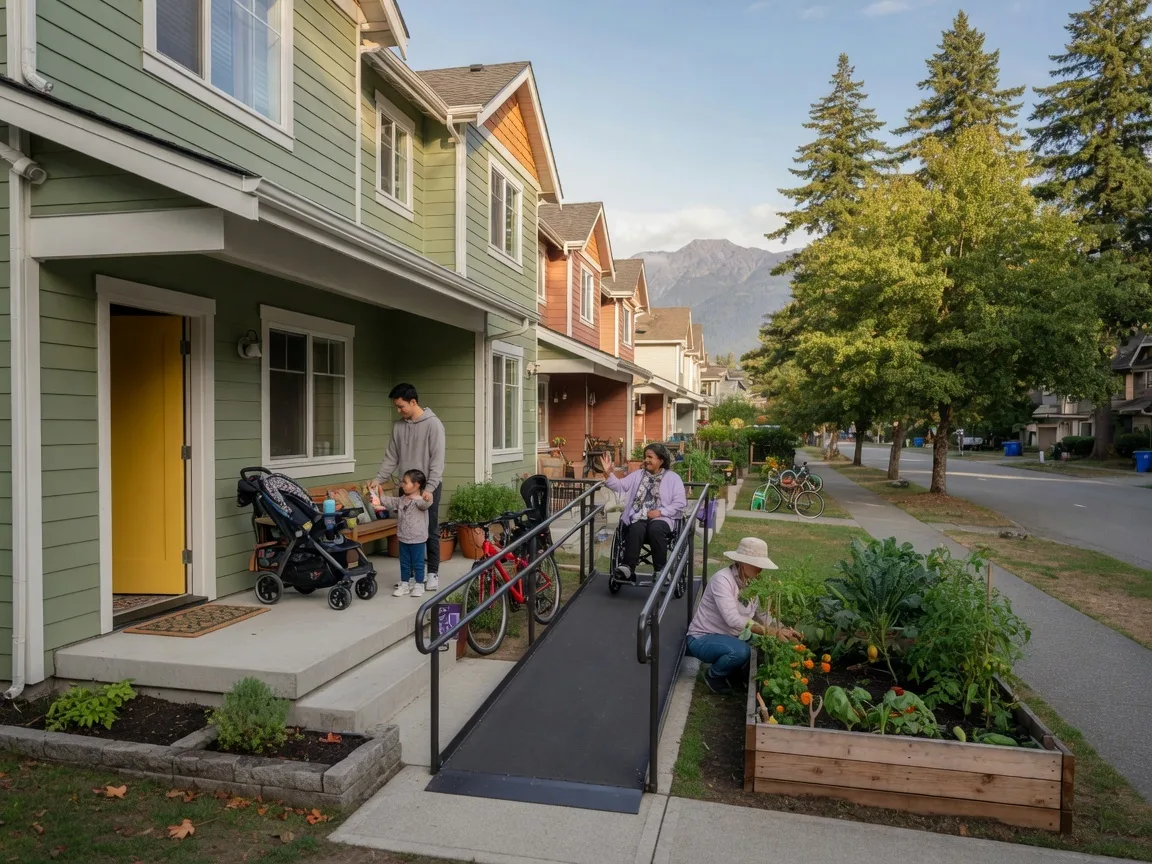
There's a common assumption that downsizing means going from a house full of people to a home for one or two. But for many families in Greater Victoria, the reality is more nuanced. You may want to move to a smaller, more manageable property — yet still need space for an aging parent, an adult child who's saving for their own home, or grandchildren who visit regularly.
This is the challenge of multi-generational downsizing: finding a home that's both smaller and more affordable than your current one, yet still flexible enough to accommodate several generations of family. It's not an impossible puzzle to solve, but it requires a different approach to how you think about space, layout, and community. This guide explores the options available in Greater Victoria for families who want to downsize without leaving anyone behind.
Why multi-generational living is on the rise in Greater Victoria
Multi-generational households — homes where two or more adult generations live together — are becoming more common across Canada, and Greater Victoria is no exception. Rising housing costs, an aging population, and changing family dynamics are all contributing to the trend.
For downsizers, the reasons to consider a multi-generational arrangement often include:
- Supporting aging parents. A parent who needs some assistance but isn't ready for assisted living can thrive in a secondary suite or in-law unit, close to family but with their own space and independence.
- Helping adult children. With home prices in Greater Victoria among the highest in Canada, many young adults are finding it difficult to enter the housing market. A separate suite or basement apartment can provide affordable housing for an adult child while they save for their own home.
- Pooling resources. Combining household incomes — or the proceeds from two home sales — can unlock a higher-quality home than either generation could afford alone, while reducing everyone's individual housing costs.
- Shared caregiving. Grandparents can help with childcare; adult children can help with elder care. A multi-generational home makes this mutual support easier and more natural.
- Reduced isolation. For seniors especially, living alone can be lonely. A multi-generational home provides built-in social connection and peace of mind for everyone.
What does multi-generational downsizing look like?
Multi-generational downsizing isn't about cramming everyone into a small condo. It's about finding a property that provides enough space for multiple households while being more efficient, affordable, and manageable than maintaining two separate homes. Here are the most common approaches in Greater Victoria:
Duplexes and side-by-side homes
A duplex — two units under one roof — can be an ideal multi-generational downsizing solution. Each generation has their own front door, kitchen, and living space, but you share a property, a garden, and proximity. In Greater Victoria, duplexes are increasingly common in newer developments in Langford, Colwood, and Saanich.
The financial advantage is significant: instead of two households carrying separate mortgages, property taxes, insurance, and maintenance, you share the land costs and many of the ongoing expenses. If you're selling one larger family home and your adult child is renting, the combined resources can often purchase a duplex comfortably.
Single-family homes with legal secondary suites
Many detached homes in Greater Victoria already have — or can be modified to include — a legal secondary suite. This could be a basement apartment, a garden-level suite, or a separate structure on the property. For downsizers, this means you can move into the main level (single-level living, no stairs) while a family member lives in the suite, or vice versa.
In BC, legal secondary suites must meet specific requirements (ceiling height, egress windows, soundproofing, and permitting). If your current home doesn't have a legal suite, adding one is a significant renovation — but it may be possible in a downsized home you purchase that already has one. Victoria, Saanich, and Langford all have zoning that permits secondary suites in many residential areas.
Townhomes with bonus space
Some townhome developments in Greater Victoria offer three-bedroom units with dens, bonus rooms, or flexible layouts that can serve as a private space for a family member. While townhomes typically don't have the same separation as a duplex or a house with a suite, they can work well when the second generation is an adult child who needs a bedroom and study space rather than a fully separate apartment.
Townhomes also offer strata-maintained grounds, which reduces the maintenance burden — a key consideration for downsizers who want less yard work, not more.
Two condos in the same building
A less obvious but increasingly popular option is purchasing two smaller condos in the same building — one for each generation. This provides complete privacy while keeping everyone within a few floors or a short elevator ride of each other. You can share meals, help with childcare or eldercare, and spend time together, then retreat to your own space when you need quiet.
In Victoria proper, several newer condo developments have units that would work well for this arrangement. The combined cost is often less than a single detached home in the same neighbourhood.
Greater Victoria communities that suit multi-generational living
Not every community in Greater Victoria is equally suited to multi-generational downsizing. Here's what to look for:
- Langford and Colwood: Newer developments with a high proportion of duplexes, townhomes, and homes with legal suites. More affordable than Victoria proper, and growing amenities including shopping, healthcare, and recreation — important for multiple generations.
- Saanich: A wide range of housing types, including older homes that already have basement suites. Good transit connections and proximity to both Victoria and the Westshore. Excellent parks and community centres suit all ages.
- Victoria: Close to downtown amenities, healthcare, and cultural attractions. Condo living with proximity to family members in nearby buildings is practical here. Walkability benefits both seniors and young adults.
- View Royal and Esquimalt: Underrated options with duplexes, townhomes, and some homes with suites. Close to Victoria but at slightly lower price points. Growing community amenities.
- Sidney and the Peninsula: Strong community feel, excellent for retirees with access to healthcare and walkable amenities. Adult children may find the commute to Victoria longer, but the quality of life is high for all generations.
- Central Saanich and North Saanich: More rural character with larger lots, which can accommodate a separate dwelling or suite. Families who value space and privacy may prefer these areas.
Financial considerations for multi-generational downsizing
The financial dynamics of multi-generational downsizing are different from a standard downsizing move. Here's what to think through:
Combined purchasing power
When two generations pool their resources, the combined budget often exceeds what either could achieve alone. An aging parent selling a family home in Oak Bay and an adult child selling a starter condo in Langford might combine $1.5 million in equity to purchase a duplex or a home with a legal suite that serves both households — while reducing each household's individual monthly costs.
Ownership structures
Multi-generational properties can be owned in several ways:
- Joint tenancy: All owners hold equal shares, and the property passes to the surviving owners outside of probate. Common for spouses, but can create complications when multiple generations are involved.
- Tenants in common: Each owner holds a specified percentage of the property, which can be different for each party. This structure allows flexibility in how costs and proceeds are shared. Each owner's share can be willed to their chosen beneficiaries.
- One party owns, the other pays rent: Perhaps the simplest arrangement. The downsizers own the property, and the adult child or aging parent pays below-market rent, which helps everyone financially without the complexity of shared ownership.
A real estate lawyer with experience in multi-generational arrangements is essential to structure the ownership in a way that protects everyone's interests and aligns with your family's goals.
Ongoing cost sharing
One of the greatest financial benefits of multi-generational living is the ability to share ongoing costs: utilities, internet, property taxes (if applicable), strata fees, and maintenance. When these are split across two or three income-earning adults, the per-person cost is significantly lower than maintaining separate households.
Making it work: practical advice for families
Multi-generational downsizing can be deeply rewarding, but it requires intentional planning. Here are the factors that make the difference between a harmonious arrangement and a strained one:
Design for privacy from the start
The single most important factor in successful multi-generational living is privacy. Each household needs their own space — their own entrance, kitchen, bathroom, and living area, if possible. Even a lockable bedroom door and a designated bathroom goes a long way. When everyone has a space they can retreat to, shared time becomes a choice rather than an obligation.
When touring properties, pay close attention to floor plans. Can a visitor reach a bathroom without walking through someone's bedroom? Is there sound separation between units? Will the layout work for everyone's daily routines?
Set clear expectations early
Before you move in together, have honest conversations about:
- Financial responsibilities: Who pays for what? How are unexpected expenses handled? What happens if one household's financial situation changes?
- Household chores and maintenance: Who mows the lawn, cleans the common areas, takes out the garbage? A shared chore chart or rotating schedule prevents resentment.
- Guests and socializing: Is it okay to have friends over? Overnight guests? How much notice is appreciated?
- Privacy boundaries: Can you drop by without knocking? Who uses which parts of the property? Establishing boundaries upfront is far easier than negotiating them after a conflict.
- Future plans: What happens if someone wants to move out? If a parent needs more care? If the property is sold? Having a plan for these scenarios protects everyone.
Consider accessibility for the future
If one generation is aging, design the arrangement with their future needs in mind. A main-floor bedroom and bathroom for a senior parent, wide doorways, no-step entries, and good lighting throughout. These features make the home safer and more comfortable for everyone, and they prevent the need for another move down the line.
The emotional rewards of multi-generational living
While this guide has focused on the practical and financial aspects, it's worth acknowledging the deeper value of multi-generational downsizing. Families that choose to live this way often report richer relationships, stronger support networks, and a sense of security that comes from having loved ones nearby.
Grandchildren who see their grandparents daily, aging parents who remain connected to younger generations, adult children who have the support of their parents while building their own lives — these are the intangibles that no spreadsheet can capture. For many families, the trade-off of slightly less space is more than worth the gain in connection.
Frequently asked questions
How do I find a home in Greater Victoria that works for multiple generations?
Start by working with a REALTOR® who understands multi-generational needs. Search filters should include: properties with secondary suites, duplexes, townhomes with flexible layouts, and buildings with multiple units for sale. Many listings don't advertise \"multi-generational potential,\" so an experienced agent will know how to identify properties that could work.
Is it cheaper to live multi-generationally than separately?
Almost always, yes. Even when the combined housing cost is similar to what each household would spend separately, the shared expenses — utilities, internet, maintenance, property taxes — reduce everyone's individual costs. The savings can be significant enough that families can afford a higher-quality home than either generation could on their own.
What are the legal requirements for a secondary suite in BC?
In BC, legal secondary suites must meet the BC Building Code requirements including minimum ceiling height (6'5" or 1.95m), proper egress windows in bedrooms, smoke alarms connected between units, and appropriate fire separation. Zoning varies by municipality — Victoria, Saanich, and Langford all permit secondary suites in many single-family zones, but the specific rules differ. Always verify with the local municipality and work with a licensed contractor if you're creating a new suite.
Can I use RRSP funds to help purchase a multi-generational home?
The Home Buyers' Plan (HBP) allows you to withdraw up to $35,000 from your RRSP tax-free for a first home purchase — but this is limited to first-time home buyers. If you're a downsizer who currently owns a home, you generally won't qualify. However, an adult child who is a first-time buyer could use the HBP as part of a pooled purchase. Consult a financial advisor for your specific situation.
How do we handle the property transfer tax on a multi-generational purchase?
BC's Property Transfer Tax is based on the purchase price: 1% on the first $200,000, 2% on the remainder up to $2,000,000, and 5% on amounts over $3,000,000. First-time home buyers may qualify for a partial or full exemption on their share of the purchase, but this is complex in multi-generational arrangements. Your lawyer and notary will handle the calculation, but it's wise to understand the costs upfront.
What if the arrangement doesn't work out?
It's wise to plan for this possibility. Include a \"way out\" in your agreement — whether that's a lease that allows either party to give notice, an ownership structure that allows one party to buy out the other, or simply an understanding that everyone has the freedom to change their mind. Multi-generational living works best when it's a choice that everyone can revisit if circumstances change.
Making a multi-generational move? I can help you find the right home.
Whether you're looking for a duplex, a home with a legal suite, or two condos in the same building, I know the Greater Victoria market and the properties that work for extended families. Let's find a home that brings your family together — without anyone feeling crowded.
Let's Find Your Fit