
A Downsizer's Moving Timeline: Week by Week in Greater Victoria

Andrew Holenchuk
Victoria Property Group · eXp Realty
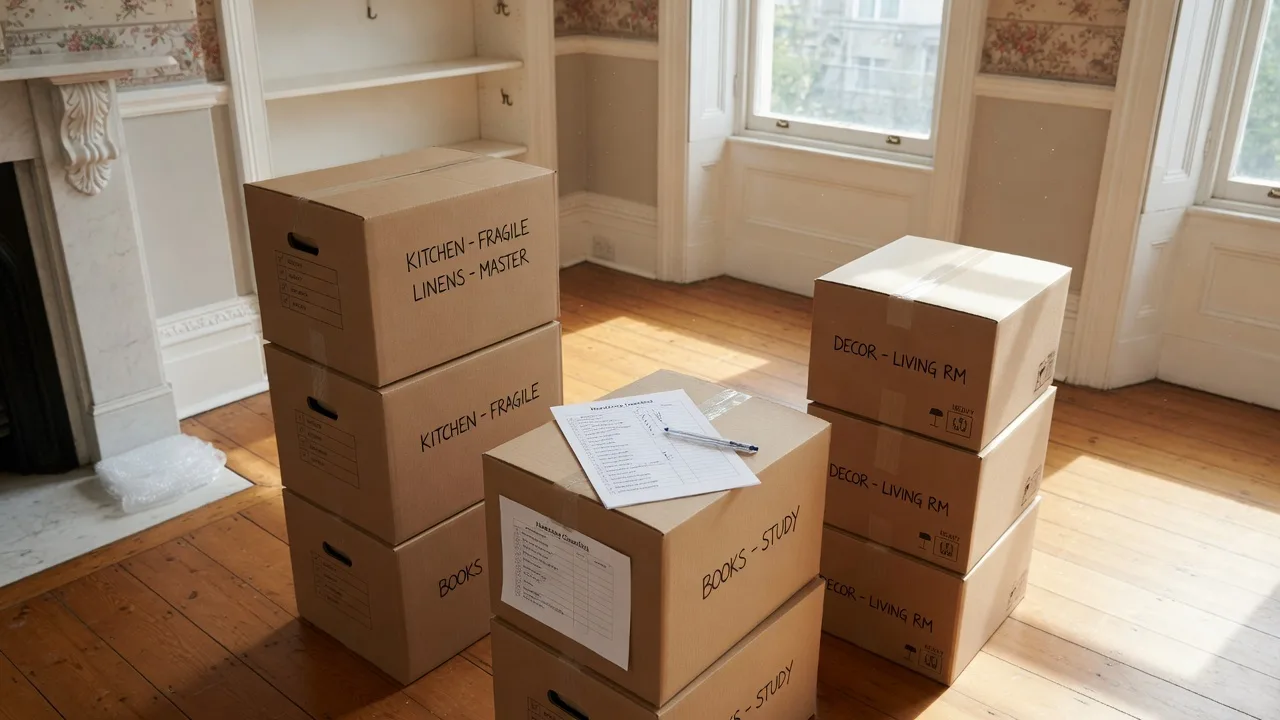
You've made the decision. You've decluttered, sorted, and said goodbye to rooms full of memories. You've listed your home, accepted an offer, and the closing date is on the calendar. Now comes the part that can feel overwhelming in a completely different way: the actual move.
For downsizers in Greater Victoria — many of whom are moving for the first time in decades — the logistics of a move can be the most stressful phase of the entire process. You're not just relocating belongings. You're coordinating a closing date, managing a lifetime of possessions, transitioning to a new neighbourhood, and doing it all while managing the emotions of leaving a familiar home.
This week-by-week timeline breaks down exactly what to expect and what to do, so you can approach moving day with clarity and confidence rather than chaos.
Two months before the move: plan and prepare
If you've been decluttering for several months, much of the sorting work should already be done by this point. The eight-week mark is when the logistical planning shifts into high gear.
Choose your moving company
This is one of the most important decisions you'll make during the move. In Greater Victoria, moving companies range from large operations to smaller, owner-operated businesses that specialise in local and island moves. Get at least three quotes, and ask specifically about experience with downsizing moves — these require a different skill set than a standard household relocation.
Key questions to ask:
- Do you provide packing services, or is that DIY?
- How do you handle fragile or sentimental items?
- What's included in the estimate — are there potential add-on fees?
- Do you offer storage if my new home isn't ready on time?
- What's your cancellation and rescheduling policy?
- Are you licensed and insured in BC?
In Victoria, peak moving season runs from May through September. If you're moving during these months, book as early as possible — popular dates fill up quickly, especially at month-end.
Start packing non-essentials
Two months out is the time to begin packing the things you won't need in your daily life before the move. This typically includes:
- Seasonal decorations and holiday items
- Guest bedroom linens and rarely used kitchen items
- Books, media, and collections you're keeping
- Off-season clothing
- Items stored in the attic, basement, or garage
Use uniform, sturdy boxes. Label every box on at least two sides with the contents and the room it belongs in. If you're downsizing significantly, consider colour-coding labels — one colour for items going to the new home, another for items going to storage, donation, or family members.
Finalise donations and sales
By this point, most items should be sorted. But the final push often surfaces things you've been putting off. Commit to a deadline for decision-making. If you're using a local donation centre — like the Victoria Habitat for Humanity ReStore, Value Village, or the Salvation Army — schedule a pickup or drop-off. For items with resale value, finalise arrangements with local estate sale companies or consignment shops.
Six weeks before: handle the details
Update your address and accounts
Start the process of redirecting mail and updating your address with every institution that needs to know. This includes:
- Canada Post mail redirection: Submit online at canadapost.ca. Allow at least two weeks for processing.
- Banks and credit cards: Update your address for all financial accounts.
- Government agencies: CRA (for tax correspondence), BC Services Card, driver's licence, and voter registration.
- Insurance: Update or transfer your home, auto, and health insurance policies.
- Medical: If you're changing healthcare providers, request transfers of your medical records. In Greater Victoria, clinics are sometimes at capacity, so start this process early if you're changing areas.
Arrange utility transfers
Contact your current utility providers to schedule disconnection or transfer for moving day, and contact your new providers to arrange connection. In Greater Victoria, this typically includes:
- BC Hydro (electricity)
- FortisBC (natural gas, if applicable)
- Municipal water and sewer (varies by municipality — Victoria, Saanich, Langford, etc.)
- Internet and cable (Telus, Shaw/Rogers, or your current provider)
- Garbage and recycling collection (register with your new municipality)
If you're moving into a strata property, ask the strata management company about move-in procedures, elevator bookings, and any damage deposits required for the move.
Four weeks before: the final push
Pack strategically
At this point, you should be packing daily. Focus on the rooms and items you use least often. Leave everyday essentials — medications, a change of clothes, basic kitchen supplies, important documents — for the final days.
Create a clearly labelled "essentials box" or "first-night kit" that travels with you, not on the moving truck. This should include:
- Medications and health essentials
- Phone chargers and important electronics
- A change of clothes and toiletries
- Important documents (identification, closing papers, moving contract)
- Basic kitchen supplies: kettle, mugs, snacks, paper plates
- Sheets, towels, and a pillow for the first night
- Pet supplies if applicable
Confirm everything with your moving company
Call your movers to confirm the date, time, and any special instructions. Walk through the logistics: Where will they park? Are there stairs, narrow doorways, or tight turns they should know about? Do you have heavy items — a piano, a safe, large furniture — that require special handling?
Prepare your current home for the final walkthrough
If you're selling, your buyer's final walkthrough is typically 24–48 hours before closing. Ensure the home is clean, all agreed-upon items are in place, and any remaining repairs are completed. Your realtor can help coordinate this to make sure there are no surprises.
Two weeks before: wind down
The final two weeks are about finishing what you've started and beginning to transition mentally.
- Use up perishable food. Don't pack or move food you can finish now. If you have extra, donate unopened items to a local food bank.
- Deep clean as you go. As rooms empty out, clean them. This saves a massive effort on moving day.
- Disassemble furniture. Take apart bed frames, shelving, and any furniture that won't fit through doorways intact. Keep hardware in labelled bags taped to the corresponding piece.
- Confirm the new home is ready. Check that the keys work, utilities are on, and any renovations or cleaning are completed before you arrive.
- Say your goodbyes. Walk through the empty rooms. Take photos. This is a significant transition — give yourself a moment to acknowledge what the home has meant to you.
The final week: moving day is almost here
Pack the last essentials
By this point, almost everything should be boxed and ready to go. The final week is about the things you genuinely need until the morning of the move. Keep packing supplies handy — you'll always find one more thing that needs a box.
Prepare the new space
If you have access to your new home before moving day, do whatever preparation you can: clean the floors, set up the bedroom, ensure the kitchen is ready for basic use. Arriving to a clean, prepared space makes an enormous difference to how the first night feels.
Confirm with all parties
Touch base with your moving company, your realtor, the lawyer handling the transaction, and anyone else involved in the move. A quick confirmation call the day before eliminates most last-minute surprises.
Moving day: what to expect
Here's what the typical moving day looks like in Greater Victoria:
- The movers arrive. They'll do a walkthrough, confirm the inventory, and begin loading. Be available to answer questions, but you don't need to hover — a good crew knows what they're doing.
- Loading takes time. Depending on the size of your home and the crew, loading typically takes two to four hours. Movers work systematically, starting with the heaviest items and building the truck strategically.
- Final sweep of the old home. While the crew finishes loading, do a last walkthrough. Check every closet, cabinet, and room. Confirm that nothing has been left behind and that the home is in the condition expected by the buyer.
- Travel to the new home. For local moves within Greater Victoria, transit time is usually short. If you're moving from one side of the region to another — say, from Oak Bay to Langford or Sidney to Sooke — factor in travel time.
- Unloading and placement. Direct the movers to place furniture and boxes in the correct rooms. Having room labels on the boxes makes this much faster.
- Unpack essentials first. Make the bed. Set up the bathroom. Unpack the kitchen basics. These small actions transform an unfamiliar space into a home by bedtime.
Victoria-specific moving tips
Moving within Greater Victoria comes with some local considerations:
- Ferry and bridge traffic: If you're moving between the island and the mainland, or even across the region during peak hours, traffic on the Pat Bay Highway, the Malahat, or the Trans-Canada can add significant time to your move.
- Parking permits: In downtown Victoria, James Bay, and some older neighbourhoods, street parking for a moving truck may require a permit from the City of Victoria. Check in advance.
- Strata move-in rules: Many condo buildings in Victoria require advance notice and elevator bookings for moves. Some restrict moving to certain hours or days. Contact your strata management well ahead of time.
- Weather: Victoria's mild climate makes most months comfortable for moving, but winter moves can bring rain. Have tarps and protective coverings ready for furniture.
- Island moving companies: If you're moving from Greater Victoria to the Cowichan Valley, Shawnigan Lake, Mill Bay, or Cobble Hill, make sure your moving company services that route. Some local movers don't travel beyond the CRD.
After the move: settling in
The first few days in a new home are a mix of excitement and disorientation. Here's how to settle in with intention:
- Unpack one room at a time. Start with the bedroom and bathroom, then move to the kitchen and living areas. Trying to unpack everything at once is overwhelming.
- Explore your new neighbourhood. Walk the streets, find the nearest grocery store, locate the closest coffee shop. Building familiarity with your surroundings helps the new place feel like home.
- Register with local services. If you've moved to a new municipality, register for garbage and recycling, update your driver's licence, and register with a new family doctor or clinic if needed.
- Meet your neighbours. A simple introduction goes a long way. In Victoria's neighbourhoods, community connections form quickly — especially in walkable areas.
- Give yourself grace. Settling in takes time. It's normal to feel a sense of loss alongside the excitement. Be patient with the process and with yourself.
Frequently asked questions
How much does a local move cost in Greater Victoria?
Moving costs in Greater Victoria depend on the size of your home, the distance, and the services required. A typical local move within the Capital Regional District for a two-bedroom home generally ranges from $800 to $2,000. Larger homes or moves requiring speciality handling may cost more. Getting multiple quotes is the best way to understand the market rate for your specific move.
Should I hire packers or pack myself?
Many moving companies in Victoria offer professional packing services for an additional fee. If you have physical limitations, a large volume of belongings, or simply want to reduce stress, professional packing can be well worth the investment. For downsizers who have already sorted and decluttered, packing a smaller volume of belongings is often manageable as a DIY project.
What if my new home isn't ready on moving day?
This happens more often than people expect, especially when selling and buying are closely timed. If there's a gap between your closing dates, short-term storage is widely available in Greater Victoria. Discuss this possibility with your realtor when planning your move — sometimes build-in flexibility in the closing dates can prevent a stressful gap.
How do I handle moving day if I have mobility limitations?
Many downsizers are moving precisely because their current home has become physically challenging. Communicate your needs clearly with your moving company in advance. Most Victoria movers are experienced with moves for seniors and can provide additional assistance with packing, unpacking, and setting up the new home. You can also enlist a family member or friend to be your on-site advocate during the move.
When should I start the downsizing process if I plan to move next year?
The earlier, the better. If you're considering a move in the next 12 months, begin the decluttering and sorting process now. Working room by room over several months is far less stressful than trying to do everything in the final weeks before a move. Start with the areas that have the most accumulated items — basements, garages, attics — and work inward.
Planning a move in Greater Victoria?
I help homeowners at every stage of the downsizing and moving process — from the first conversation to closing day and beyond. Whether you're ready to list or still planning, I'd be honoured to help you navigate this transition with confidence.
Let's Talk