
Gifting or Transferring Your Home to Family in BC: What Downsizers Need to Know

Andrew Holenchuk
Victoria Property Group · eXp Realty
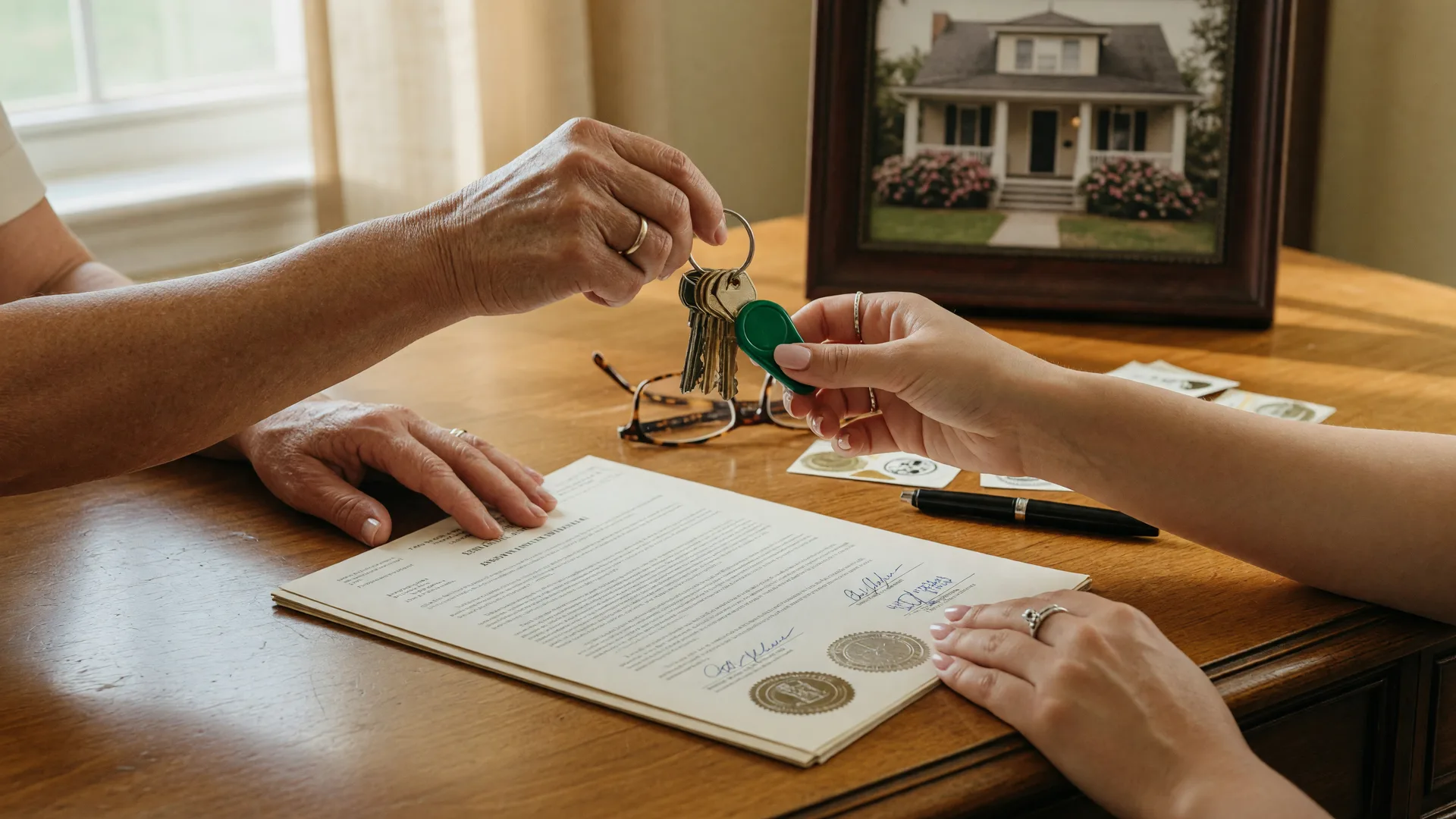
When a homeowner in Greater Victoria is ready to pass the family home to an adult child, the idea of simply "putting them on the title" or making a gift can feel like the warm, natural way to plan for the future. In practice, a transfer of ownership to family in BC involves property transfer tax, federal income tax on a deemed sale, and important questions about control and inheritance.
This article explains what gifting or transferring a home to family really involves, what to weigh before you do it, and why it deserves a conversation with a notary or lawyer and a tax professional before anything is signed.
Is there a gift tax in Canada when you transfer a home to a child?
There is no federal gift tax in Canada, so you are not taxed simply for giving property to a family member. But that does not mean the transfer is tax-free. For income tax purposes, the Canada Revenue Agency treats a gift of a home as if you sold it at its fair market value on the day of the transfer. The difference between that value and what you originally paid (your adjusted cost base) can be a capital gain that needs to be reported.
In BC, transferring title into a family member's name is registered through the Land Title Office, and a property transfer tax usually applies. The good news is that BC offers an exemption for a transfer of a principal residence between family members, provided the family relationship, residency, and ownership requirements are met.
The BC property transfer tax and the principal residence exemption
Property transfer tax is calculated on the fair market value of the property at general rates. For many family homes in Greater Victoria, that is a meaningful amount, so the exemption matters. BC provides a full or partial exemption when a principal residence is transferred between eligible family members, including a child or step-child, where the person receiving the home is a Canadian citizen, permanent resident, or registered Indian, and the property was a principal residence of the transferor or transferee for the required period.
The principal residence exemption (PRE) works differently for capital gains. If the home qualified as your principal residence for the entire time you owned it, the PRE can generally eliminate the capital gain on the portion you transfer. If the property was ever a rental, a second home, or used for income, part or all of the gain may be taxable, so you need to look carefully at the history of the property.
Adding an adult child to the title: joint tenancy explained
A common approach is to add an adult child to the title as a joint tenant, often in the hope of avoiding probate later. Joint tenancy carries a right of survivorship, meaning that when one owner dies, their share passes automatically to the surviving joint tenant, outside the will.
But adding a child to title is itself a transfer of an interest in the property, generally treated as a disposition of that share at fair market value. That can crystallize tax on the share right away (unless the PRE protects it), and it can trigger property transfer tax on the transferred value. There are also real practical downsides:
- Loss of control. Once someone is a co-owner, you can no longer sell, refinance, or mortgage the home without their consent.
- Exposure to their creditors. If your child faces debt problems, divorce, or bankruptcy, their share of the home can be affected.
- Questions about intent. Joint tenancy with right of survivorship may override what you intended for other children or loved ones.
Because the tax and legal consequences can outweigh the planning benefits, this is one area where you genuinely want tailored advice before deciding.
Tenancy in common as an alternative
Tenancy in common is the other ownership structure. Unlike joint tenancy, each owner's share passes through their own will rather than automatically to a survivor. That gives each person more flexibility over what happens to their share. It does not, however, avoid the tax consequences of transferring a share, and it still requires the same care around property transfer tax and capital gains.
Choosing between joint tenancy and tenancy in common depends on your family circumstances, your estate plan, and what you want to happen to the home when you pass away. It is not a decision to make on a form.
Selling the home to a family member at a reduced price
Some families prefer to sell the home to an adult child at a below-market price rather than gift it. It is important to understand that for income tax purposes, a transaction that is not at arm's length is generally still deemed to occur at fair market value. The sale price you write on paper may not be the value used for tax. Where the purchase is financed by a mortgage, the child must also qualify with a lender, and the property transfer tax consideration may be based on fair market value as well.
Other ways to pass the home on gradually
Transferring ownership right away is not the only option, and it is often not the best one. Many Greater Victoria families instead plan a transition that keeps the parent in control for as long as possible:
- Keep the home, update your will. The home passes through your estate to chosen beneficiaries according to your wishes.
- Downsize now. Selling the larger family home and moving to a smaller place can free up equity for you and a simpler inheritance for your family later.
- Coordinate with your estate plan. Work with a notary or lawyer to make sure your will, power of attorney, and representation agreement all tell one consistent story.
If your goal is to pass the value of the home to the next generation while supporting your own housing transition, downsizing is often a more straightforward and more controllable path. It puts you, not the transaction, in the driver's seat.
This is planning, not a decision to rush
A transfer to family touches ownership, tax, and your estate plan together. I am happy to help you think through how your housing transition fits with your goals, and to point you toward the trusted notaries and legal professionals in Greater Victoria who can walk through the specifics with you.
Book a ConsultationFrequently asked questions
Can I gift my BC home to my child tax-free?
Canada has no gift tax, so there is no tax purely for giving. However, the transfer is treated as a deemed disposition at fair market value for income tax purposes, and BC property transfer tax may apply unless the principal residence family exemption is available. Professional advice is strongly recommended.
Does the principal residence exemption apply when I add my child to the title?
If the home was your principal residence for the full period of ownership, the PRE can generally protect your share of the gain. Each person's principal residence status matters, and a child's share is only shielded if it qualifies for them, which is why a tax advisor should review the details.
Is joint tenancy better than tenancy in common for avoiding probate?
Joint tenancy with right of survivorship can let the home pass outside the will on death, which avoids probate for that share. But adding a child as joint tenant can trigger tax and create loss of control and exposure to the child's creditors. The right choice depends on your whole situation and estate plan.
Should I transfer the home now or wait until later?
There is no universal answer. Transferring early can lock in today's tax treatment but gives up control and flexibility. Keeping the home and updating your will, or downsizing to free up equity, are often more predictable ways to reach the same family goal. Talk through your options with legal and tax professionals.