
Rightsizing vs. Downsizing: What's the Difference — and What's Right for You?

Andrew Holenchuk
Victoria Property Group · eXp Realty
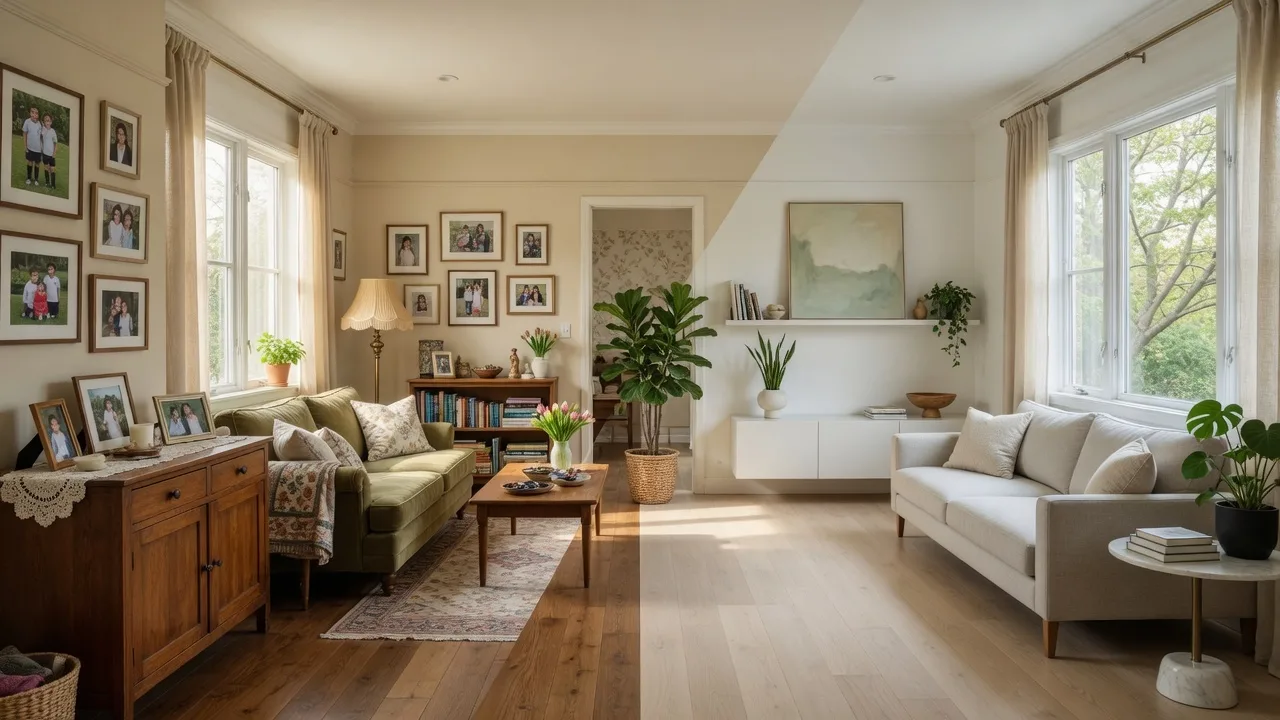
If you've been researching housing transitions in Greater Victoria, you've probably encountered two words used almost interchangeably: downsizing and rightsizing. They sound similar, and they often lead to the same outcome — a smaller, more manageable home. But the mindset behind each one is quite different, and understanding that difference can help you make a decision you feel genuinely good about.
This guide breaks down what each term actually means, when each approach makes sense, and how Greater Victoria homeowners are finding the right fit for the next chapter of their lives. Whether you're 55 or 75, selling a family home or helping a parent transition, the distinction matters more than you might think.
What does "downsizing" actually mean?
Downsizing is the straightforward act of moving to a smaller home. You sell your current property — typically a detached family home — and purchase something with less square footage, fewer bedrooms, and often lower ongoing costs. The motivation is usually practical: the house is too big for one or two people, maintenance has become burdensome, or the equity locked in the home could fund a more comfortable retirement.
In Greater Victoria, downsizing most often looks like moving from a three- or four-bedroom house in Saanich, Oak Bay, or Langford into a two-bedroom condo or townhome in Victoria, View Royal, or the Westshore. It's a direct trade — less space, less responsibility, and (ideally) more financial freedom.
Downsizing is a perfectly valid and often excellent decision. But it comes with a specific assumption: that smaller is better. And for many people, that assumption holds. For others, the real need isn't less space — it's different space.
What "rightsizing" means — and why it's gaining traction
Rightsizing starts from a different question. Instead of asking "How do I get smaller?" it asks "What do I actually need to live well?"
For some people, rightsizing does mean moving to a smaller home. But for others, it might mean:
- Moving to a home of similar size but in a better location — closer to healthcare, family, transit, or walkable amenities
- Staying in the same home but investing in modifications that make it safer and more comfortable for the years ahead (wider doorways, a main-floor bedroom, a walk-in shower)
- Moving laterally — from a detached house to a larger townhome or duplex that offers single-level living without sacrificing space for hobbies, guests, or a home office
- Relocating to a different community entirely — from a suburban home in Central Saanich to a walkable condo in Sidney, or from Victoria to a quieter setting in Shawnigan Lake or Mill Bay
- Adding an in-law suite so a parent can live nearby while maintaining independence
The key distinction is that rightsizing is about alignment — matching your home to how you actually live now and how you want to live in the coming years, rather than simply reducing square footage as an end in itself.
When downsizing makes the most sense
Downsizing is often the right call when:
- Your home is significantly larger than you need. If you're a couple or individual in a four-bedroom house and you're using one bedroom, the kitchen, and the living room, you're paying to heat, insure, maintain, and tax space that serves no purpose.
- Maintenance has become a burden. When the roof, the garden, the gutters, and the exterior paint feel like a second job, a strata property or low-maintenance home can be transformative.
- You want to unlock equity. In Greater Victoria, where home values have risen dramatically over the past two decades, the equity in a long-owned detached home can fund a comfortable retirement, supplement pension income, or provide a financial safety net.
- Your mobility or health needs are changing. A smaller home — especially a single-level condo or townhome — can be safer and easier to navigate as you age.
- You want to simplify. Fewer rooms means fewer things, less cleaning, and less mental load. For many people approaching or in retirement, simplicity is its own reward.
A typical downsizing move in Greater Victoria might look like selling a $1.1 million house in Gordon Head and purchasing a two-bedroom condo in Saanich or Victoria for $600,000–$750,000, netting $300,000–$400,000 in equity to invest, travel, or simply enjoy.
When rightsizing is the better fit
Rightsizing makes more sense when:
- Your current home works — just not where it is. If you love your space but your neighbourhood no longer serves you (too far from family, no transit access,远离 healthcare), relocating without shrinking can be the right move.
- You have specific accessibility needs. A bungalow with a main-floor bedroom and an accessible bathroom may be the same square footage as your current home — but infinitely more livable.
- You have hobbies or a home office that need space. If you paint, woodwork, garden intensively, or work from home, downsizing into a space that can't accommodate those activities will feel like a loss, not an upgrade.
- You're not ready to give up space — just the hassle. A newer townhome with strata-maintained grounds, modern systems, and single-level living can offer the ease of a condo with the breathing room of a house.
- Family regularly visits. If grandchildren, adult children, or extended family stay with you frequently, a two-bedroom condo may feel cramped, while a well-designed three-bedroom townhome might be perfect.
The financial comparison: it's not always about spending less
One common assumption about downsizing is that it automatically saves money. In many cases it does — lower purchase price, lower property taxes, lower maintenance costs, and lower insurance. But rightsizing sometimes costs the same or more than staying put, and that's okay if it delivers a better quality of life.
Consider the true cost comparison:
- Property taxes: Based on assessed value. A smaller home in Victoria proper may have a similar tax bill to a larger home in Saanich, depending on land value.
- Strata fees: A condo in Greater Victoria might run $300–$600 per month, which replaces many of the maintenance costs you're currently paying separately.
- Insurance: Strata insurance is typically included in fees, but you'll need individual contents and liability coverage, which is usually less than full detached-home insurance.
- Utilities: A smaller, better-insulated space often costs significantly less to heat and cool.
- Opportunity cost: If rightsizing means investing more in a well-located, accessible home, the long-term value — reduced need for costly retrofits, proximity to services, better quality of life — may far outweigh the upfront cost difference.
The point isn't to choose the cheapest option. It's to understand what you're paying for and make sure it aligns with your priorities.
Questions to ask yourself before you decide
Whether you lean toward downsizing or rightsizing, these questions can help clarify your thinking:
- How do I spend my time at home? Walk through a typical day. Which rooms do you actually use? What activities matter most to you?
- What frustrates me about my current home? Is it the size, the maintenance, the location, the stairs, or something else entirely? Identifying the real pain point prevents you from solving the wrong problem.
- Where do I want to be? Proximity to family, healthcare, transit, walkable shops, nature — what matters most? This often drives the decision more than square footage.
- What will I need in five to ten years? Consider mobility, health, energy levels, and whether you'll be living alone or with a partner. Planning ahead now avoids another move later.
- What am I willing to give up — and what am I not? If you can't imagine life without a garden, a guest room, or a workshop, don't give those things up just because someone told you to get smaller.
- Am I doing this for myself, or because someone else thinks I should? This is your home and your life. The decision should reflect your needs, not external pressure.
Greater Victoria options for every approach
One of the advantages of living in Greater Victoria is the range of housing options available across the region. Here's how different communities support different approaches:
- Victoria and Oak Bay: Walkable, urban living with condos and townhomes close to shops, restaurants, healthcare, and cultural amenities. Ideal for those who want to stay central.
- Saanich and View Royal: A mix of established neighbourhoods with bungalows, newer condo developments, and townhome communities. Good balance of space and convenience.
- Langford and Colwood: Newer construction, more affordable price points, and growing amenities. Popular with downsizers who want modern finishes and good value.
- Sidney and North Saanich: Quieter, with strong community feel and proximity to the ferry terminal. Attractive for retirees who value peace and access to the Gulf Islands.
- Shawnigan Lake, Mill Bay, and Cobble Hill: For those willing to leave the urban core, these communities offer more space, lower prices, and a rural lifestyle — often with the square footage to maintain hobbies and workshops.
- Sooke and Metchosin: Affordable and close to nature, with a growing selection of townhomes and smaller properties suited to downsizers who value outdoor access.
The right community depends entirely on what you're optimizing for. A REALTOR® who knows the Greater Victoria market can help you explore options you might not have considered.
The emotional dimension: it's not just about square footage
Whether you call it downsizing or rightsizing, leaving a home you've lived in for years is an emotional experience. The terminology you choose can actually influence how you feel about the process.
"Downsizing" can carry a sense of loss — giving something up, stepping back, making do with less. "Rightsizing" reframes the same transition as an active, empowered choice — finding the home that fits your life as it is now. For some people, that reframing makes a meaningful difference in how they approach the process.
Either way, it's normal to feel grief, excitement, anxiety, and relief — often all at once. The practical work of selling a home and choosing a new one is significant, but the emotional work is just as important. Give yourself time and grace for both.
Working with a professional who understands both approaches
The best REALTOR® for a housing transition isn't the one who pushes you toward the smallest, cheapest option — or the one who assumes you need to spend more. It's the one who listens to what you actually want and helps you find the home that fits.
Whether your ideal move is a compact condo in Victoria's Inner Harbour, a single-level bungalow in Saanich, or a townhome with a garden in Sidney, the process starts with an honest conversation about your priorities, your budget, and your vision for the years ahead.
Frequently asked questions
Is rightsizing just a marketing term for downsizing?
No — although the two overlap. Downsizing specifically means moving to a smaller home. Rightsizing means finding the home that best fits your current and future needs, which may or may not involve a smaller space. The distinction is in the intention: downsizing prioritizes size reduction, while rightsizing prioritizes fit.
Can I rightsizing without moving?
Absolutely. Aging-in-place modifications — like adding a main-floor bathroom, widening doorways, improving lighting, or building an accessible entrance — can make your existing home work better for you without the cost and disruption of a move. This is rightsizing in its purest form: adapting your environment to your needs.
Which option saves more money in Greater Victoria?
Downsizing typically saves more in absolute terms because you're moving to a lower-priced property and pocketing the equity difference. Rightsizing may cost the same or more upfront (especially if you're buying a newer, well-located home) but can save money long-term by reducing future renovation costs, improving energy efficiency, and eliminating the need for another move as your needs change.
What if my partner and I disagree about what to do?
This is very common. One partner may want to stay, the other may want to move. One may want a condo, the other a townhome. The best approach is to have an honest conversation about priorities — location, budget, lifestyle, accessibility — and look for the option that meets both sets of needs. A good REALTOR® can present options that bridge the gap.
How do I know if I should move to a different community?
If your current community no longer supports how you want to live — it's too far from healthcare, transit, or family, or it doesn't offer the housing type you need — it may be time to explore other areas. Greater Victoria is diverse enough that there's likely a community that fits your priorities. Spend time visiting, walking the neighbourhoods, and talking to residents before making a decision.
Not sure whether to downsize or rightsize? Let's explore your options.
I've helped hundreds of Greater Victoria homeowners find the home that fits their life — not just their square footage needs. Whether you're ready to move or just starting to think about it, I'd be honoured to help you find the right fit.
Let's Talk