
Renting a Storage Unit After Downsizing: When It Helps and When It Hurts

Andrew Holenchuk
Victoria Property Group · eXp Realty
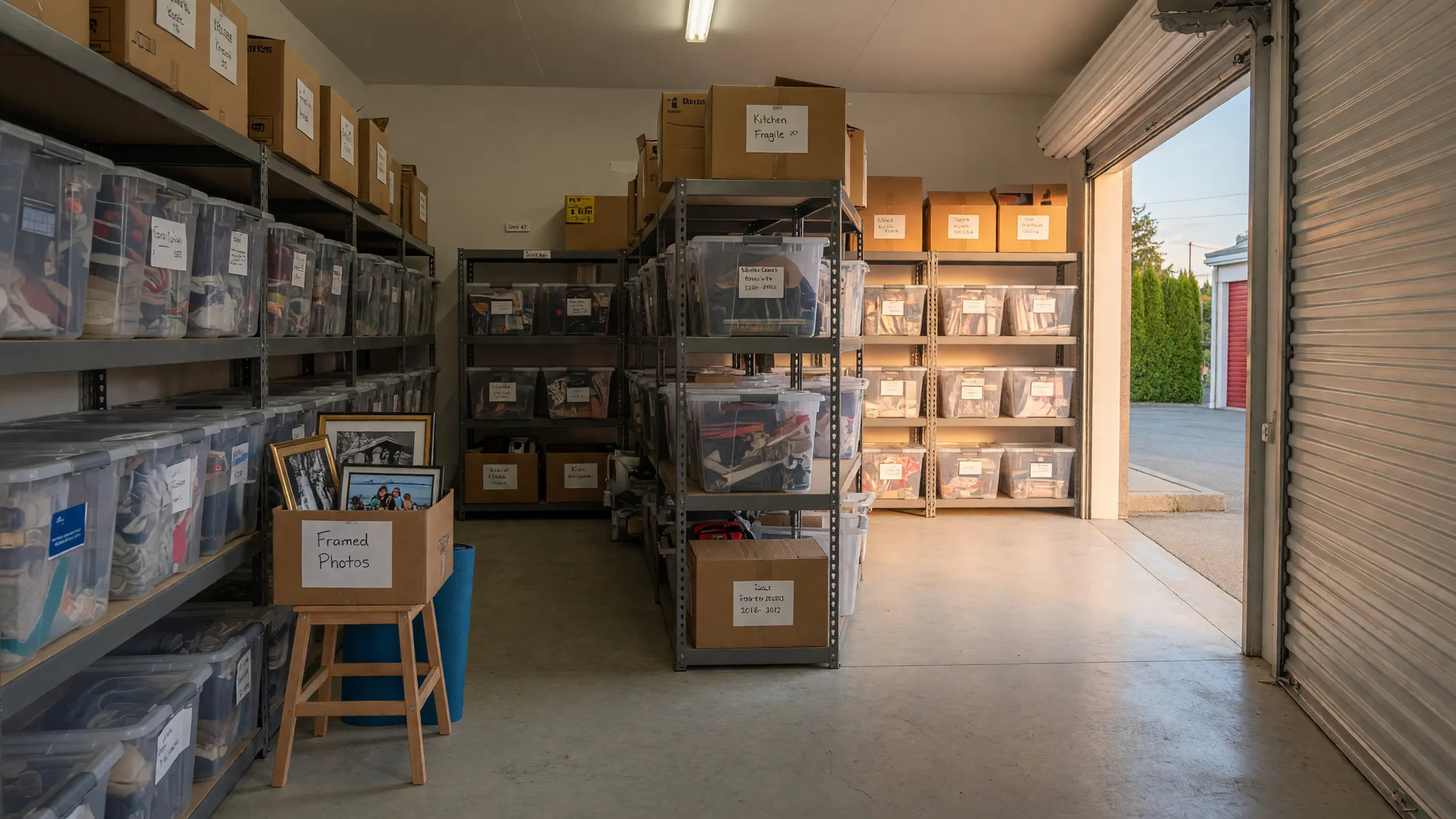
When a move into a smaller home forces hard choices, renting a storage unit can look like the perfect compromise: you keep your things, and your new home stays uncluttered. In Greater Victoria, storage units typically cost roughly $100 to $300 per month depending on size and location, and they can be genuinely useful during a short bridge between homes. This guide helps you decide whether a storage unit is a practical tool or a quiet trap, and how to use one wisely if you do.
The honest starting point is to notice what a storage unit is for: it is a way to postpone a decision about things you have not looked at in years. Sometimes postponing is the right call, especially during a move. But when the postponement turns into a monthly payment for years, the storage unit stops serving you and starts serving your indecision.
The honest question behind the storage unit
Before you rent anything, ask what the stored items actually are. There are three kinds of things people store after downsizing:
- Active items with a clear return date. Things you will genuinely need soon, like furniture waiting for a renovated room, or seasonal gear you will use at your new place.
- Sentimental items you are not ready to decide about. Boxes of photos, letters, children's art, family treasures. These deserve time and gentleness, and a short storage period can be a kindness to yourself.
- Everything else. The extra sofa, the wedding china from a first marriage, the table saw that does not fit the condo. If an item is not going back into your daily life, a storage unit is just a monthly fee for keeping it somewhere you cannot see it.
Naming which category most of your things fall into makes the decision much clearer. Sentimental items respond well to a slow, supported sorting process rather than a permanent storage bill. Our guide to what to keep when downsizing walks through exactly that process.
When a storage unit genuinely helps
There are situations where a storage unit is the smartest, kindest decision you can make. The common threads are a known end date and a real plan:
- Bridge moves. You sold your home, and your new one is not ready yet. Renting for a few months beats moving twice or paying for hotels. Our guide to the timing gap between selling and buying explains the full set of options.
- Homes being prepared for sale. Staging a home for sale works best with less furniture in it. Storing a few rooms' worth of pieces for the listing period can improve how the home shows and what it sells for, especially when the home is being sold vacant.
- Estate transitions. When a parent moves to a care residence or passes away, families often need weeks to sort belongings that cannot fit anywhere yet. A storage unit buys time while preparing an estate home for sale, as long as the family sets a deadline together.
- Seasonal and occasional items. Skis, camping gear, holiday decorations, and tools used a few times a year can make sense to store if the cost is small relative to the value, but compare that cost against simply selling and renting when needed.
What a storage unit really costs
The rent is only the beginning. A full, honest monthly picture in Greater Victoria looks like this:
- Rent. $100 to $300 per month for a typical unit, depending on size, location, and whether the facility is indoors or outdoors.
- Insurance. Most facilities require coverage, whether you add it to your home insurance or buy theirs. It is usually modest, but it is not free.
- Climate control. Valuable documents, photographs, and furniture with wood veneers need temperature-stable space. Climate-controlled units cost more per month, and without them, a damp coastal winter can damage whatever you store.
- Time and travel. Every visit is a drive, and every drive is a reminder that your stuff lives somewhere else. The distance between your new home and the facility is a real cost, often the one people underestimate.
- The annual total. Twelve months of rent at the middle of that range is about $2,400. Over three years, that is more than many of the items inside the unit are worth, and it is money that no longer goes toward the home you actually live in.
Our article on making a smaller space work with smart storage shows how much of what people store can live beautifully inside a well-organized smaller home, which is nearly always cheaper than paying for a second address.
The trap: paying rent to postpone a decision
Here is the pattern I see most often: a couple downsizes, rents a unit "just for the move," fills it with the things they could not decide about, and then visits it twice in the first year and almost never after that. The unit becomes a second, invisible household, a monthly reminder of decisions avoided. Out of sight really does mean out of mind, and the bill keeps arriving either way.
It is also worth noticing the math of comfort. Storing an item costs money every month, while selling it costs a few hours of time once. Many people keep things in storage because selling feels like a loss, when the actual loss, month after month, is the rent. The kindest question is not "can I bear to let this go?" but "would I pay $100 this month to keep it?" If the answer is no, the decision has already been made.
Alternatives worth trying first
Before renting, run the stored items through the options that end with them in someone's life rather than in a warehouse:
- Gift to family. Children and grandchildren often treasure the things you think nobody wants. Offer first, warmly and with no strings.
- Sell the useful and the valuable. Furniture, tools, and quality household goods sell well in Greater Victoria's resale market when priced fairly.
- Donate or consign. Charities and consignment shops in Greater Victoria are used to receiving good-quality household items from downsizing moves, and our guide to donation, consignment, and estate sale options compares them honestly.
- Digitize the once-a-year papers and photos. A scanner or a phone turns boxes of documents into a folder on a hard drive, with the originals kept for the few that matter.
- Run a focused sorting session. A few unhurried weekends with a friend, a family member, or a senior move manager can accomplish more than years of storage, because decisions get made in the room where the items are, not in a facility across town.
If you do rent a unit: a system that works
Used well, a storage unit is a short bridge with guardrails. Set the guardrails when you sign:
- Give it a deadline. Three months is generous for a bridge move; six to twelve months is plenty for an estate sorting that is actually happening. Write the end date into your calendar the day you sign, with a second reminder two months before.
- Write an inventory. A simple list of what went in, with the date, takes twenty minutes and saves hours of guessing later. Keep a copy at home and give one to a trusted family member.
- Label everything. Boxes labelled on the side you can see, not just the top. "Kitchen, everyday" tells you more than "Kitchen." When you visit, put the boxes you have revisited at the front and the unopened ones toward the back; the pattern will tell you the truth.
- Insure and protect. Confirm what the facility covers and what your own policy covers. Upholstered pieces, mattresses, and paper documents at risk from damp are the things to climate-control or to not store at all.
- Never store what you cannot bear to lose. Irreplaceable photos, the only copy of legal documents, jewellery, and hard drives with family history should not live in a unit that could be flooded, damaged, or broken into. That is not a storage question; those items belong at home, in a safe, or with a bank.
- Always know your exit. If you cannot imagine the day you empty the unit, that is a signal to shrink it. Many facilities have smaller units; if you find yourself not visiting, downsizing the unit itself is a clean first step.
Planning the exit
The goal of a good storage plan is to never hear someone say "we have had that unit for five years." Schedule the revisit dates, clear the unit in three or four practical sessions rather than one overwhelming day, and let each session end with the surplus going somewhere useful: a charity pickup, a consignment shop, or a family member's trunk. When the unit is empty, cancel the rental early enough to avoid another month's charge, and let the new home, with a little extra room for the life you actually live, be the only address you carry.
Frequently asked questions
How much does a storage unit cost in Greater Victoria?
Roughly $100 to $300 per month for a typical unit, depending on size, location, and whether it is indoors or climate-controlled. Add insurance, and consider the time and travel of visits. Over a year, even a modest unit costs more than most people expect, so compare it honestly against the value and future of the items inside.
Should I store furniture or sell it when I downsize?
Store furniture only when you have a specific future use and a short timeline, such as a bridge move or a room being prepared. Paid monthly, full-size furniture is expensive to keep, and its resale value tends to drop while it sits. If a piece does not fit your new life within six to twelve months, selling it now and buying what you actually need later is usually the better choice.
How long should I rent a storage unit?
Use the shortest term that covers your plan: a few months for a bridge move, up to about a year for an estate sorting that is actively happening. Set the end date when you sign and put reminders in your calendar. If you have not cleared or even visited the unit in six months, it is time to shrink it or empty it.
What should I never put in a storage unit?
Irreplaceable items: original family photos, legal documents, jewellery, and the only copies of anything you could not replace. Also avoid items that are dangerous to store, including flammable materials, and consider that furniture, mattresses, and paper can be damaged by the damp of a coastal winter without climate control. Storage is for things you can afford to lose, not the things you cannot.
Who should know about my storage unit?
Tell at least one trusted family member or friend: where it is, roughly what is inside, and how much it costs. If something happens to you, a forgotten unit becomes an unpaid bill, an auction of someone's belongings, and a painful mystery for your family. Keeping one person informed also gives you a built-in ally for the difficult job of emptying it.
Not sure whether you truly need that storage unit?
I have walked through this decision with many Greater Victoria downsizers, and I can help you see clearly what belongs in your new home, what can go with gratitude, and what, if anything, deserves a short stay in storage. I would be glad to talk it through honestly and without pressure. Helping people confidently navigate one of life's biggest housing transitions is what I do every day.
Let's Talk About Andrew Holenchuk
Andrew is Team Leader of Victoria Property Group at eXp Realty and has been helping people buy and sell homes throughout Greater Victoria since 2006. Together with his team, they have facilitated more than $1 billion in real estate sales while helping families navigate downsizing, estate transitions, and housing moves.