
Sentimental Belongings: How to Decide What to Keep When Downsizing in Victoria

Andrew Holenchuk
Victoria Property Group · eXp Realty
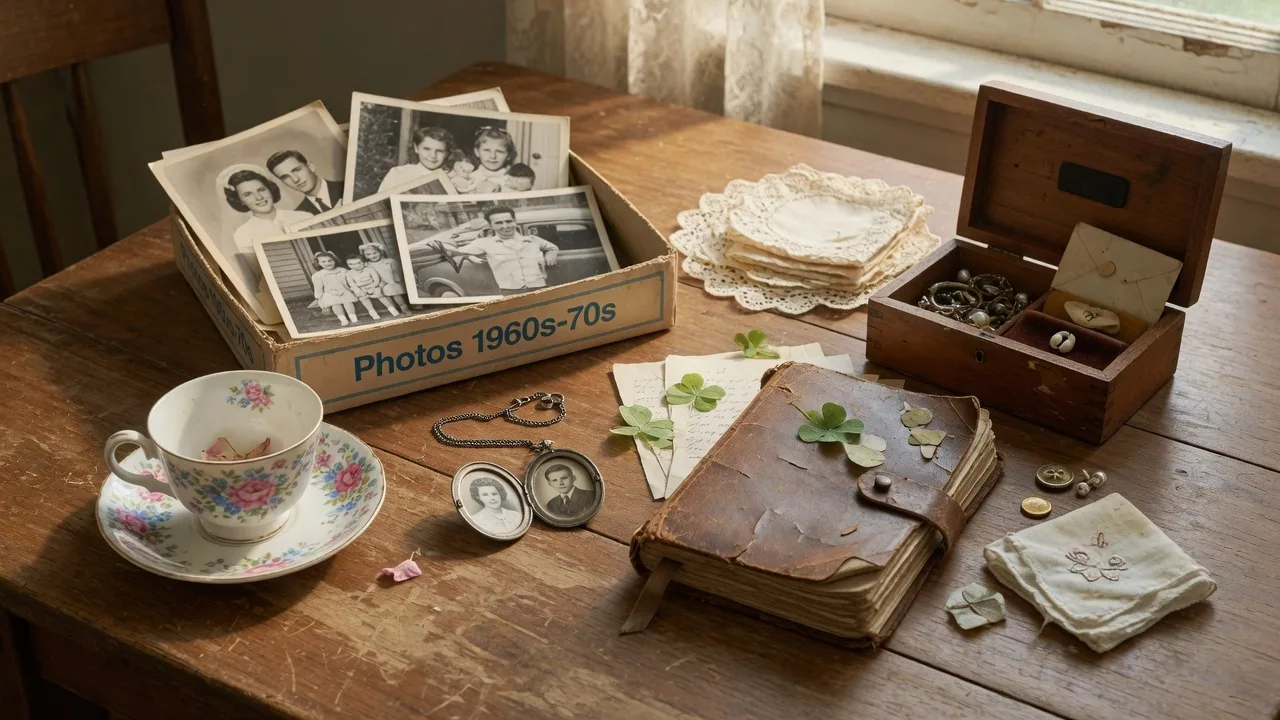
The dining room table is covered with a lifetime of treasures. Your mother's china. Your father's fishing rods. Decades of family photos in shoeboxes. A hand-knitted baby blanket from your great-aunt. A collection of seashells gathered on family vacations to Tofino. A wooden toy box your grandfather built by hand.
How do you possibly decide what to keep?
This is the question that stops many homeowners in their tracks when downsizing. The practical decluttering tips are helpful for the kitchen junk drawer and the linen closet. But sentimental belongings live in a different category entirely. They carry stories, memories, and identity. Sorting through them is not about organizing. It is about grieving, celebrating, and making peace with letting go.
This guide offers a compassionate framework for sorting through sentimental belongings when downsizing in Greater Victoria, no matter how deep the emotional attachment runs.
Why sentimental items are the hardest to sort
Sentimental belongings are not things. They are anchors to people, places, and moments in time. When you look at your grandmother's teacup, you are not seeing porcelain and gold trim. You are seeing her hands holding it, hearing her voice, remembering the afternoons you spent together.
Letting go of these objects can feel like losing the person all over again. It can feel like erasing your own history. This is not irrational, and it is not something to push through with sheer willpower. It deserves time, gentleness, and the right approach.
At the same time, moving your entire collection of sentimental belongings into a smaller condo or townhome is rarely practical. The goal is not to abandon your memories. It is to find a way to carry them that fits your new life.
The keep, share, document, release framework
Instead of the usual "keep or toss" binary, try a four-category system that gives every sentimental item a dignified path forward.
Keep: The items that truly earn their place
Not everything can come to a smaller home, but some things deserve to. Ask yourself these questions to identify your keepers:
- Does this item bring me genuine joy when I see it, or do I keep it out of obligation?
- Would I notice if it were gone a year from now?
- Does it fit functionally and aesthetically into the home I am moving to?
- Do I have a specific place for it in my new space, or am I keeping it for a someday that never comes?
A good rule of thumb: if you cannot picture exactly where an item will live in your new home, it may belong in a different category. Your new space deserves to feel open and peaceful, not crowded with objects that made sense in a larger house.
Share: Pass meaningful items to family and friends
One of the most rewarding parts of downsizing is the chance to give family heirlooms and meaningful objects to the people who will treasure them. This is not getting rid of things. It is passing them forward while you are still here to see the joy they bring.
Consider hosting a small gathering where family members can choose items that have meaning to them. You might be surprised by what people want. Your nephew may have always admired that fishing rod. Your granddaughter may have fond memories of baking with that mixing bowl. Giving these items to someone who will use and value them turns goodbye into a gift.
If no one in your family wants a particular item, consider whether it might hold meaning for someone outside your family. A historical society, museum, or community organization in Greater Victoria may welcome items that tell a local story.
Document: Preserve the memory without the object
This is the most powerful category for downsizers, and it is often overlooked. You do not need to keep the object to keep the memory. Photography gives you a way to honour an item's significance without using physical space.
Here is how to document sentimental belongings:
- Take a high-quality photograph of each item in good light.
- Write a short note about what the item is, who it came from, and what it means to you.
- Create a digital photo album or a small physical scrapbook.
- Share the album with family members so the stories live on.
A photograph of your grandmother's teacup on a shelf in your new home can carry the same memory as the teacup itself, without taking up cupboard space. Over time, many people find that the photograph becomes as meaningful as the object ever was.
This approach works especially well for children's artwork, school projects, awards, and holiday decorations that carry specific memories. Take a photo, write the story, and release the physical object with gratitude.
Release: Let go with intention
Some sentimental items will not fit the first three categories, and that is okay. The goal is not to find a home for everything. It is to release what does not serve you in your next chapter, with intention and without guilt.
When releasing sentimental items, give them a proper goodbye. Hold the object one last time. Remember the story it holds. Thank it for the role it played in your life. Then let it go to a place where someone else can find value in it.
In Greater Victoria, several organizations accept quality donations:
- Habitat for Humanity ReStore accepts furniture, tools, and building materials
- The Society of St. Vincent de Paul takes household goods and small furniture
- WIN (Women in Need) supports women and families in transition
- UsedVic.com or Facebook Marketplace can connect you with people who will treasure specific items
Practical strategies for the sorting process
Start with the easy rooms first
Build momentum by sorting rooms with less emotional weight first the bathroom, the laundry room, the guest room. Leave the attic, basement, and photo albums for later, when you have developed a rhythm and built some emotional stamina.
Set a timer, not a quota
Sorting sentimental items is emotionally draining. Instead of setting a goal like "finish the living room today," set a timer for 30 or 45 minutes. When the timer goes off, take a break. Walk around the block. Make a cup of tea. Come back when you are ready. This approach prevents decision fatigue and reduces the overwhelm that causes many people to give up entirely.
Work with a friend or family member
Sorting sentimental belongings alone can feel isolating. A trusted friend or family member can offer a second opinion, share memories, and provide emotional support. They can also help you stay honest about whether an item truly needs to come with you.
If you do not have someone available, consider hiring a professional organizer or move manager who specializes in downsizing. These professionals are trained to support people through the emotional aspects of letting go, and they bring a non-judgmental presence that can make the process feel safer.
Use the one-year rule for items you are unsure about
If you are genuinely uncertain about an item, pack it in a clearly labelled box and store it. If you have not opened the box in a year, you likely do not need the contents. This approach takes the pressure off making a final decision in the moment and lets time clarify what truly matters to you.
Helping aging parents sort their sentimental belongings
If you are an adult child helping your parents downsize in Greater Victoria, approach their belongings with deep respect. What looks like clutter to you may hold irreplaceable meaning to them. Your parents are not just sorting objects. They are reviewing their entire lives.
Here is how to help well:
- Ask before touching. Never assume something is trash. Every object in their home was deliberately acquired and kept.
- Let them tell the story. When they pick up an item, let them share the memory attached to it. This is part of the process, not a distraction from it.
- Offer choices, not commands. "Would you like to give this to your sister, or would you prefer to donate it?" is very different from "We can't keep this."
- Be patient. A single drawer can take an entire afternoon. That is normal. The relationship matters more than the timeline.
The gift of downsizing your belongings
There is a quieter story about sentimental belongings that people rarely talk about. When you sort through them with intention, you have the chance to reconnect with your own life. You remember people you have loved. You rediscover moments you had forgotten. You see the thread of experiences that brought you to where you are today.
This is not a chore. It is a gift that downsizing gives you. The time and space to reflect on what matters, and the freedom to carry only what you truly need into your next chapter.
Your new home will not have room for everything you have collected. But it will have room for the memories that matter, and for the new ones you are about to create.
Frequently asked questions
How do I decide what sentimental items to keep when I have limited space?
Use the keep, share, document, release framework. Identify the items that bring you the most joy and that you have a specific place for in your new home. For the rest, consider passing them to family members who will treasure them, photographing them to preserve the memory, or releasing them with gratitude to a charity or new owner. You do not need to keep the object to keep the memory.
What should I do with family photos when downsizing?
This is one of the most common challenges. Start by sorting photos chronologically or by family member. Discard duplicates, blurry shots, and photos that have no personal significance. Digitize what remains using a scanning service or a smartphone scanning app. Create a digital photo album that can be shared with family members. Keep only the physical prints that hold the deepest meaning. For slides and negatives, consider a professional scanning service in Greater Victoria.
How do I handle items that belong to a deceased spouse or family member?
Give yourself time and compassion. There is no deadline for sorting a loved one's belongings. If the grief is still fresh, consider setting aside their most meaningful items in a single box or drawer and revisiting them when you feel ready. A therapist, grief counsellor, or trusted friend can provide invaluable support during this process. Remember that keeping the items does not keep the person. Letting them go does not mean letting go of the love.
Should I use an estate sale company or sell items myself?
It depends on the volume and value of your items. An estate sale company can handle pricing, display, and sale of a large collection, saving you significant time and emotional energy. They take a percentage of the proceeds. Selling items yourself through online marketplaces or consignment shops gives you more control but requires more effort. For high-value items such as antiques, jewellery, or fine art, consider getting a professional appraisal first.
What if family members do not want the heirlooms I offer them?
This is increasingly common as younger generations value different things. If your children or grandchildren do not want your china cabinet, silver set, or collection of figurines, try not to take it personally. Their homes are smaller, their tastes are different, and they may already have everything they need. Consider selling valuable items and using the proceeds for something that brings your family together a trip, a gathering, or a contribution to a grandchild's education fund. The money can become a new kind of heirloom.
Ready to start sorting?
I help Greater Victoria families navigate every part of the downsizing journey, including connecting you with trusted professionals who can support the sorting process with compassion and expertise. Let's talk about your situation.
Let's TalkAbout the author: Andrew Holenchuk is Team Leader of Victoria Property Group at eXp Realty and has been helping families in Greater Victoria navigate housing transitions since 2006. He has facilitated more than $1 billion in real estate sales and is a trusted resource for homeowners navigating the emotional and practical aspects of downsizing.