
Preparing Your Smaller Home Before Moving Day: A Room-by-Room Guide for Greater Victoria

Andrew Holenchuk
Victoria Property Group · eXp Realty
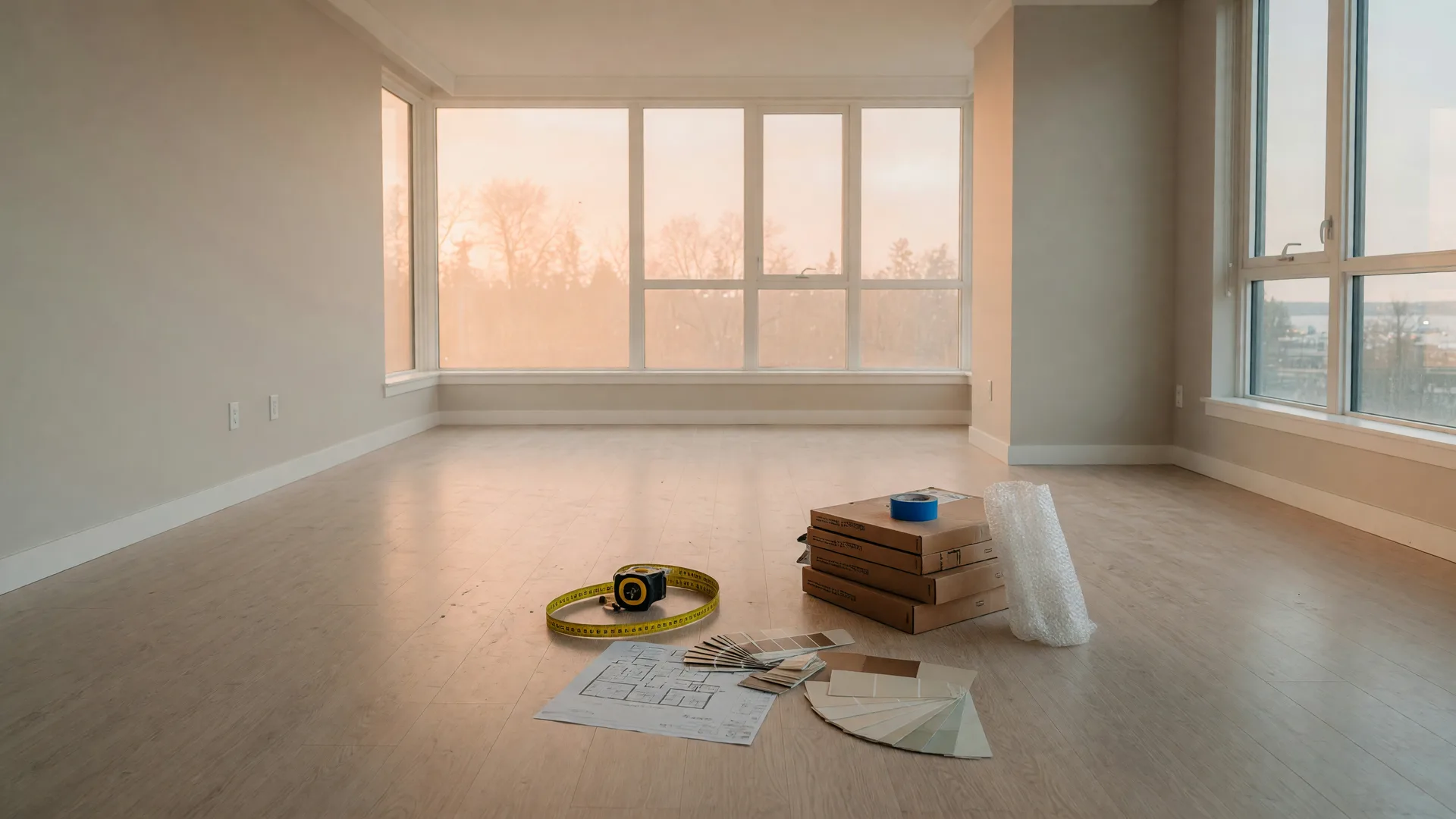
This article is about the quiet work that makes a downsizing move feel calm: preparing your new, smaller home before moving day, so the day itself is about carrying boxes rather than making decisions. Most moving advice focuses on packing up the old home and settling into the new one, but the week before the move is where a housing transition is won or lost.
Whether you are moving from a family home in Saanich to a condo in Victoria, from a house in Langford to a townhome in Sidney, or anywhere in between across Greater Victoria, a little preparation in the new space pays off in the first weeks after you arrive. This guide walks through the new home room by room, from measuring and furniture to paint, plumbing, and the practical bookings that prevent moving-day surprises.
Why prepare the new home before the move
There is one short window of time when your new home is empty, and it is the cheapest and easiest time to do almost any work in it. Painting a wall with no furniture in the room takes a few hours and a drop cloth. Painting the same wall around a sofa, a bookcase, and a bed takes most of a day and a great deal of patience.
The same logic applies to flooring, light fixtures, window coverings, and small repairs. Contractors prefer empty homes, and they often charge less and finish faster when they are not working around your belongings. Preparing the new home before moving day also means you arrive to a space that is clean, safe, and ready, which is a gentler start to a big transition than arriving to unpack into a project.
Start with measurements and a floor plan
Everything else in this guide depends on knowing what actually fits. Get the floor plan for your new home, whether from the listing, the seller, or the strata management office, and take your own measurements once you have access. Record the width of every doorway, the height and depth of hallways and stairways, the path from the elevator or front door to each room, and any tight corners or turns a long sofa will need to navigate.
If your new home is a condo or townhome in a strata building, check the moving rules early. Most Greater Victoria buildings require you to book the moving elevator and loading dock in advance, and many ask for proof of insurance and a damage deposit. Some buildings have restricted move-in hours. Booking these details a few weeks ahead is far easier than arranging them on the day.
Rightsize your furniture before you move it
The most common downsizing mistake is paying to move furniture that does not fit, only to sell it later at a discount. Before you move a single piece, compare its measurements with the floor plan and decide what stays. For each piece, there are really only three choices: it fits and comes with you, it goes to a family member or a buyer, or it is donated or recycled.
Think about how you actually live in a smaller space. A dining set that seated eight for holiday dinners may be more than you want to dust in a condo. A full desk may give way to a well-designed console. This is the heart of rightsizing, which is about choosing a home and belongings that fit your next chapter rather than simply moving less stuff. For a deeper look at the difference, our guide on rightsizing versus downsizing is a helpful place to start.
Paint and flooring while the rooms are empty
If your new home needs fresh paint, new flooring, or updated light fixtures, do it before the furniture arrives. Paint while walls are bare, refinish or replace flooring with nothing to protect, and swap dated light fixtures while the ladder has room to move. Window coverings are worth planning for as well, since bare windows can make a new home feel exposed and bright until you hang them.
Order materials early. Paint colours, flooring, and fixtures sometimes have lead times, and a delay in one item can push your move date. A useful rule is to treat any renovation in the new home as its own project with its own deadline, at least two weeks before moving day.
The kitchen and bathroom: plan for real use
Smaller kitchens and bathrooms are the rooms where the math of downsizing becomes personal. A kitchen that served a family of five at a house in Oak Bay may hold far less than your current one, and that is the point. Before you move, decide which kitchen items genuinely earn their space: the everyday pots, the tools you use weekly, the dishes for the guests you actually host. Reserve the rest for donation or family.
In the bathroom, this is the time to think about comfort and safety, not just storage. Grab bars, lever handles, a non-slip surface, and good task lighting are far easier to install in an empty room. For a fuller look at the modifications that support aging comfortably at home, our guide to aging in place and home modifications covers the options in detail.
Accessibility and safety tweaks, done early
Even if you do not need accessibility features today, a smaller home is often a home you plan to stay in for a long time. Small changes made while the place is empty make a large difference later: replacing round doorknobs with levers, improving hallway and stair lighting, installing a handrail where steps are present, and considering a no-step entry or a simple ramp.
These changes are also more practical in a single-level home or a condo with an elevator, which is one reason so many Greater Victoria downsizers choose that style of home. If mobility is part of your thinking, our guide on downsizing with mobility challenges explains what to look for in a next home.
Book the practical essentials early
A smooth move is often just a collection of bookings made in advance. In the weeks before moving day, arrange:
- The moving elevator and loading dock if your new home is in a strata building, plus parking for the moving truck.
- Utility start dates for electricity, gas, water, and waste services at the new address, and cancellation or transfer at the old one.
- Internet and phone installation, which often need a technician visit and can be scheduled days before you arrive.
- Home insurance on the new property, effective from the date you take possession, not the date you finish unpacking.
- Mail forwarding through Canada Post so bills and cards follow you.
For the logistics of the move itself, our guides on choosing a moving company and the complete moving day checklist cover the rest of the planning in plain language.
Plan for the handover overlap
Many downsizers have a few days where the closing of one home and the possession of the next overlap, and that overlap is a gift if you use it. It lets you move the big furniture on one day, clean the old home on another, and unpack gradually instead of all at once. If the gap works the other way and you are between homes, our guide to the timing gap between homes explains how to manage it.
Whatever your timeline, keep a small bag of essentials with you: medications, documents, chargers, and a change of clothes. Even the best-planned move has its surprises, and having what you genuinely need close at hand keeps the transition calm.
Frequently asked questions
How far ahead should I start preparing my new home?
Start four to six weeks before moving day if you can. That gives you time to measure, book the elevator and utilities, order paint or flooring, and complete any contractor work while the home is empty. Even two weeks of preparation makes a meaningful difference; the key is to do the work before the furniture arrives rather than after.
What should I measure before moving my furniture?
Measure every doorway, the hallways and stairways, the elevator or path of entry, and the rooms themselves, including ceiling height if you are moving tall pieces. Compare those measurements with your largest furniture items, especially sofas, beds, and dressers. Remember that a piece has to fit through the path to the room, not just inside the room.
Do I really need to paint before I move in?
No, but it is the best time to do it. Painting an empty room is quicker, cleaner, and cheaper than painting around furniture. If your budget or timeline will not allow it, at least decide on colours and order materials now, so the work can happen comfortably in the first weeks after the move.
What accessibility changes should I make before I move?
Start with grab bars in the bathroom, lever handles on doors, good lighting in hallways and stairs, a handrail where there are steps, and a no-step entry if possible. These are inexpensive and far easier in an empty home. They also add genuine value and comfort if you plan to stay in the home for many years.
What do I need to book for a condo move in Victoria?
In most strata buildings, you will need to reserve the moving elevator and loading dock in advance, arrange parking for the moving truck, and provide proof of insurance. Check your building's move-in rules early, because some buildings restrict move times or require a deposit. The strata manager or property management office can give you the exact requirements.
Preparing your next home and planning the move?
A housing transition goes smoothly when the pieces are planned in the right order, and it is my job to help with the real estate side of that plan: pricing your current home, finding the right smaller home, and timing the handover so moving day feels calm. If you would like a second set of eyes on your timeline, I would be glad to talk it through with you.
Let's Talk About Andrew Holenchuk
Andrew is Team Leader of Victoria Property Group at eXp Realty and has been helping people buy and sell homes throughout Greater Victoria since 2006. Together with his team, they have facilitated more than $1 billion in real estate sales while helping families navigate downsizing, estate transitions, and housing moves. Helping people confidently navigate one of life's biggest housing transitions is what he does every day. This article is general information only and not a substitute for professional financial, legal, or real estate advice for your specific situation.