
Moving Day Guide for Downsizers: A Complete Checklist for Greater Victoria

Andrew Holenchuk
Victoria Property Group · eXp Realty
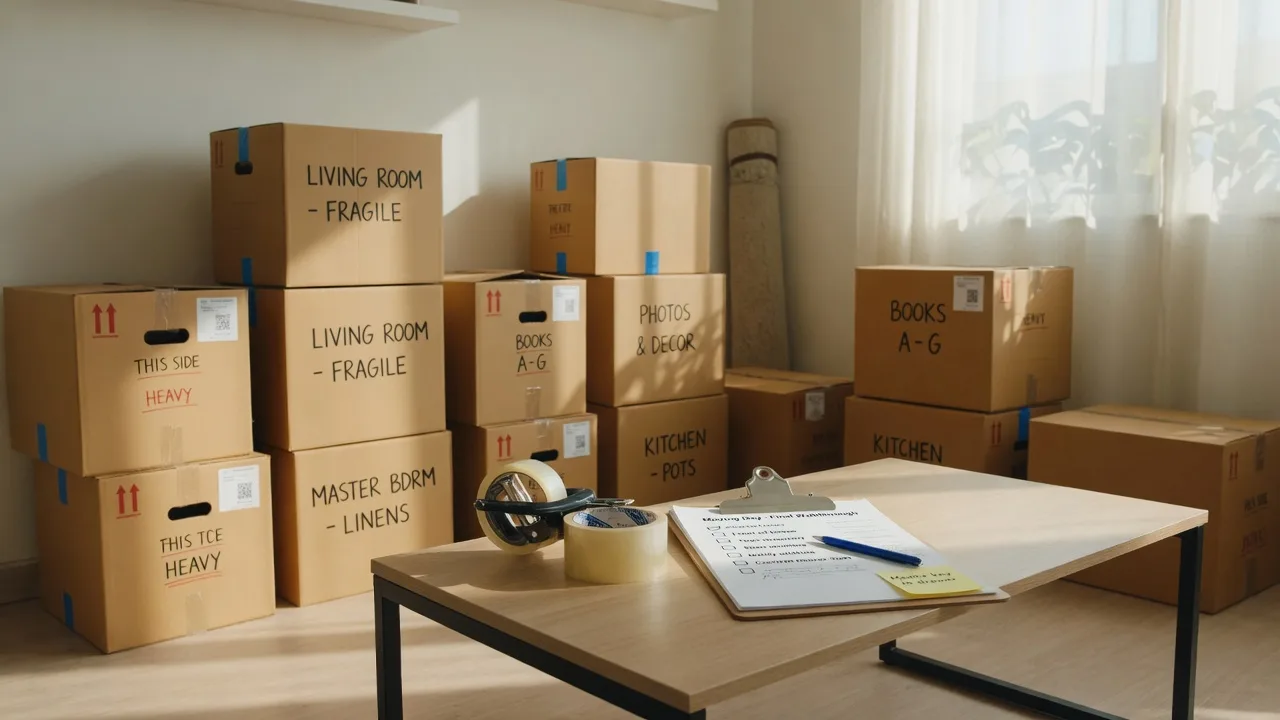
Moving day is one of the most physically and emotionally demanding parts of any downsizing journey. After weeks or months of sorting, packing, and preparing your home for sale, the day itself arrives with its own unique set of challenges and rewards.
For downsizers in Greater Victoria, a well-planned move can mean the difference between a stressful day and a smooth one. This guide covers everything you need to know about moving day and the weeks surrounding it, from hiring movers to setting up your new home on the other side.
Whether you are moving from a family home in Saanich to a condo in downtown Victoria, or from a house in Langford to a 55+ community in Sidney, these steps will help you arrive at your new home feeling organized and ready for what comes next.
Part 1: Four to six weeks before moving day
Book your movers early
Victoria's moving companies book up quickly, especially during the summer months and at the end of each month. Reach out to at least three moving companies for quotes. Ask specifically about:
- Whether they have experience with downsizing moves (which often involve packing, unpacking, and furniture assembly)
- Their insurance coverage and what happens if something gets damaged
- Whether they charge by the hour or by the job
- Their cancellation and rescheduling policy
Notify utility companies and service providers
Create a list of everyone who needs to know your moving date and new address:
- BC Hydro (electricity)
- FortisBC (gas)
- Municipal water and sewer (typically handled through your municipality)
- Internet and cable provider (Shaw, Telus, or local provider)
- Canada Post (mail forwarding)
- ICBC (vehicle address and driver's licence)
- CRA (Canada Revenue Agency)
- Service BC (BC Services Card, Medical Services Plan)
- Your financial institutions
- Insurance providers (home, auto, medical)
- Your family doctor, dentist, and any specialists
Start packing early
You will need more time than you think. Start with the things you use least: seasonal decorations, guest linens, books, and kitchenware you rarely touch. Pack a few boxes each day rather than leaving it all for the final weekend. Label every box clearly with its contents and the room it belongs in. A simple system like "KITCHEN -- pots and pans" or "LIVING ROOM -- books" will save hours on moving day.
For downsizers especially, this is also the time to make the hard decisions about what to keep. Be honest about whether each item truly belongs in your new, smaller home. If you have not used something in two years, consider donating it. We have a room-by-room decluttering guide that can help.
Measure your new space
One of the most common downsizing mistakes is bringing furniture that does not fit. Before moving day, measure the doorways, hallways, and rooms in your new home. Compare those measurements to your current furniture. If your dining table or sofa will not fit, sell or donate it before the move rather than paying to move something you cannot use.
Part 2: One to two weeks before moving day
Confirm your moving arrangements
Call your moving company to confirm the date, time, and address. If you are using a moving truck, confirm you have the necessary parking permits or elevator bookings if you are moving into a condo building. Many strata buildings require elevator reservations, insurance certificates from movers, and specific move-in time slots.
Pack an essentials box
This is the most important box you will pack. It should contain everything you need for the first 48 hours in your new home, when boxes may still be unpacked. Include:
- Toiletries and medications
- A change of clothes and pyjamas
- Phone chargers and a power bar
- Basic tools (screwdriver, scissors, tape, box cutter)
- Snacks and bottled water
- Toilet paper, hand soap, paper towels, and garbage bags
- Bedding and towels for the first night
- Important documents (moving contract, new home keys, ID)
- Pet supplies and any pet medications
Keep this box with you in your vehicle, not on the moving truck, so you have it the moment you arrive.
Take care of special items
If you have valuables, fragile antiques, or sentimental items that you do not trust with movers, move them yourself. Jewelry, family photo albums, important documents, and small heirlooms should travel with you. This also includes any houseplants, since moving companies in BC may not transport them.
Prepare your current home for the next owner
If you have already sold your home, review the terms of your sale. Some buyers expect the home to be professionally cleaned after you move out. Arrange for any final cleaning or minor touch-ups. Leave behind any items that were included in the sale (appliances, window coverings, light fixtures) and any manuals or warranties that go with them.
Part 3: Moving day itself
Start early
Moving day will be longer and more tiring than you expect. Start as early as you can. Have a good breakfast, stay hydrated, and pace yourself. If you are over 65 or have health concerns, do not try to lift heavy items. That is what you hired movers for.
Be present for the movers
Make sure someone is at both the old home and the new home to direct movers and answer questions. Walk through each room with the movers before they start, pointing out anything fragile or requiring special handling. Have your floor plan handy so they know which room each box belongs in.
Do a final walkthrough
Before you hand over the keys, walk through every room, closet, and storage space in your old home. Check cupboards, the attic, the basement, and the garage. Open every drawer and cabinet. It is remarkably easy to leave something behind in the stress of moving day. Check the yard too, including garden sheds and under the deck.
Say goodbye
Take a moment to acknowledge what this home has meant to you. This is especially important in a downsizing move, where the home you are leaving likely holds decades of memories. A brief, quiet moment of gratitude can make the transition feel more meaningful and less abrupt.
Part 4: Settling into your new home
Unpack strategically
You do not need to unpack everything on day one. Focus on the essentials first: the bedroom, bathroom, and kitchen. Once those are functional, the rest of the home can be tackled at your own pace. Give yourself permission to live with boxes for a week or two while you decide where things belong.
Introduce yourself to your neighbours
One of the best parts of downsizing is becoming part of a new community. Whether you have moved into a condo building, a 55+ community, or a smaller house in a new neighbourhood, introducing yourself to your neighbours helps you feel at home faster. A simple knock on the door with a baked good or a friendly wave in the hallway goes a long way.
Learn your new neighbourhood
If you have downsized into a new area of Greater Victoria, take time to explore. Find the nearest grocery store, pharmacy, coffee shop, and walking path. Visit the local community centre. If you have moved to a new municipality, learn how the recycling and garbage pickup works, where the nearest hospital is, and what transit options are available.
Update your address everywhere
Change-of-address notifications have a way of falling through the cracks. As you settle in, keep a running list of organizations you need to update. Banks, insurance companies, your employer or pension administrator, and any subscription services. Canada Post's mail forwarding service is a helpful safety net and runs for up to 12 months.
Local moving resources in Greater Victoria
Here are some practical resources that can help you with your move:
- Moving companies: Several reputable moving companies serve the Greater Victoria area. Ask for referrals from friends, neighbours, or your REALTOR, and read recent reviews before booking.
- Canada Post mail forwarding: Available online or at any post office. Forwarding can be set up for 4, 6, or 12 months.
- ICBC address change: You can update your driver's licence and vehicle registration online or at any ICBC office.
- Municipal services: Each municipality in Greater Victoria has its own utility billing, garbage collection, and property tax system. Visit your new municipality's website to set up accounts.
- Donation centres: The Mustard Seed, Beacon Community Services, WIN (Women in Need), and the Victoria Society for the Prevention of Cruelty to Animals all accept household donations. If you are downsizing, arrange a donation pickup before your move date.
Frequently asked questions
How far in advance should I book movers in Victoria?
Book your moving company at least four to six weeks in advance, especially if you are moving between May and September or at the end of a month. Popular moving dates book up quickly across Greater Victoria.
Should I pack myself or pay for packing services?
Many downsizers find that a combination works best. Pack your own sentimental items, clothing, and everyday essentials, and hire the moving company to pack fragile items like dishes, glassware, and art. Most moving companies offer partial packing services if you do not need full-service packing.
How do I move into a condo building with an elevator?
Contact the strata management or building concierge well in advance. Most buildings require you to book the elevator for a specific time slot, provide proof of insurance from your movers, and sign a move-in agreement. Some buildings also require a damage deposit, refundable after a successful move.
What if my closing dates do not line up?
This is a common challenge when selling one home and buying another. Options include arranging temporary storage for your belongings (many moving companies offer this service), staying with family or in a short-term rental for a few days or weeks, or negotiating different possession dates with both the buyer and seller. Your REALTOR can help coordinate these details.
How long does it take to feel settled after downsizing?
Most people take three to six months to feel truly at home in a new space. Be patient with yourself. The first few weeks are about function: making sure you can sleep, eat, and move through your day. The next few months are about adding the personal touches that make a house feel like home. Give yourself time, and do not pressure yourself to have everything perfect on day one.
Planning a downsizing move in Greater Victoria?
I help downsizers through every stage of the transition, from listing your current home to finding the right next one and coordinating a seamless move. Let's talk about your timeline and what support you need.
Let's Plan Your MoveAbout the author: Andrew Holenchuk is Team Leader of Victoria Property Group at eXp Realty and has been helping clients buy and sell homes in Greater Victoria since 2006. He has facilitated more than $1 billion in real estate sales and helps families confidently navigate one of life's biggest housing transitions. This article provides general information and does not replace professional advice from your moving company, lawyer, or financial advisor.