Should You Get a Pre-Listing Home Inspection? A Guide for Greater Victoria Sellers

Andrew Holenchuk
Victoria Property Group · eXp Realty
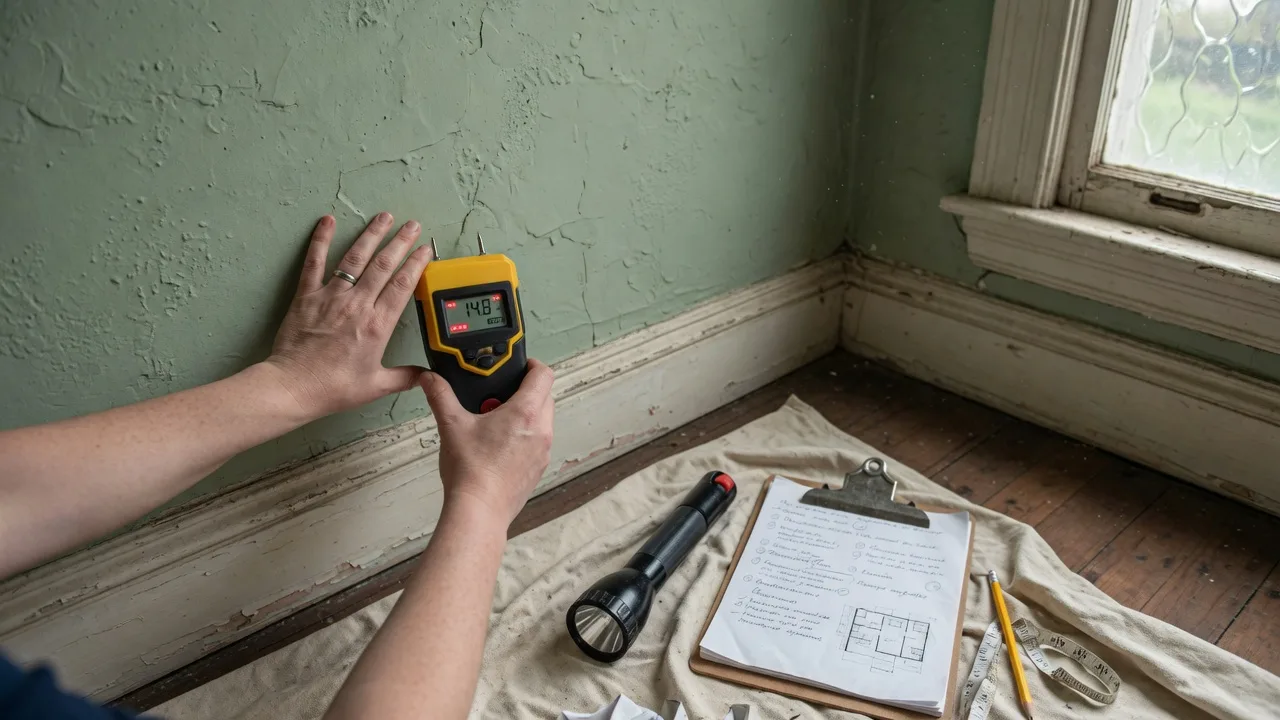
If you have owned your Victoria home for twenty or thirty years, you probably have a good sense of its moods: the window that sticks in damp weather, the corner of the basement that smells after heavy rain, the light switch that hums. You know these things because you live with them. Now imagine a written report, prepared by a professional, that names every one of them in advance, so that you, not a surprised buyer, decide what happens next. That is what a pre-listing home inspection offers.
A pre-listing inspection is exactly what it sounds like: a full home inspection you commission as the seller, before your home goes on the market, and use to your advantage. It is not required in British Columbia. Most sellers never get one. But for downsizers selling a long-held family home, it can be one of the smartest moves you make, and this guide explains when it pays off and when it is simply not worth it.
What a pre-listing inspection actually covers
A professional home inspection is a visual, non-invasive examination of the major systems and components of your home. A qualified inspector in Greater Victoria will look at:
- The roof, gutters, and exterior cladding
- The structure, foundation, and grading around the home
- Electrical systems, including the panel and visible wiring
- Plumbing, water heater, and visible drain and supply lines
- Heating and cooling equipment and ventilation
- Windows, doors, and insulation
- Interior surfaces for signs of water, dampness, or pest activity
An inspection is not a guarantee and it is not a code audit. It is an informed look that tends to surface the same issues buyers' inspectors find later. That predictability is the whole point.
Why sellers order one: the honest case
You find out first
The worst time to learn about a problem is after a buyer's offer is on the table and their inspector flags it. You are suddenly negotiating from behind, with your timeline and your sale at stake. A pre-listing inspection puts the information in your hands months earlier, when you have the freedom to fix, disclose, price, or simply prepare.
You control the narrative
When you have a clean report, you can share it with buyers and answer their questions before they are asked. When the report does note issues, you decide whether to repair them, disclose them honestly, or adjust your price. Either way, the buyer discovers nothing that shocks them, and shock is what kills deals.
It can speed up your sale
In a balanced market, buyers and their realtors value certainty. A pre-listing inspection report, especially one that is less than a year old and accompanied by an honest disclosure statement, lets a buyer waive or shorten their own inspection condition with confidence. For downsizers whose move depends on timing, that certainty can be worth real money.
When a pre-listing inspection is less helpful
It is not always the right call. Consider the trade-offs honestly:
- Unconditional offers were already coming anyway. In a fast seller's market, some buyers waived inspections regardless. That is less common in today's balanced Greater Victoria market, where conditional offers are normal again.
- The home is being sold strictly as is, or to an investor. If the buyer is a renovator who expects problems, your report mainly confirms the discount, and the cost may be better spent elsewhere.
- Extra time before listing. An inspection report ages. If you are still months away from listing, much of the value fades, and serious findings may need re-verification at sale time.
- The price of disclosure. In BC you must disclose known material latent defects, and an inspection report gives you knowledge you did not have before. That is not a reason to skip one, it is a reason to be thoughtful about what you do with the findings, with your realtor guiding you.
- The age of the report. Buyers and lenders like reports under a year old, and often fresher. Time your inspection reasonably close to listing.
The cost of a typical inspection is modest compared with the price of a home, but it is not nothing. The question is whether it buys you certainty and leverage; for most downsizers selling a long-held home, it does.
The pre-listing inspection versus the buyer's inspection
Buyers in Greater Victoria frequently include a home inspection condition in their offer, and that is perfectly healthy in a balanced market. A pre-listing inspection does not replace the buyer's inspection. What it does is reshape how the buyer's inspection is used. When a buyer's inspector starts from a clean pre-listing report, the follow-up tends to be far less adversarial, because the obvious issues are already documented and priced in.
For a fuller picture of how conditions and inspections interact in a BC offer, our guide to the Property Disclosure Statement and our article on deferred maintenance repairs before selling pair well with this one.
What to do with the findings
Once the report is in hand, the work begins, and none of it should be a surprise:
- Sort issues into three piles: safety items that must be addressed, maintenance items worth fixing or pricing in, and cosmetic items that buyers rarely care about at all.
- Fix the cheap things that look expensive. A dripping valve, a cracked outlet plate, a missing downspout extension, these read as neglect in a buyer's eyes and cost almost nothing to correct.
- Get quotes on the big items. If the roof or furnace is nearing end of life, adjust your price or offer a credit. Sellers who price honestly from the start close faster.
- Disclose the rest. Your realtor will help you complete the disclosure statement accurately, because the report has now informed you of what you know.
- Use the report in your marketing. Make it available to buyers, their realtors, and their inspectors. A visible, recent report is a quiet signal that you are a confident, organized seller.
Choosing an inspector in Greater Victoria
An experienced, well-regarded inspector makes all the difference. Look for membership in a recognized industry association, recent experience with homes of your age and type (character homes in Oak Bay and Victoria demand different knowledge than newer Westshore builds), and a sample report so you can see how clearly they write. Your realtor will have worked with local inspectors for years and can point you to several, which also protects you: you never want to use an inspector a buyer could reasonably question.
Frequently asked questions
Is a pre-listing inspection required to sell a home in BC?
No. It is voluntary and completely optional. What is required is that you disclose known material latent defects, which is why any inspection you do order should be followed by honest disclosure with your realtor's guidance.
How much does a pre-listing home inspection cost in Greater Victoria?
Typical fees vary with the size and age of the home and whether extras like sewer scope or thermal imaging are included, but in the Capital Regional District the cost is generally in the low hundreds of dollars, a small fraction of a sale price. Most sellers find it modest relative to the protection it provides.
Can I share a pre-listing inspection report with buyers?
Yes, and doing so is usually an advantage. Buyers can review it with their own inspector and often waive or shorten their own inspection condition. Your realtor will advise on how to present it cleanly alongside the disclosure statement.
What happens if the inspection finds something major before I list?
You have three honest choices: repair it, disclose it and price accordingly, or, in rare cases, reconsider the listing altogether. Every one of those is better than learning about it through a buyer's inspection halfway through a negotiation.
Can the buyer still do their own inspection after I share mine?
Yes, and they often will. A pre-listing report does not remove a buyer's right to conditions you agree to in the contract. What it usually does is make that inspection far more routine, since the significant issues are already on the table.
Not sure whether a pre-listing inspection is the right move for your home?
I have guided Victoria families through hundreds of sales of long-held homes, and I can tell you honestly whether an inspection will help in your case. Let us look at your home's age, condition, and your timeline together before you spend a dollar.
Let's Talk