
What Happens to Your Mortgage When You Sell Your Home in BC

Andrew Holenchuk
Victoria Property Group · eXp Realty
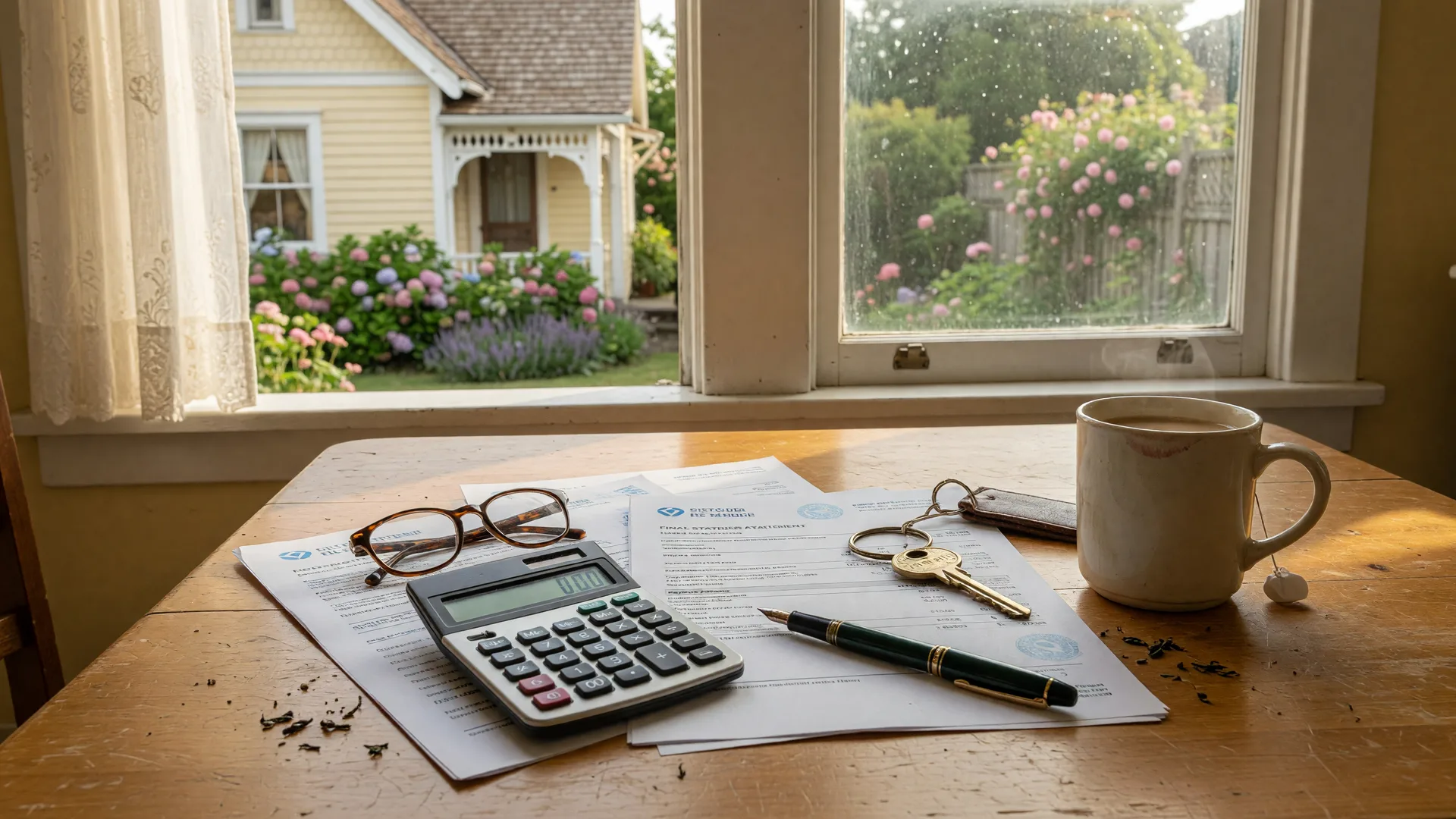
If you still owe money on a mortgage when you sell your home in British Columbia, the mortgage is paid off from the sale proceeds at closing, through your lawyer or notary. It is not something you manage yourself on moving day, but how much it costs to end the mortgage early, and whether you plan to port it to your next home, can change what you walk away with. This guide explains how the payout works, what prepayment penalties and discharge fees can cost, and the questions to ask your lender before you list. It is general information only, not financial or legal advice.
For many downsizers, the mortgage question feels abstract until the sale is underway. You might have owned your home for decades and paid the mortgage off years ago, or you might have bought more recently and still carry a balance. Either way, understanding the mechanics before you sign a listing agreement means no surprises at closing and a clearer picture of your net proceeds.
Do you have to pay off the mortgage when you sell?
In most cases, yes. A mortgage is a loan secured against your home, and the lender registers a charge on the property's title. When you sell, the buyer's title must be free of that charge, so your mortgage is paid out of the sale proceeds before you receive the balance. Your lawyer or notary handles this automatically as part of closing: the buyer's funds come in, your mortgage is discharged, and the remaining proceeds go to you.
The one common exception is when you port the mortgage to a new home, which keeps the loan alive and moves the security from your old property to your new one. Porting is a separate decision, and we cover it in our guide to porting your mortgage when you downsize in Greater Victoria. If you are not porting, the mortgage is paid out at closing.
How the mortgage is paid off at closing
When your sale closes, your lawyer or notary requests a payout statement from your lender. This document states the exact amount required to close the mortgage on a specific date, including the remaining principal, accrued interest, any prepayment penalty, and any applicable fees. Payout statements are typically valid for about 30 days, and the exact figure can change by the day because interest accrues daily, so your lawyer obtains a current one close to the closing date.
At closing, the buyer's funds are used to pay the payout amount, the mortgage is discharged from title, and the net proceeds are transferred to you. This is all coordinated behind the scenes by your legal professional. Your job is to make sure the lender has your current contact information and that your lawyer or notary knows which institution holds the mortgage.
What a mortgage payout statement shows
It helps to know what is on the page before your lawyer reads it to you. A typical payout statement includes:
- The principal balance. What you still owe on the loan itself.
- Accrued interest. Interest that has built up since your last payment, calculated to the payout date.
- Any prepayment penalty. The charge for ending a closed mortgage before its maturity date, explained below.
- Fees. A discharge fee or administrative charge the lender applies to close the file.
The payout statement is the single number that matters at closing, because it is what comes off your sale proceeds. If you want to estimate your net proceeds before you list, you can ask your lender for an estimated payout figure, and your REALTOR can help you model the rest of the sale costs. Our guide to budgeting for closing costs when you downsize in Greater Victoria walks through the full picture.
Prepayment penalties: three months' interest vs. the interest rate differential
This is the part that surprises people. If you have a closed mortgage and you pay it off before the maturity date, your lender charges a prepayment penalty. In Canada, the penalty is calculated one of two ways, and the lender charges whichever is higher, as the Financial Consumer Agency of Canada explains.
- Three months' interest. An amount equal to three months of interest on your outstanding balance. This is the standard method for closed variable-rate mortgages.
- Interest rate differential (IRD). The estimated interest the lender loses because you are ending the loan early and replacing it with a loan at today's rates. If current rates are lower than your contract rate, the IRD can be significantly higher than three months' interest. This is typically the method for closed fixed-rate mortgages, where the penalty is the greater of three months' interest or the IRD.
The exact penalty depends on your mortgage contract, your rate, and how much time is left on your term. Lenders use their own posted rates in the IRD formula, which can make the number higher than you expect. The practical takeaway: before you list, ask your lender for a written estimate of the prepayment penalty on your specific mortgage, and keep in mind that many mortgages allow a generous annual prepayment, which you may be able to use to reduce the balance before the sale.
Discharge fees and the discharge of mortgage
Beyond the prepayment penalty, lenders typically charge a discharge fee to close the mortgage file and release the charge on your title. This is usually a modest administrative fee, but it is part of the payout statement, so it comes out of your proceeds. On the buyer's side, your lawyer or notary registers the discharge with the Land Title Office so the new owner takes title free and clear. It is routine, and your legal professional handles it.
HELOCs and second mortgages
If you have a home equity line of credit (HELOC) or a second mortgage, those are also secured against your home, and they are paid out at closing too, in order of priority. A HELOC that is part of a combined mortgage product is paid out with the primary mortgage. If you have a separate second mortgage, your lawyer coordinates paying it off as well. Before you list, it is worth confirming exactly what is registered against your title, because every secured charge must be cleared before the buyer takes ownership.
What if the sale doesn't cover the mortgage?
In Greater Victoria, most downsizers sell for more than they owe, which is often part of the motivation for the move. But it is possible, especially if you bought recently or borrowed heavily against your equity, for the payout amount to be close to or above the sale price. If the proceeds do not fully cover the mortgage, you are responsible for the shortfall, and you would need to bring money to closing or make arrangements with your lender before the sale completes. This is rare for long-time owners, but it is exactly why it pays to know your payout figure early and to work with a REALTOR who prices the home realistically. Our article on getting your home valued before you downsize explains how to establish a realistic starting number.
Porting instead of paying out
If you are buying your next home in the same period, you may be able to port your mortgage, which means moving the existing loan to the new property and avoiding the prepayment penalty. Porting has its own rules, including how long you have to buy, whether you can increase the amount, and whether the new home qualifies. It is a good option for many downsizers, but it is not always the right call, so it deserves its own careful look. Our guide to porting, increasing, and decreasing your mortgage when you downsize covers the decision in detail.
Selling mortgage-free
If you paid off your mortgage years ago, the process is simpler but still involves a discharge. Your lawyer or notary confirms that no charge remains on title, and if a discharge was never registered after your final payment, they arrange for the lender to release it. This is a common small detail for long-time owners, and it is handled at closing. If you are selling mortgage-free, there is no payout statement and no prepayment penalty, so the full sale proceeds, less selling costs and any taxes, are yours.
Questions to ask your lender before you list
A short phone call with your lender before you list can save you from surprises. Ask for:
- An estimated payout statement for your expected closing date, including any prepayment penalty and fees.
- Your prepayment privilege. How much extra you can pay annually, and whether using it before the sale reduces your penalty.
- Your maturity date. If your term ends soon, it may be cheaper to wait or to align the sale with the renewal.
- Whether porting is available if you plan to buy a next home.
- What documents your lawyer will need to obtain the payout at closing.
Most lenders provide this information over the phone or through your online account. Having it in writing before you commit to a listing date gives you a realistic view of your net proceeds, which is the number that actually funds your next chapter.
Frequently asked questions
Can I sell my home before my mortgage term ends?
Yes. Selling does not require you to wait for the maturity date. You simply pay out the mortgage at closing, and the lender charges a prepayment penalty if your mortgage is closed, based on your contract. Many people sell mid-term and either pay the penalty or port the mortgage to their next home.
Who pays off the mortgage when you sell a house in BC?
Your lawyer or notary pays it off from the sale proceeds at closing. They obtain a payout statement from your lender, use the buyer's funds to discharge the mortgage, and transfer the remaining net proceeds to you.
How much is the penalty for breaking a mortgage to sell?
It depends on your mortgage. For a closed variable-rate mortgage, the penalty is typically three months' interest. For a closed fixed-rate mortgage, it is typically the greater of three months' interest or the interest rate differential. Your lender can give you an exact estimate for your mortgage, and it is worth asking before you list.
Can I avoid the prepayment penalty by porting my mortgage?
Often yes. Porting moves your existing mortgage to your new home instead of paying it out, which can avoid the penalty. It depends on your lender's porting rules, whether you buy within the allowed window, and whether the new home qualifies. Our mortgage porting guide walks through the details.
What happens to my HELOC when I sell?
A HELOC is secured against your home, so it is paid out at closing along with your mortgage, in order of priority. Confirm with your lender exactly what is registered against your title so nothing is missed at closing.
Do I need to tell my REALTOR about my mortgage?
Not for the listing itself, but it helps to share your payout situation so your team can price the home realistically and model your net proceeds. Knowing your payout figure early means no surprises at closing and a clearer budget for your next home.
Wondering how your mortgage fits into your downsize?
I have helped many Greater Victoria homeowners work through the numbers, from mortgage payouts to porting and everything in between, and I work closely with the lenders, notaries, and lawyers who confirm the details. I would be glad to walk through your situation honestly and without pressure. Helping people confidently navigate one of life's biggest housing transitions is what I do every day.
Let's Talk About Andrew Holenchuk
Andrew is Team Leader of Victoria Property Group at eXp Realty and has been helping people buy and sell homes throughout Greater Victoria since 2006. Together with his team, they have facilitated more than $1 billion in real estate sales while helping families navigate downsizing, estate transitions, and housing moves.