
Getting Your Home Valued Before Downsizing: Appraisals, Market Analyses, and Assessments in Greater Victoria

Andrew Holenchuk
Victoria Property Group · eXp Realty
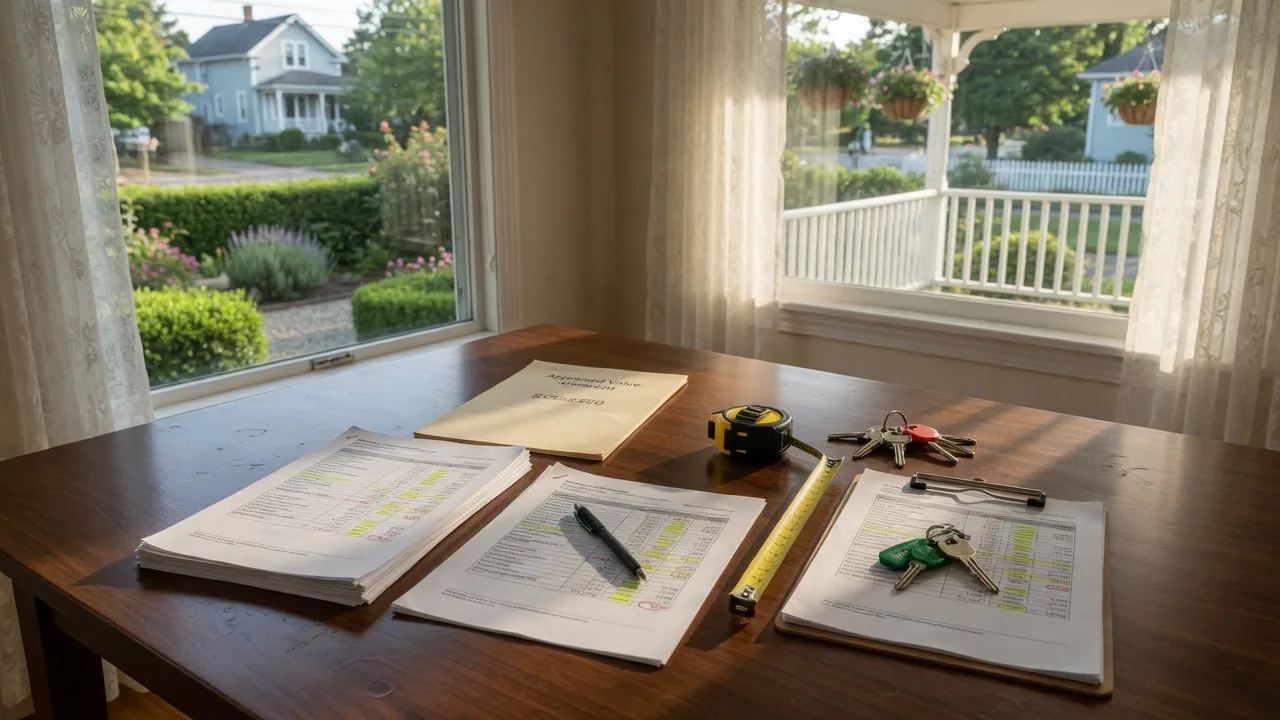
If you are thinking about downsizing, one of the first questions you will ask is simple: what is my home actually worth? The answer shapes everything that follows, from the equity you can unlock to the neighbourhood you can afford next. In Greater Victoria, that question can come back with three different numbers: the assessed value from BC Assessment, a comparative market analysis from a real estate agent, and a formal appraisal from a licensed appraiser.
This guide explains what each one is, when it matters, and how to use them together as you plan a confident housing transition. It is education, not appraisal or legal advice. For a number that affects a sale, a purchase, or an estate, the right professionals will confirm the details that apply to your situation.
Why your home's value matters before you downsize
Your home's value is the starting point for almost every downsizing decision. It tells you how much equity you are working with, which sets a realistic budget for your next home. It helps you weigh whether to sell now or later. It shapes what you can put toward retirement income, renovations in a new place, or support for family. And in the case of an estate or inherited home, it can affect how the property is handled and what beneficiaries receive.
The challenge is that "value" is not one single, fixed number. It depends on why you need it. A bank lending on a purchase, a family settling an estate, and a homeowner planning a budget are all asking slightly different questions. Understanding the difference between the three common valuations saves confusion later.
The three ways a home gets valued in BC
The BC Assessment value
Every January, BC Assessment sends owners a notice of the assessed value of their home as of July 1 of the previous year. This number is used primarily to calculate property taxes. It reflects the estimated market value at that valuation date, but it is not a prediction of what your home will sell for today. Market conditions, renovations, and the condition of the home can all move the sale price well away from the assessment.
For a downsizer, the assessed value is a useful reference point, not a target. Some owners are surprised that their home sells above assessment in a strong market; others are surprised it sells below. Treat it as one data point among several.
The comparative market analysis (CMA)
A comparative market analysis is the valuation a real estate agent prepares when helping you decide on a listing price. It looks at recently sold homes similar to yours, homes currently for sale that you will compete with, and homes that recently expired without selling. It also accounts for your home's condition, updates, lot, and location within its neighbourhood.
The CMA is the most practical valuation for planning a sale, because it is grounded in the current, active market rather than a single fixed date. In Greater Victoria, where different communities from Oak Bay to Langford can behave quite differently, a good CMA is built on local comparables, not a citywide average. That local nuance is exactly what matters when you are trying to understand your specific home.
The formal appraisal
A formal appraisal is a written valuation prepared by a licensed, accredited appraiser. Unlike a CMA, an appraisal follows a defined professional methodology, includes a physical inspection, and results in a signed report with a stated value and the reasoning behind it. It is the valuation that lenders, courts, and some legal processes rely on because it is independent and documented.
You do not usually need an appraisal to sell a home. But you may need one to buy, if your lender requires it. And an appraisal is often requested in situations where an independent, defensible value is important, such as settling an estate, establishing a value for probate, or resolving a dispute.
Which valuation do you need for your situation?
The right valuation depends on what you are trying to accomplish. Here is a practical guide to matching the tool to the decision:
- Planning your budget. Start with a comparative market analysis to understand the range your home could sell for today, then use that range to size your next purchase.
- Selling your home. A CMA drives your listing price and pricing strategy. Your realtor will monitor the market and adjust through the process.
- Buying your next home. Your lender will often order an appraisal to confirm the property supports the mortgage. This is for the home you are buying, not the one you are selling.
- Estate and probate matters. When a home is part of an estate, an independent appraisal is frequently requested to establish value for the estate and for beneficiaries. This connects closely with how probate works in BC.
- Insurance. Insuring a home is about replacement cost, not market value. A rebuilding-cost estimate, not a sale appraisal, is what you and your broker use here.
How the Greater Victoria market shapes values
Greater Victoria is not one market. It is a collection of distinct communities, each with its own mix of buyers, housing types, and pricing. A character home in Oak Bay, a townhome in Saanich, a newer build in Langford, and a condo with a water view in Sidney can all move differently over the same period.
When you are valuing your home, the neighbourhood matters as much as the condition. A home in a walkable, in-demand community may hold its value differently than a similar home in a quieter part of the region. As you downsize, the communities that appeal to you, whether Victoria, Esquimalt, View Royal, Colwood, North Saanich, or the Peninsula, each bring their own market characteristics. This is why a valuation done by someone who knows the local market is worth far more than a citywide estimate.
What an appraiser and a realtor look at
Both an appraiser and a realtor preparing a CMA consider similar core factors, though with different methods and purposes:
- Location, including the neighbourhood, street, views, and proximity to amenities
- Lot size and shape, and the orientation of the home on the lot
- Square footage, number of bedrooms and bathrooms, and layout
- Age of the home and the condition of major systems like the roof, heating, and electrical
- Updates and renovations, and whether they add lasting value or simply match the neighbourhood
- Recent sale prices of comparable homes in your immediate area
- Current listings you are competing against, and how long homes are taking to sell
A common misunderstanding is that every renovation raises value dollar for dollar. In practice, updates tend to add the most value when they bring a home in line with its neighbourhood, and the least when they are personal in style or exceed what the local market will pay for. Value is about what a buyer will pay, not what was spent.
Common mistakes about home value
- Confusing assessment with market value. The assessment is a tax tool with a fixed date, not a live sale prediction.
- Adding up renovations and assuming you get it all back. Value depends on the market, not your receipts.
- Using an old number. A value from last year may no longer reflect today's conditions, especially in a shifting market.
- Comparing to the wrong homes. Averages across the city hide the big differences between neighbourhoods.
- Waiting to understand value until you list. Knowing your range early helps you plan the whole transition with confidence.
Using your valuation to plan the move
Once you understand the range of your home's value, the numbers start working together. Your sale range becomes the equity available to fund your next home. That equity, combined with your ongoing costs, helps you choose between a condo, a townhome, or a smaller house, and between communities across Greater Victoria.
A clear value also gives you a firmer footing for decisions about timing, renovations before listing, and how to sequence selling and buying. When you know roughly what your home can bring, you can price realistically, avoid overpricing that stalls the sale, and move through the transition on your own timeline rather than reacting to the market.
If the home is part of an estate, understanding value early is just as important. It informs how the family approaches clearing, repairs, and staging, and sets expectations for beneficiaries. For a deeper look at preparing an inherited property, our guide to preparing an estate home for sale walks through the full process.
Frequently asked questions
Is the assessed value the same as market value?
No. The assessed value reflects estimated market value as of a specific date for property tax purposes. The actual market value on the day you sell can be higher or lower depending on conditions, condition of the home, and local demand. Use the assessment as a reference, not a target.
Do I need a formal appraisal to sell my home?
Usually not. To sell, a comparative market analysis from an experienced local realtor is the practical valuation that drives your pricing. A formal appraisal is more commonly needed when you are buying and your lender requires it, or in estate and legal situations where an independent documented value is needed.
When is an appraisal needed for probate or an estate in BC?
When a home is part of an estate, an independent valuation is often requested to establish the value for the estate and its beneficiaries. The specific requirement depends on the situation and the parties involved. For estate homes, an appraisal is one of the steps in understanding the property's worth before it is prepared and sold.
How long does a home valuation stay valid?
A CMA reflects a moment in time and can change quickly in an active market. A formal appraisal is generally considered valid for a limited period, often a few months. For budgeting purposes, revisit your range as the market moves, especially if your plans stretch across several months.
Will renovating increase my appraisal?
Some updates add value and some do not. The gains are greatest when updates bring a home in line with its neighbourhood and are broadly appealing rather than personal in style. Before investing in renovations, it is worth understanding what the local market actually pays for them.
How much does a home appraisal cost in Greater Victoria?
The cost of a formal appraisal varies with the size and complexity of the property and the purpose of the report. If an appraisal is required for a mortgage or an estate, your lender or the professionals involved will usually advise on the process and fees.
Want an honest sense of what your home is worth today?
I can put together a no-obligation comparative market analysis for your Greater Victoria home and talk through what it means for your downsizing plan. No pressure, just clear local insight.
Let's Talk