How Estate Sales Work in Greater Victoria: A Step-by-Step Guide for Families

Andrew Holenchuk
Victoria Property Group · eXp Realty
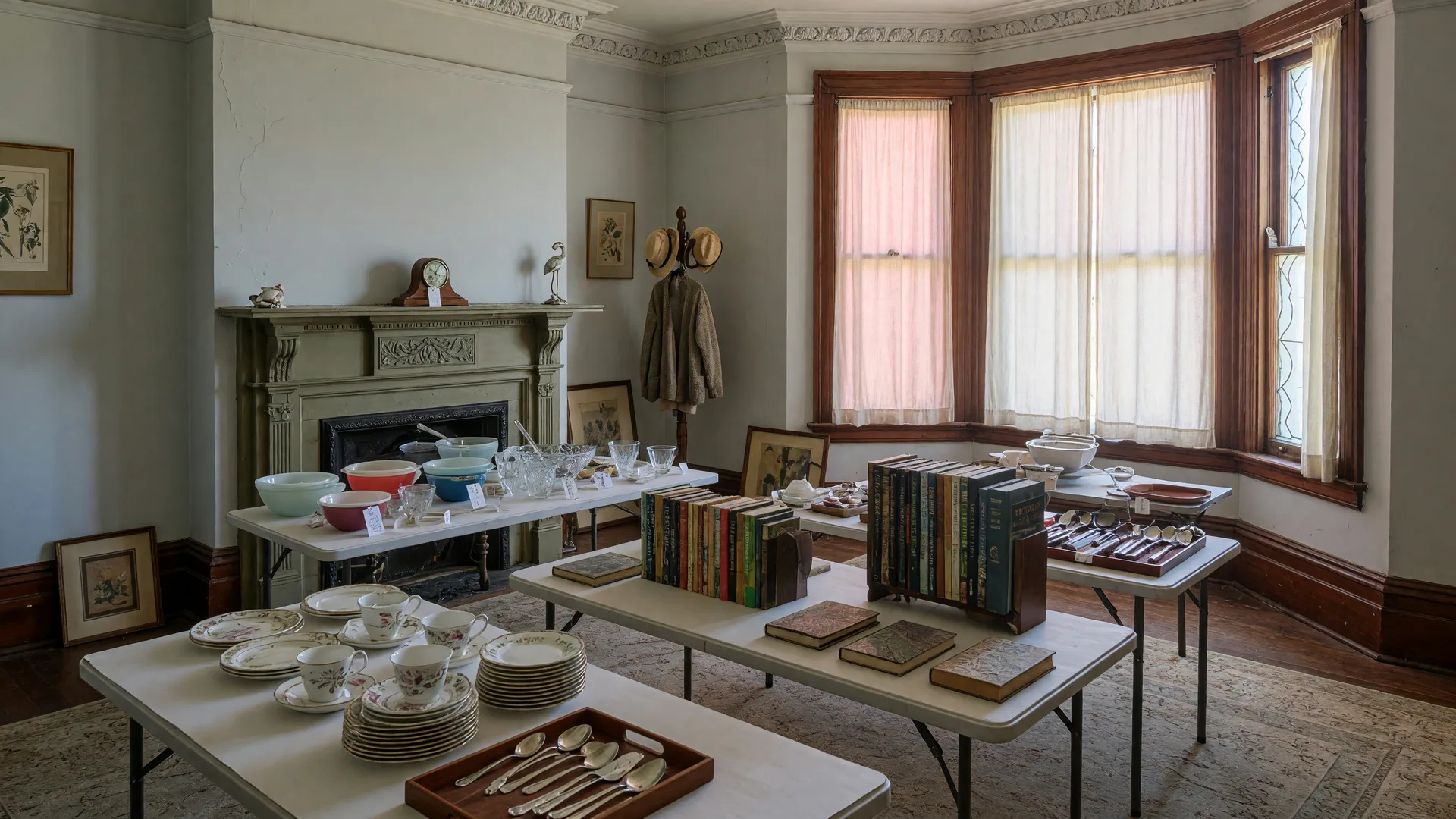
An estate sale is a professionally managed sale of a home's entire contents, and it is one of the most efficient ways to turn a lifetime of belongings into proceeds, donations, and a cleared house. In Greater Victoria, estate sales are a common first step before a family home is listed for sale, whether the move follows a death, a downsizing decision, or a parent's transition into care. This guide walks through exactly how an estate sale works, what it costs, what sells, and how to prepare, from the first phone call to the day the house sits empty.
The process is far less mysterious than it sounds. A professional company comes in, sorts and prices everything, runs a well-advertised sale over a few days, removes what is left, and hands you a cleared home and a settlement. The details are where the value lives, and those are worth understanding before you sign a contract.
What an estate sale is, and what it isn't
An estate sale is not a garage sale. A good estate sale company takes over the entire process: pricing at current market value, organizing and displaying the contents, advertising to serious buyers, staffing the sale, and handling every transaction. You receive a percentage of the proceeds, and the company earns its commission for doing the heavy work well.
Estate sales are commonly used after a death, before a downsizing move, or when a parent transitions into assisted living or residential care. They differ from consignment (where a shop sells items over time and you retrieve what does not move) and from auction (where single high-value items are bid on individually). When the whole home's contents need to go at once, an estate sale is usually the fastest and most orderly route. Our comparison of donation, consignment, and estate sale options explains how the channels differ in detail.
The estate sale process, step by step
- The first call and walkthrough. You contact a company, describe the home and its contents, and they visit for a free in-home assessment. They look at what you have, how much there is, and how the sale should be structured. This is also your chance to interview them: ask about experience, commission, marketing, and how they handle unsold items on the same visit.
- The proposal and contract. The company sends a written proposal with the fee structure and the sale plan. In Greater Victoria, most companies charge a commission on gross sale proceeds rather than an upfront fee, commonly in the 30% to 50% range depending on the estate's value and the labour involved. Read the contract for what the commission covers, whether there is a minimum, and what happens to unsold items.
- Protect what matters first. Before anything is priced, remove the irreplaceable: legal documents, wills, deeds, tax records, insurance papers, family photos, letters, medications, and anything hazardous. Cash and jewellery should be decided on in advance. The company handles the sale; you handle what only you can judge, and it is much easier before strangers walk through the house.
- Sorting, pricing, and display. The company sorts the contents, cleans and displays them, researches values, and price-tags every item at current market value. For fine art, antiques, coins, or jewellery, they may bring in outside specialists for appraisals. A well-prepared sale looks like a small, curated shop, not a pile of boxes.
- Advertising. Established companies have buyer lists, social media followings, and relationships with collectors, plus local signage. Ask how they market a sale in Victoria or Sidney versus a home in Langford or Sooke, because local buyers are the engine of a successful sale.
- The sale days. Most sales run over two to three days with discounted pricing on later days. The company staffs the sale, handles payment, and keeps the flow organized. You do not usually need to be present, and most families find it easier to be out of the house during the sale.
- After the sale: removal and cleanup. When the sale ends, the company removes what is left, typically arranging consignment of quality pieces to dealers, donating usable goods to local charities, and recycling or disposing of the rest. Many contracts include post-sale cleanup so the home is left cleared and ready for showing. This is the step to confirm in writing before you hire anyone.
- Settlement. Your proceeds, less commission and any agreed costs, are paid out, usually within a few weeks. The home is now a vacant, contents-free property, which changes everything about how it shows to buyers.
For executors going through this after a loved one's death, the estate settlement side of the process matters too. Our guides to executor duties in BC and the probate timeline for selling a family home walk through how the contents and the house fit into the estate as a whole.
When to hold the sale: before or after the house is listed
In almost every case, the estate sale happens before the home goes on the market. A cleared, clean house shows dramatically better than a furnished one, buyers can imagine their own furniture in the space, and there are no scheduling conflicts between viewings and sale days. An estate sale is what clears the way to sell the house.
There are exceptions. If the new owners have already bought the house as-is and simply want the contents gone, the sale can happen after closing. If probate is still underway and listing authority is weeks away, holding the sale during that waiting period puts the family productively ahead. The practical move is to plan the sale and the listing together with your REALTOR®, so the calendar works instead of colliding. Our guide to preparing an estate or inherited home for sale covers the full sequence.
What it costs: commission structures in Greater Victoria
The overwhelming majority of estate sale companies in the region work on commission, not flat upfront fees. Industry-standard rates run roughly 30% to 50% of the gross sale proceeds, with messier, lower-value estates at the higher end of the range and large, high-value estates at the lower end. Some companies use a sliding scale, and a few quote a flat project fee for very large or very small jobs.
Three questions pin down the real cost before you commit:
- Is there any upfront fee, and is it refundable if the sale does not proceed?
- Is the commission based on gross proceeds, and does it include cleanup and removal?
- What happens to unsold items, and who pays for their disposal or donation transport?
On the tax side, the proceeds from selling personal belongings can have tax implications depending on your situation and whether you are dealing with an estate. That is general information, not tax advice: confirm the treatment of estate sale proceeds with your accountant or tax professional, especially while an estate is being administered.
What sells, and what doesn't
A realistic read on the contents saves a lot of disappointment. In a typical Victoria family home, the items that genuinely sell include quality furniture, kitchenware and china, books in organized categories, tools, garden equipment, collectibles, art, silver, and lighting. The items that rarely sell and usually head to donation or disposal include mattresses and box springs, large exercise equipment, worn bedding and clothing, opened food and toiletries, old electronics and TVs, and many large appliances.
Sentiment and value are different things. The china that held decades of family dinners may be worth a modest amount even though it is priceless to you, and the worn recliner that cost a fortune in 2005 may have little resale value. An honest estate sale company will tell you what to expect before you plan around proceeds, and that honesty is exactly what you want in the first walkthrough.
Online and hybrid estate sales
Many Greater Victoria companies now run online auctions alongside or instead of in-home sales, using platforms such as MaxSold and similar services. Online auctions reach a far wider buyer pool, work well for higher-value items, and avoid the disruption of strangers moving through the house. The trade-off is that online buyers bid without seeing the item in person, so returns and pickup logistics need to be handled cleanly.
The strongest approach is often hybrid: an in-home sale for the everyday volume, with choice pieces photographed and listed online to reach collectors outside the region. When you interview companies, ask which model they recommend for a home like yours in the Victoria area, and why.
Choosing an estate sale company in Greater Victoria
Because the company handles thousands of small decisions, the right one makes the experience calm and the wrong one adds stress. Ask for references from recent sales, review how they market in your municipality, and confirm they carry insurance. A company that regularly works in Oak Bay, Victoria, Saanich, Sidney, or Langford will know local buyers, local charities, and how a home of your style sells. Our guide to choosing the right professionals for your downsizing move includes the specific questions to ask before you hire anyone.
Frequently asked questions
How much will I make from an estate sale?
It depends entirely on the contents. The company will give you a realistic estimate after the walkthrough. Expect everyday household goods to sell at modest prices, with real value concentrated in furniture, art, antiques, tools, and collectibles. The goal is usually a cleared home with reasonable proceeds, not a windfall.
What is the typical commission for an estate sale company?
Most companies in the region charge a commission on gross sale proceeds rather than an upfront fee, typically 30% to 50% depending on the estate's value and the labour required. Confirm the percentage, any minimums, and what the commission includes before you sign.
What happens to items that don't sell?
The company removes them after the sale, typically arranging consignment for quality pieces, donation of usable goods to local charities, and disposal of the rest. Post-sale cleanup so the home is left empty is standard, but confirm it is in your contract.
Do I need to be home during the estate sale?
No, and most families prefer to be out. The company staffs the sale, handles payments, and manages the flow. Remove documents, photos, medications, valuables, and anything irreplaceable before the sale begins, and you can step away with confidence.
Should the estate sale happen before or after the house is listed?
Almost always before. A cleared home shows better, schedules never collide with viewings, and the empty house photographs as a blank canvas for buyers. When probate or timing delays the listing, the sale can productively happen during the wait.
Are estate sale proceeds taxable?
It depends on your situation and whether the sale is part of an estate administration. This is general information, not tax advice: talk to your accountant or tax professional about how sale proceeds are treated in your specific circumstances.
Timing the sale and the listing together makes everything smoother.
I've coordinated estate sales and home listings for many Greater Victoria families, and I can introduce you to companies we trust in Victoria, Saanich, Oak Bay, Sidney, Langford, and across the region. Reach out any time and we'll plan the sequence together.
Reach Out AnytimeThis article is general information, not tax or legal advice. Commission structures, sale formats, and tax treatment vary by company and by situation. Confirm the terms of any estate sale contract with the company and consult qualified professionals for your specific circumstances.