
Tax Credits for Home Accessibility Renovations in BC: What Seniors and Families Should Know

Andrew Holenchuk
Victoria Property Group · eXp Realty
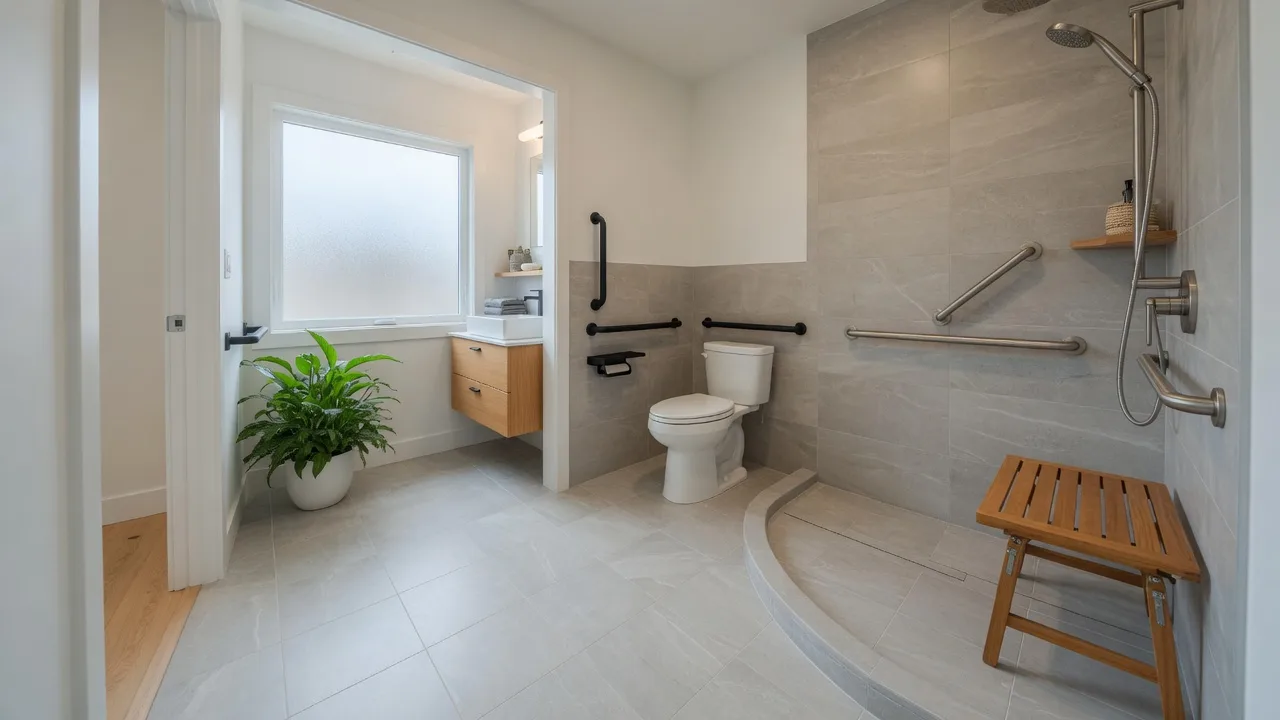
The decision to stay in a family home or move to a smaller one often comes down to one question: can this home let me live safely and comfortably as I age? For many Greater Victoria homeowners, the answer turns on a handful of renovations, a curbless shower, a stair lift, grab bars, a ramp, widened doorways. Because those upgrades also reduce the risk of the most common housing crisis for seniors, a fall, both the province and the federal government offer tax help for them.
This guide explains the two main credits in plain language: the BC Home Renovation Tax Credit for Seniors and Persons with Disabilities, and the federal Home Accessibility Tax Credit. You will learn who qualifies, what expenses count, how much each credit is worth, and how the two fit together. It is general information to help you plan, not tax advice; the details on your return can change, so confirm the current rules with the BC government, the Canada Revenue Agency, or a qualified tax professional before you claim.
Where accessibility fits into a downsizing plan
It is worth pausing on why these credits matter to downsizers specifically. A housing transition usually takes one of two shapes. Either you sell the family home and move into a smaller, more accessible property, a condo or townhome in Victoria, Saanich, Sidney, or Langford, or you stay in the family home and make it work for the years ahead, which is what "aging in place" means in practice.
Both paths involve accessibility spending. A new condo might need a walk-in shower and grab bars installed before you move in. A family home might need a ramp, a stair lift, or a main-floor bathroom. The credits in this article apply to both situations, which makes them a genuinely practical part of the financial picture for almost every housing transition.
The BC Home Renovation Tax Credit for Seniors and Persons with Disabilities
British Columbia offers a refundable credit worth 10% of your eligible renovation expenses, up to a maximum credit of $1,000 per year, based on up to $10,000 of qualifying costs. Because it is refundable, you receive the full benefit even if you owe no BC income tax, which makes it valuable to retirees on fixed incomes.
Who qualifies:
- You must be a resident of BC on the last day of the tax year, and,
- Be 65 or older at the end of the tax year, or be eligible for the federal Disability Tax Credit, or be a family member who lives with someone who qualifies.
Notably, the credit is available to both owners and renters of their principal residence in BC, and there is no minimum spending threshold and no lifetime limit, so you can claim again in future years.
What counts as an eligible expense is broad and practical. It includes wheelchair ramps, stair lifts, grab bars and handrails, walk-in tubs and curbless (wheel-in) showers, widened doorways, lowered counters and cupboards, non-slip flooring, and lever-style door handles. The work can be done by a contractor or by you yourself; materials and fixtures generally qualify either way. You claim the credit on your BC income tax return.
The federal Home Accessibility Tax Credit
On the federal side, the Home Accessibility Tax Credit (HATC) is a non-refundable credit equal to the lowest federal marginal tax rate applied to up to $20,000 of eligible expenses per year. At the 14% rate in effect for 2026, that works out to a maximum credit of about $2,800. Because it is non-refundable, it reduces federal tax you otherwise owe but does not produce a refund on its own.
Who qualifies:
- A "qualifying individual" who is 65 or older at the end of the tax year, or who is eligible for the Disability Tax Credit at any time in the year.
- A spouse, common-law partner, or supporting relative who lives with the qualifying individual and owns the principal residence may also claim.
- The home must be owned, so renters generally do not qualify for this particular federal credit, unlike the BC credit.
- The $20,000 limit is shared per eligible dwelling, so two qualifying individuals in the same home cannot each claim the full amount.
The eligible expenses are similar in spirit to the BC list: permanent renovations that improve accessibility or reduce the risk of injury, including grab bars, ramps, stair and wheelchair lifts, walk-in tubs, wheel-in showers, widened doorways and hallways, lowered counters, non-slip flooring, and lever handles. The work must be performed and paid for in the tax year you claim it.
One change to note for 2026 and later: the federal rules were amended so an expense claimed under the Medical Expense Tax Credit can no longer also be claimed under the Home Accessibility Tax Credit. This is exactly the kind of detail a tax professional can help you navigate, because the two credits cover related but different territory.
How the two credits work together
The BC credit and the federal credit are separate programs claimed on separate returns, which means a qualifying renovation can draw on both. A common example: a BC senior spends $10,000 on a curbless shower, grab bars, and non-slip flooring. That could support a $1,000 BC credit, and the same $10,000 of expenses could also be claimed under the federal credit, since each expense limit is much higher than the typical accessibility budget.
The cautious way to approach it: keep your receipts, note the date and nature of each expense and who did the work, photograph the "before" and "after," and confirm with a qualified preparer that each expense is claimed correctly on each return. The rules change from year to year, and the interaction with the Medical Expense Tax Credit in particular has recently tightened.
What this means for your decision: stay or move
For a homeowner weighing whether to stay in a family home, the credits change the math of aging in place. A $10,000 accessibility upgrade has a real net cost after the combined provincial and federal benefit, which can make staying workable for people who assumed a move was financially necessary. That is a meaningful planning insight, and it is one of the reasons a thoughtful comparison of "stay and renovate" versus "sell and move" usually produces a better decision than either option considered alone.
For the moving path, the credits offset the cost of making a new condo or townhome safe before you settle in, and they apply even when the purchase itself is through a strata. As always, renovation rules in shared buildings can have their own requirements, and our practical guide to choosing professionals for your downsizing move has tips for vetting contractors and trades before you commit.
Accessibility work is also one of the most safety-focused investments a home can receive. If you are exploring modifications in more depth, our guide to aging in place home modifications walks through ramps, showers, lighting, and other changes room by room, and our article on home safety and fall prevention explains why these upgrades matter so much for peace of mind.
Practical steps to prepare for a claim
- Decide what you need before you spend. A short, honest review of mobility and safety needs, with your family or an occupational therapist, prevents impulse spending on things you will not use.
- Get written quotes from at least two contractors. Ask for itemized invoices that describe each product and the labour, so the expenses are easy to map to the credit rules.
- Keep every receipt and invoice in one place. A dedicated folder, paper or digital, makes tax season simple and gives you a record if the Canada Revenue Agency or BC asks.
- Note the dates. Expenses must be paid in the tax year you claim them, so plan the work and the payment timing deliberately.
- Ask a qualified professional. A tax preparer familiar with seniors' credits, or BC's free community volunteer tax program, can confirm how the provincial and federal credits apply to your situation.
- Watch for changes. Credit amounts, rates, and eligibility details can shift from year to year. Verify the current rules before you rely on them in your plan.
Frequently asked questions
Can I claim both the BC credit and the federal credit for the same renovation?
Yes, they are separate credits claimed on separate returns: the BC Home Renovation Tax Credit on your provincial return and the federal Home Accessibility Tax Credit on your federal return. The same eligible expenses can support both, within each program's annual limits. However, the federal rules changed for 2026 so that an expense claimed under the Medical Expense Tax Credit cannot also be claimed under the Home Accessibility Tax Credit, so confirm the interaction with a tax professional.
How much is the BC seniors' renovation tax credit?
The BC credit is 10% of eligible expenses, up to a maximum credit of $1,000 per year, based on up to $10,000 of qualifying costs. It is refundable, so you receive it even if you owe no BC tax, and there is no lifetime maximum, meaning you can claim again in future years if you do more qualifying work.
Who qualifies for the BC Home Renovation Tax Credit?
You must be a BC resident on the last day of the tax year and either be 65 or older at year-end, be eligible for the federal Disability Tax Credit, or be a family member living with someone who qualifies. Both owners and renters of a principal residence can claim it.
Does the federal Home Accessibility Tax Credit cover renters?
Generally no. The federal credit applies to a principal residence owned by the qualifying individual or a spouse, partner, or supporting relative who lives with them. Renters may still benefit from the BC credit, which is available to renters as well as owners.
What renovations are eligible for these tax credits?
The eligible work is aimed at access, mobility, and reducing the risk of harm: wheelchair ramps, stair lifts and elevators, grab bars and handrails, walk-in tubs, wheel-in or curbless showers, widened doorways and hallways, lowered counters and cupboards, non-slip flooring, and lever-style door handles. Work can be done by a contractor or yourself in many cases.
Is the tax credit the same as a grant I apply for before renovating?
No. These are tax credits claimed on your return after the work is done and paid for, not upfront grants. You pay for the renovation, keep the receipts, and reduce your tax bill when you file. The practical advice is the same either way: plan the work, get itemized invoices, and keep good records.
Trying to decide between renovating and moving?
The right answer depends on your home, your health, your finances, and what you want the next years to look like. I'd be glad to help you compare the cost of staying and renovating with the cost of transitioning to a smaller home. Helping people confidently navigate one of life's biggest housing transitions is what I do every day across Greater Victoria.
Let's Talk About Andrew Holenchuk
Andrew is Team Leader of Victoria Property Group at eXp Realty and has been helping people buy and sell homes throughout Greater Victoria since 2006. Together with his team, they have facilitated more than $1 billion in real estate sales while helping families navigate downsizing, estate transitions, and housing moves. This article is general information only and not a substitute for professional tax, legal, or real estate advice for your specific situation.