
Home Safety Assessments and Fall Prevention for Seniors in Greater Victoria

Andrew Holenchuk
Victoria Property Group · eXp Realty
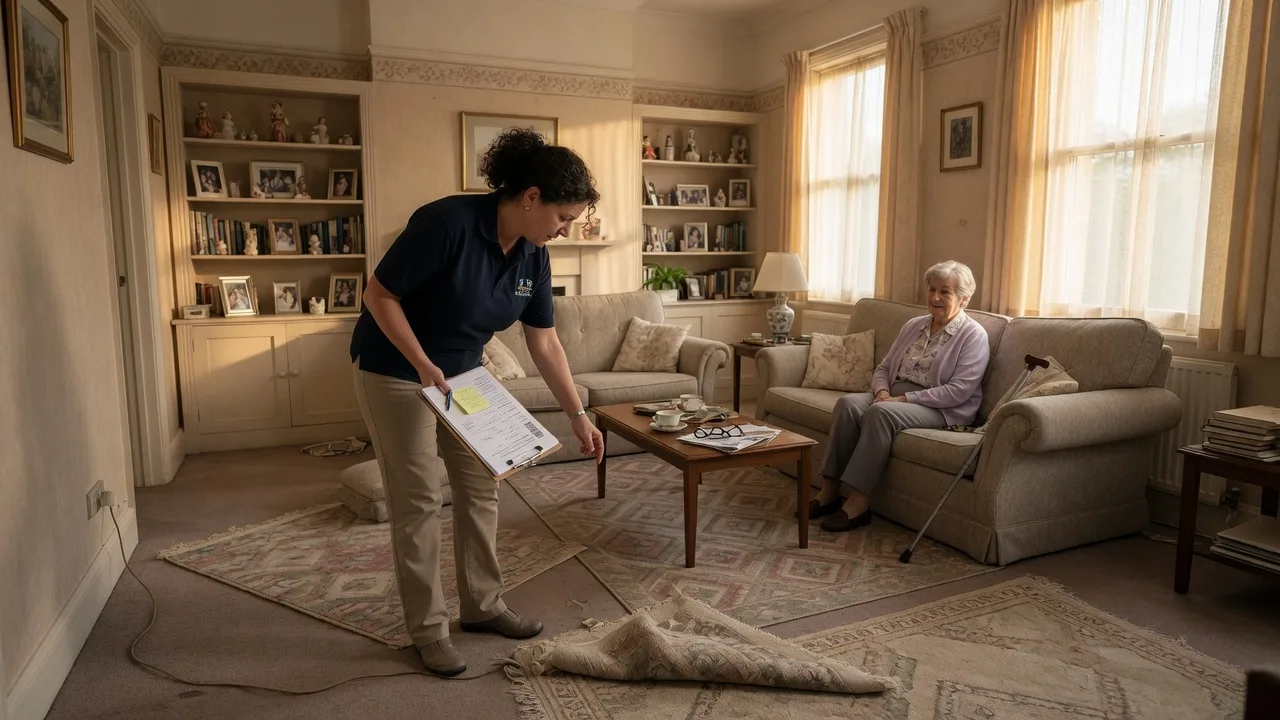
Falls are the leading cause of injury among seniors in Canada, and the majority of falls happen at home. For families in Greater Victoria who are helping aging parents age in place, or for seniors wondering whether their current home is still safe, a home safety assessment is one of the most practical and affordable steps you can take. It is also one of the most overlooked. Many homeowners wait until a fall happens before making changes, when a simple assessment could have prevented the injury entirely.
This guide covers what a home safety assessment involves, the most common fall hazards in Greater Victoria homes, affordable upgrades that make a real difference, and how to know when your home may no longer be safe regardless of modifications. Whether you live in a heritage home in Oak Bay, a mid-century bungalow in Saanich, a townhouse in Langford, or a condo in downtown Victoria, the principles of home safety apply to every type of home.
Why home safety matters for aging in place
The decision to stay in your home as you age depends on more than just wanting to stay. It depends on whether your home can be made safe enough to prevent the most common and serious risk: falling. According to the Public Health Agency of Canada, one in three seniors aged 65 and older will experience at least one fall each year. Among those who fall, 20 to 30 per cent suffer injuries that reduce mobility and independence. Hip fractures, head injuries, and the fear of falling again all accelerate the need for higher levels of care.
The good news is that most falls are preventable. The even better news is that the modifications that prevent falls are often inexpensive and straightforward. A home safety assessment identifies the specific risks in your home and gives you a prioritized list of fixes, from simple adjustments to more significant renovations.
What is a home safety assessment?
A home safety assessment is a systematic walk-through of your home by a trained professional who identifies fall hazards, tripping risks, and safety gaps. The assessor looks at every room, every transition between rooms, and every pathway you use daily. They consider your mobility, your vision, your balance, and the specific ways you use each space.
In Greater Victoria, home safety assessments are available through several channels:
- Occupational therapists (OTs) through Island Health can provide a clinical home safety assessment as part of Home and Community Care. A referral from your doctor may be required, but the assessment is publicly funded for eligible seniors.
- Private occupational therapists offer comprehensive assessments for a fee, typically $200 to $500 depending on the scope. This can be faster than the public system and may include a written report with specific recommendations.
- Better at Home programs through United Way and local community organizations offer safety checks as part of their services. These are typically less clinical than an OT assessment but still valuable for identifying common hazards.
- Family members can perform a basic safety walk-through using checklists available from the Public Health Agency of Canada, the BC Injury Research and Prevention Unit, and the Canadian Safety Council. While not a substitute for a professional assessment, a family-led check is a good starting point.
The most common fall hazards in Greater Victoria homes
Every home is different, but certain hazards appear in nearly every safety assessment. Here are the most common risks I see when helping clients prepare their homes for the next chapter:
Stairs and steps
Stairs are the single most dangerous area in most homes. The risks include:
- Missing or loose handrails. Every staircase should have a sturdy handrail on both sides, extending the full length of the stairs. A single handrail on one side is not enough for someone with balance challenges.
- Uneven or worn treads. Older homes, especially heritage homes in Victoria and Oak Bay, often have stairs that are slightly uneven in height or depth. This is a tripping hazard even for people with good vision.
- Poor lighting. Stairwells are often dim. A motion-activated light at the top and bottom of the stairs is an inexpensive fix that significantly improves safety.
- Clutter on stairs. Shoes, mail, laundry, and other items left on stairs are a common cause of falls. Keeping stairs clear is a simple but non-negotiable safety rule.
- No visual contrast on the edge of steps. Adding non-slip treads or brightly coloured tape to the edge of each step makes the transition between steps more visible, especially for seniors with declining depth perception.
Bathrooms
Bathrooms combine slippery surfaces, hard fixtures, and the need to move in confined spaces. The most common bathroom hazards include:
- Slippery tub and shower floors. Non-slip adhesive strips or a rubber mat are essential. Better yet, consider replacing a tub with a walk-in shower or curbless shower if you are planning a renovation.
- Lack of grab bars. Grab bars near the toilet and in the shower or tub area provide critical support. Suction-cup grab bars are not reliable. Professionally installed grab bars anchored into wall studs are the only safe option.
- Low toilet height. A toilet that is too low makes sitting down and standing up difficult. A raised toilet seat or a comfort-height toilet reduces strain and fall risk.
- No bath mat or small bath mat. A large, non-slip bath mat that covers most of the bathroom floor outside the shower or tub is safer than a small mat that can slide or flip.
Living areas and bedrooms
- Loose area rugs. This is the number one tripping hazard in most homes. Rugs that are not secured to the floor, have curled edges, or sit on top of carpet are a significant risk. The safest option is to remove loose rugs entirely. If you want to keep them, use double-sided carpet tape or a non-slip rug pad, and ensure the edges lie flat.
- Cords and cables. Extension cords, phone chargers, lamp cords, and cable TV wires running across pathways are easy to trip over. Tuck cords along baseboards, use cord covers, or hire an electrician to add outlets where you need them.
- Low furniture. Coffee tables, ottomans, and magazine racks that sit at shin height are a tripping hazard, especially in a room where you walk in dim light. Consider rearranging the room to create clear walking paths.
- Cluttered pathways. Books, shoes, bags, pet toys, and other items that accumulate on the floor increase fall risk. A clear path at least 36 inches wide through every room is the goal.
Kitchens
- Reaching for high or low items. Storing frequently used items on high shelves or in low cabinets forces you to reach, stretch, and bend. Relocating everyday items to waist-level cabinets reduces fall risk.
- Slippery floors. Spills in the kitchen happen. Using non-slip mats in front of the sink and stove, and cleaning up spills immediately, are simple habits that prevent falls.
- Poor lighting over work areas. Under-cabinet lighting in the kitchen is a relatively inexpensive upgrade that makes a significant difference for seniors with declining vision.
Entryways and outdoor areas
- Uneven walkways and steps. Cracks in concrete, loose paving stones, and raised edges on walkways are easy to miss but easy to trip over. Repairing or replacing these surfaces is an important safety upgrade.
- Lack of handrails at exterior steps. Every exterior staircase, including the front steps, should have a sturdy handrail. Many older Victoria homes were built without them.
- Poor exterior lighting. Motion-activated lights at the front door, back door, and along pathways make a significant difference. Solar-powered path lights are an affordable option for garden paths.
- Slippery surfaces in wet weather. Greater Victoria's rainy season means that decks, steps, and walkways are often wet. Non-slip paint or adhesive strips on exterior steps and decks reduce the risk significantly.
Affordable safety upgrades that make a difference
You do not need a full home renovation to dramatically improve safety. Here are some of the most effective and affordable upgrades:
- Grab bars ($30 to $150 each plus installation): Install in the bathroom near the toilet and in the shower or tub. Use a professional installer to ensure they are anchored into studs.
- Handrails ($50 to $200 plus installation): Add a second handrail to any staircase that has only one. Ensure the handrail runs the full length of the stairs and is securely mounted.
- Non-slip treads and strips ($10 to $40 per set): Apply to stairs, both indoor and outdoor. Replace them annually or when they show wear.
- Motion-activated night lights ($10 to $30 each): Place in hallways, bathrooms, and stairwells. They turn on automatically when you get up at night, reducing the need to turn on bright lights.
- Raised toilet seat or comfort-height toilet ($40 to $300): A simple raised toilet seat can be installed in minutes. A comfort-height toilet is a more permanent solution.
- Non-slip bath mat ($20 to $60): Choose a large mat that covers most of the bathroom floor outside the tub or shower, with a non-slip rubber backing.
- Cord covers and cable management ($10 to $30): Bundle and secure cords along baseboards to keep them out of walking paths.
- Under-cabinet lighting ($30 to $150 per section): Battery-operated LED strip lights are affordable and easy to install in the kitchen.
- Exterior motion lights ($20 to $80 each): Simple to install and dramatically improve safety when entering or leaving the home at night.
If you are planning to sell your home as part of a downsizing move, these upgrades also improve your home's appeal to buyers. A home that feels safe and well-maintained attracts more interest and sells for a better price.
When modifications are not enough
For some seniors, no amount of home modification can make the current home safe enough. This is especially true for:
- Homes with stairs that cannot be avoided. If the only entrance is up a flight of steps, or the bedroom and bathroom are on different floors, and you cannot install a stairlift or elevator, the home may not be safe for aging in place.
- Homes with narrow doorways and hallways. If you use a walker or wheelchair, or anticipate needing one in the future, a home with narrow doorways (less than 32 inches) and tight turns may not be accessible regardless of modifications.
- Homes in remote locations. If you live in Metchosin, Highlands, Shawnigan Lake, or another rural area, proximity to emergency services matters. A fall that results in a long wait for paramedics is a more serious situation than the same fall in a downtown Victoria condo.
- Homes with significant structural issues. An older home with foundation problems, an unsafe roof, or aging electrical systems may require more investment than is practical for a senior who is also considering downsizing.
Recognizing that your current home cannot be made safe is not a failure. It is a realistic assessment that allows you to make a proactive decision about your housing transition, rather than waiting for a crisis to force the move.
How a home safety assessment connects to downsizing
When I meet with clients who are considering downsizing, one of the first questions I ask is about how their current home feels. Are they comfortable moving through it? Do they worry about the stairs? Have they had any close calls? The answers to these questions often tell me more about whether a home is still working for someone than any spreadsheet of costs and benefits.
A home safety assessment is a practical tool that answers those questions objectively. It gives you a clear picture of what needs to change and what it will cost. From there, you can compare the cost of making your current home safe against the cost and benefits of moving to a home that is already accessible and safe. That comparison is one of the most important calculations you can make when deciding whether to age in place or downsize.
Wondering if your home is still safe for your next chapter?
I help families in Victoria, Saanich, Oak Bay, Langford, Sidney, and across Greater Victoria evaluate whether their current home is working for them or whether it is time to start planning a move. A candid conversation about your home, your safety, and your options can bring clarity and confidence.
Book a Private ConsultationFrequently asked questions
How do I get a home safety assessment in Greater Victoria?
You can request an occupational therapy assessment through Island Health's Home and Community Care by calling 1-888-533-2273. A doctor's referral may be needed. For a faster option, private occupational therapists in Victoria offer assessments for a fee (typically $200 to $500). The Better at Home program through United Way also offers basic safety checks for seniors.
How much does it cost to make a home safer for seniors?
Basic safety upgrades such as grab bars, non-slip treads, motion lights, and securing loose rugs can cost as little as $100 to $500. More significant modifications such as a walk-in shower, stairlift, or curbless shower entry range from $2,000 to $10,000 depending on the scope. The BC Seniors Home Renovation Tax Credit can offset some of these costs for eligible homeowners.
What is the most common cause of falls at home for seniors?
The most common cause is tripping on loose rugs, clutter, or uneven surfaces. The second most common is falls on stairs, particularly when descending. The third is bathroom falls, often related to getting in and out of the tub or shower or sitting down and standing up from the toilet. All three are preventable with the right modifications.
Can I do my own home safety check?
Yes. The Public Health Agency of Canada and the BC Injury Research and Prevention Unit both offer free home safety checklists you can download and use to walk through your home. While a professional assessment is more thorough, a self-check is a good starting point, especially if you are not ready to involve a clinician.
Does the BC Seniors Home Renovation Tax Credit cover safety modifications?
Yes. The BC Seniors Home Renovation Tax Credit provides a refundable tax credit for eligible home renovations that improve accessibility and safety for seniors. Eligible expenses include grab bars, handrails, walk-in bathtubs, wheelchair ramps, stairlifts, and non-slip flooring. The credit covers up to $10,000 in eligible expenses per year, with a maximum credit of $1,000 to $2,000 depending on the tax year. Save your receipts and consult a tax professional to confirm eligibility.
I live in a condo in Victoria. Do I still need a home safety assessment?
Yes. Condos have different fall hazards than houses. Bathrooms in condos can be particularly challenging, and many condo layouts include steps at the entrance or between rooms. Clutter in smaller spaces is also a significant issue. The principles of a safety assessment apply to any home, regardless of size or type.
Written by Andrew Holenchuk, Team Leader of Victoria Property Group at eXp Realty. Since 2006, Andrew has been helping homeowners in Greater Victoria navigate one of life's biggest housing transitions with confidence. With more than $1 billion in facilitated sales, he brings deep local knowledge and genuine care to every client relationship. He serves clients across Victoria, Saanich, Oak Bay, Esquimalt, View Royal, Langford, Colwood, Sidney, North Saanich, Central Saanich, Sooke, Metchosin, Highlands, Shawnigan Lake, Mill Bay, Cobble Hill, and Duncan.