
Downsizing and Your Retirement Income: How CPP, OAS, RRIFs, and Pensions Fit Into the Move

Andrew Holenchuk
Victoria Property Group · eXp Realty
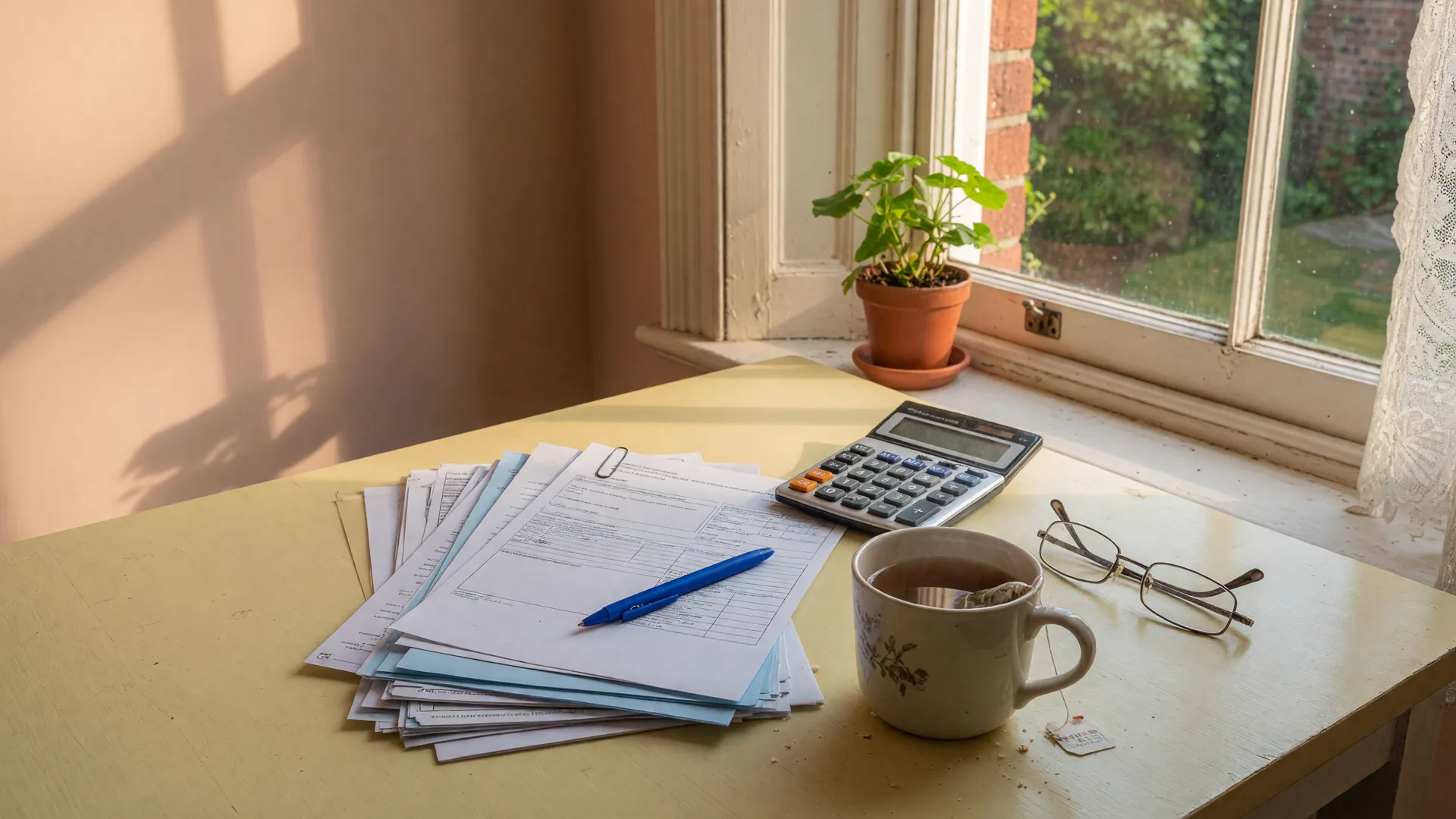
Your retirement income, from CPP, OAS, RRIFs, and any pension, shapes how much home you can comfortably carry and whether downsizing makes sense for you. This guide explains how these income sources work in plain language, how they interact with the money you free up from your home, and how to think about the move before you talk to a financial professional.
This is not financial or tax advice. It is a framework to help you understand your own picture and ask better questions. Every situation is different, and your numbers, your age, and your plans all matter. The goal here is to help you see how your income and your housing fit together, so you can make a confident decision.
Why your income picture matters before you downsize
Downsizing is usually framed as a way to lower your costs and free up equity, and it often does both. But the decision is really about matching your housing to the income you will live on for the rest of your life. A smaller home only helps if the savings are real, and the savings only matter if your income covers the costs that remain.
That is why it helps to write down your expected retirement income before you look at homes. Knowing what you will receive each month, and when each source starts, gives you a clear picture of what you can afford to carry, including strata fees, property tax, insurance, and the everyday costs of a smaller home.
The main retirement income sources, explained
- CPP (Canada Pension Plan). A monthly benefit based on your years of work and contributions. You can start it as early as age 60 with a reduction, or delay it to age 70 for a higher amount. The decision of when to start is significant and personal.
- OAS (Old Age Security). A monthly benefit available to most Canadians from age 65, based on years of residence in Canada. It is not tied to work history, and it can be partially or fully clawed back at higher incomes through the OAS recovery tax.
- RRIFs (Registered Retirement Income Funds). A RRIF is what your RRSP becomes, usually by the end of the year you turn 71. You must withdraw a minimum amount each year, and those withdrawals count as income and are taxed. The minimum rises with age.
- Workplace pensions. If you have a defined-benefit or defined-contribution pension, it may provide a guaranteed monthly amount or a lump sum you manage yourself. The rules vary completely by plan.
These sources interact. For example, RRIF withdrawals add to your income, which can affect how much OAS you keep. Understanding these interactions is exactly where a financial planner or accountant earns their value, and it is worth getting professional help before you make a big decision.
How downsizing and your income work together
Downsizing can change your income picture in a few ways. Selling your home may free up a large amount of cash, and how you invest or spend that money affects your income for years. For most people, the family home is their principal residence, so the sale is usually tax-free under the principal residence exemption, but the money you then invest can generate taxable income. Our guide to the tax treatment of downsizing proceeds explains this in more detail.
At the same time, a smaller home usually lowers your monthly costs, which means you need less income to live comfortably. That combination, more cash and lower costs, is why downsizing is so often a sound move for retirees. But it only works if you plan the transition deliberately, rather than reacting to a single number.
The timing question: when to start each income source
The timing of CPP, OAS, and RRIF withdrawals is one of the most important decisions in retirement, and it is deeply personal. Starting CPP earlier gives you money sooner but a lower amount for life. Delaying it gives you more later, if you can cover your costs in the meantime. OAS generally starts at 65, and RRIF minimums begin by age 71.
Downsizing can give you flexibility here. If you sell your home and lower your costs, you may be able to delay CPP or draw down your savings more slowly, which can increase your long-term security. This is exactly the kind of trade-off worth discussing with a financial planner, because the right answer depends on your health, your other savings, and your plans.
What to bring to a financial professional
- A list of all income sources. CPP, OAS, pensions, RRIFs, and any investment income, with rough monthly amounts.
- Your housing plans. Whether you plan to sell, buy, rent, or stay, and roughly what you expect to spend.
- Your current monthly costs. Housing, utilities, insurance, property tax, and everyday expenses.
- Your goals. Whether you want to travel, help family, leave an inheritance, or simply live comfortably.
With these in hand, a professional can help you see how your income and housing fit together and stress-test your plan. It is one of the best investments you can make before a housing transition.
Common questions retirees ask about downsizing and income
- Will selling my home affect my OAS? The sale of your principal residence is usually tax-free, so it does not directly add taxable income. But if you invest the proceeds and earn income, that income can affect your OAS through the recovery tax.
- Should I pay off my mortgage or invest my proceeds? This depends on your rate, your risk tolerance, and your income needs. It is a classic question for a financial planner, and there is no one-size-fits-all answer.
- Can I afford to delay CPP? If your costs are low and your savings are sufficient, delaying CPP can increase your lifetime security. A professional can model this for you.
Bringing it together: a housing transition that fits your income
The most successful downsizing moves I see are the ones planned around the full picture: the income, the costs, the timing, and the life the person actually wants. When you understand your retirement income, you can choose a home that fits it comfortably, rather than stretching to keep a house that no longer serves you.
If you are early in the process, start by gathering your numbers and having an honest conversation with a financial advisor or accountant. Then, when you are ready to look at homes, a REALTOR® who understands downsizing can help you find a place that matches both your budget and your life. Our guide to what it really costs to downsize gives you the full cost picture to bring to that conversation.
Frequently asked questions
Does downsizing affect my CPP or OAS?
Downsizing itself does not change your CPP or OAS. The sale of your principal residence is usually tax-free, so it does not add taxable income. But if you invest the proceeds and earn income, that income can affect your OAS through the recovery tax at higher income levels.
Should I start CPP early or delay it when I downsize?
There is no universal answer. Starting CPP earlier gives you money sooner but a lower amount for life; delaying gives you more later. If downsizing lowers your costs, you may be able to delay CPP and increase your long-term security. A financial planner can model the choice for your situation.
How do RRIF withdrawals work after I downsize?
A RRIF requires a minimum withdrawal each year, starting by the end of the year you turn 71, and those withdrawals count as taxable income. The minimum rises with age. Downsizing does not change the rules, but lowering your costs can give you more flexibility in how you use the withdrawals.
Is the money from selling my home taxable?
For most people, the family home is their principal residence, so the sale is usually tax-free under the principal residence exemption. However, income you earn by investing the proceeds can be taxable. It is worth confirming your situation with an accountant, especially if the property had a rental suite or business use.
Do I need a financial planner before I downsize?
It is strongly recommended. A financial planner or accountant can help you understand how your income sources interact, whether to pay off debt or invest your proceeds, and when to start CPP and other benefits. It is one of the best investments you can make before a housing transition.
Thinking about how your income and housing fit together?
I've helped many Greater Victoria retirees plan a downsizing move that fits their income and their life, and I can point you to the right professionals for the financial side. I'd be glad to talk through your situation and help you see the path forward. Helping people confidently navigate one of life's biggest housing transitions is what I do every day.
Let's Talk About Andrew Holenchuk
Andrew is Team Leader of Victoria Property Group at eXp Realty and has been helping people buy and sell homes throughout Greater Victoria since 2006. Together with his team, they have facilitated more than $1 billion in real estate sales while helping families navigate downsizing, estate transitions, and housing moves.