
What to Do With a Lifetime of Books When You Downsize in Greater Victoria

Andrew Holenchuk
Victoria Property Group · eXp Realty
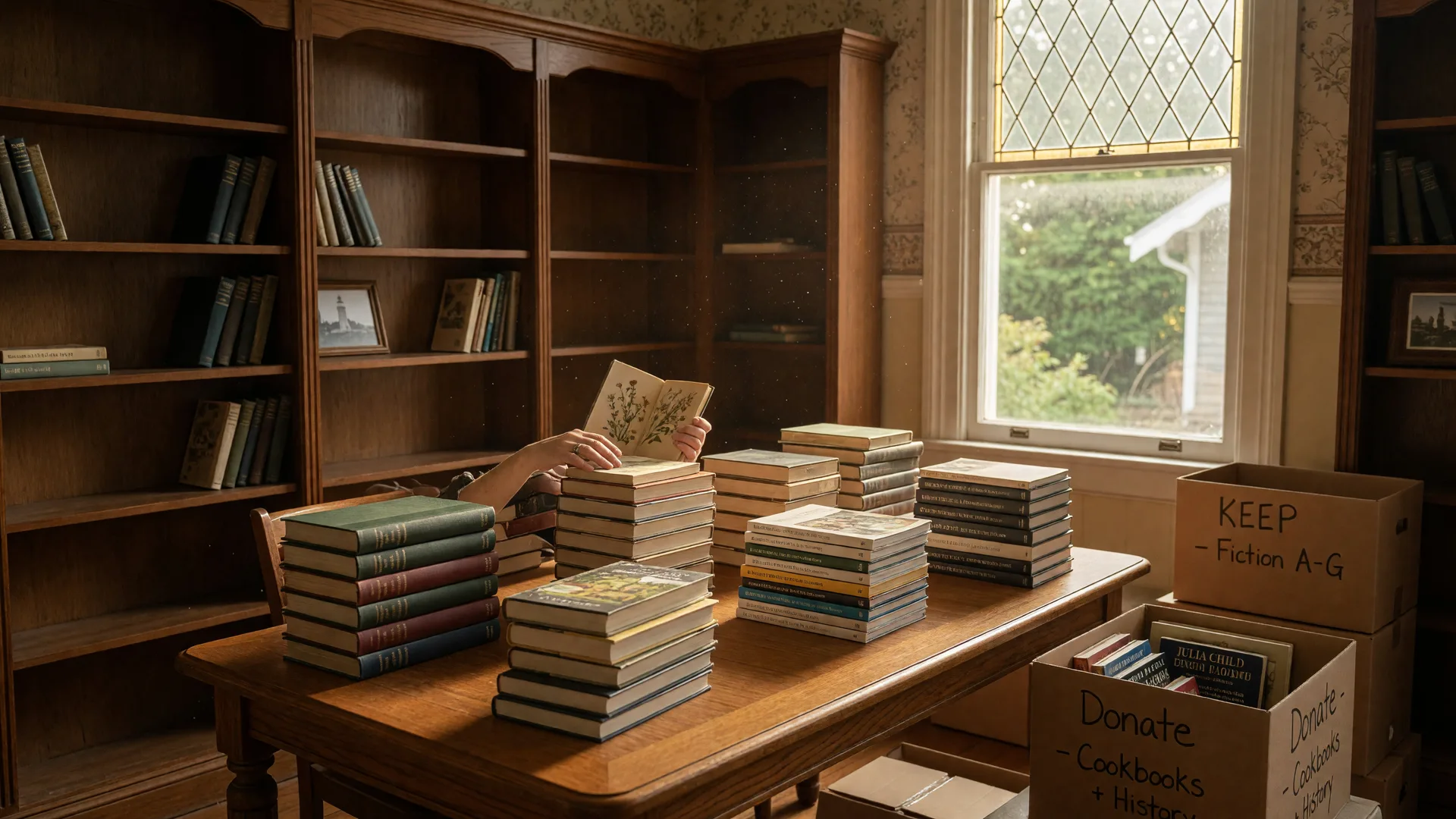
For many people, the books are the hardest part of downsizing. Furniture can be sold, china can be given away, but a lifetime of reading carries memories in a way no other possession quite does. This guide is about how to sort a personal library with kindness and clarity, and where books can go next in Greater Victoria, whether they are sold, donated, gifted, or digitized.
The good news is that you do not have to choose between keeping everything and keeping nothing. A downsized home can hold a beautiful, curated library, and the books that leave can find homes where they will be read and loved again. The process works best when it is done in stages, starting with what matters most to you.
Start with why, not with the books
Before touching a single shelf, it helps to ask what your books actually represent. A collection of cookbooks may be about the meals you love to make. Shelves of history may be about the curiosity you want to keep feeding. The novels you reread are companions. When you understand what the collection means, you can keep the books that carry that meaning and let the rest go without guilt.
It also helps to be honest about which books you will realistically open again. A useful test is the one-year rule: if a book has not been read, referenced, or lent in the past year, and it is not a reference book you know you will need, it is a candidate to move on. Reference books, family Bibles, and books with personal inscriptions are the exceptions that usually stay.
Build the keep pile first
Just as with any other possession, start with the keep pile rather than the discard pile. Walk the shelves and pull out the books you cannot imagine your next home without: the ones you reread, the ones with notes in the margins, the ones signed or inscribed, the ones you plan to pass to a grandchild. Put them in one place and see what you have.
Most people find the keep pile is smaller than they feared. A thoughtful shelf of forty or fifty books holds more meaning than five hundred books that are never opened. When you know what is staying, the rest of the collection becomes a series of decisions about where each book goes next, rather than an overwhelming wall of stuff.
Sort in stages, not all at once
A lifetime of books is best sorted a shelf at a time, over several sessions. Start with the shelves you feel least attached to, which is often the fiction or the paperbacks, and leave the most emotional shelves for later. Some families find it helps to create four boxes or piles as they go:
- Keep: the books coming to the next home.
- Family: books promised to children, grandchildren, or friends.
- Sell: books with real market value, handled separately.
- Pass on: everything else, through donation or a book drive.
Working in short sessions keeps the decisions thoughtful. Trying to clear a whole library in one weekend usually leads to either hoarding everything or giving away things you later miss.
Sell the books with real value
Most books are worth very little, but some are worth something: first editions, signed copies, out-of-print local history, collectible children's books, and books in exceptional condition. If you suspect a book has value, it is worth a quick check before it goes into a donation box.
In Victoria, Russell Books at 747 Fort Street is the main buyer of used books. It is Canada's largest used bookstore, family-owned since 1961, and it buys and trades used books by appointment, so call ahead to arrange a time. A local bookseller can also tell you honestly whether a title has value or is simply a lovely book to pass on.
Donate the rest to good homes
Greater Victoria has several solid options for donating books, and each one supports a different cause:
- The Salvation Army thrift stores accept book donations, including the Victoria location at 525 Johnson Street and the Brentwood Bay location on West Saanich Road.
- Value Village at 1810 Store Street accepts books, and donations there benefit Big Brothers Big Sisters of Victoria Capital Region.
- WIN (Women in Need) thrift stores accept books and are selective about condition, so bring clean, intact copies.
- Beacon Community Thrift Store sells used books with proceeds supporting Beacon Community Services.
- The BC SPCA thrift store also accepts book donations, with proceeds supporting animals in care.
One note: the Greater Victoria Public Library no longer accepts donated books, and its Friends book-sale program is paused, so the library is not currently an option for drop-offs. The annual Times Colonist Book Drive, which supports local literacy organizations, runs early in the new year and is a wonderful way to pass books on if your timing lines up.
Digitize selectively, not everything
Scanning every book is rarely worth the effort, but digitizing selectively can be deeply rewarding. Family cookbooks with handwritten notes, books with personal inscriptions, and out-of-print local history are the best candidates. A phone scanner app captures a few key pages in minutes, and a shared family album or drive lets everyone keep the memory without the shelf space.
For reading itself, an e-reader can hold a remarkable library in a device the size of a paperback. Many downsizers find that moving their daily reading to digital, while keeping a small shelf of favourites, gives them the best of both worlds. Audiobooks, available free through the Greater Victoria Public Library's digital collection, are another way to keep a lifetime of stories close without a single spine on a shelf.
Give books to people who will love them
The most satisfying way to let books go is to give them directly to people who will read them. Grandchildren often treasure the books their grandparents loved, and a book with an inscription becomes a keepsake, not just a title. Teachers, community centres, and Little Free Libraries around Greater Victoria also welcome good-condition books.
If a book matters to you, name its next reader. That single step transforms the process from getting rid of things into passing on stories, and it is the reason so many people find the books, of everything in the house, the most meaningful to place well.
Build the new library
A downsized home can still have a beautiful library. A well-chosen shelf in the living room, a reading nook by a window, or a compact bookcase in the bedroom holds the books that matter and makes them part of daily life. When you plan the new space, think about how you actually read: near a comfortable chair, with good light, and within reach of the books you reach for most.
The goal is not an empty home. It is a home where the books that remain are the ones with meaning, and where there is room for the life you are moving toward. If you are sorting the whole house, our room-by-room decluttering guide and the guide to family photos, letters, and memories cover the other sentimental corners of the home with the same care.
Frequently asked questions
Where can I sell used books in Victoria?
Russell Books at 747 Fort Street is the main buyer of used books in Victoria and buys and trades by appointment. Most other books are worth more as donations than as sales, so it is worth asking a bookseller which of your titles have real value before you sort.
Does the Greater Victoria Public Library take book donations?
Not currently. The library stopped accepting donated books, and the Friends of the GVPL book-sale program is paused. Good alternatives include the Salvation Army, Value Village, WIN, Beacon Community Thrift Store, the BC SPCA thrift store, and the annual Times Colonist Book Drive.
How do I decide which books to keep when downsizing?
Start with the keep pile and pull out the books you reread, reference, or treasure, including signed and inscribed copies. Use the one-year rule for the rest, and remember that a small, curated shelf holds more meaning than shelves of books that are never opened.
Should I scan all my books before giving them away?
No. Scanning every book is rarely worth the time. Digitize selectively: handwritten cookbooks, inscribed copies, and out-of-print local history are the best candidates. For daily reading, an e-reader and the library's digital collection can replace a lot of shelf space.
How long does sorting a large book collection take?
Plan for several sessions over a few weeks, working a shelf at a time and starting with the shelves you feel least attached to. Rushing a library leads to regret on both sides: keeping books you will never open, or giving away ones you later miss.
Sorting a lifetime of books and the rest of the house?
I've guided many Greater Victoria families through the sentimental side of downsizing, and I know how much care these decisions deserve. Whether you are planning the move or just starting to sort, I'm glad to help you picture the next home and the life it will hold. Helping people confidently navigate one of life's biggest housing transitions is what I do every day.
Let's Talk About Andrew Holenchuk
Andrew is Team Leader of Victoria Property Group at eXp Realty and has been helping people buy and sell homes throughout Greater Victoria since 2006. Together with his team, they have facilitated more than $1 billion in real estate sales while helping families navigate downsizing, estate transitions, and housing moves.