
What to Do With Family Photos, Letters, and Albums When Downsizing in Victoria

Andrew Holenchuk
Victoria Property Group · eXp Realty
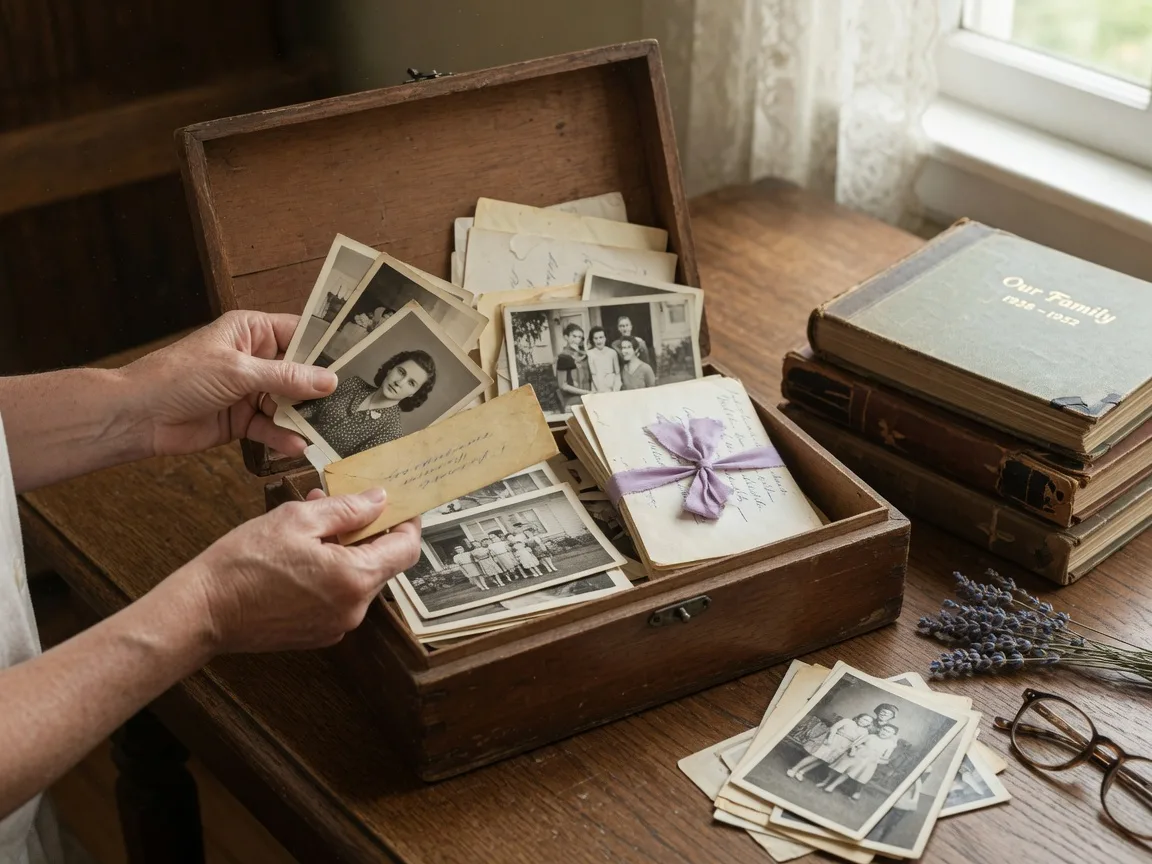
Of all the challenges that come with helping people confidently navigate one of life's biggest housing transitions, sorting through the family photographs and letters is often the most emotionally layered. In my work with Greater Victoria homeowners, I've seen kitchens turned into sorting rooms, coffee tables buried under decades of snapshots, and entire weekends consumed by the question, "What do we do with all of this?"
The photo albums, the shoeboxes of prints, the letters, the holiday cards, the slides from the 1970s, the frames that have hung in the same hallway for forty years. Together they tell the story of your life and your family's life. Letting go of the home itself is hard enough. Sorting the visual record of everything that happened inside it can feel overwhelming.
This guide walks you through a practical, compassionate approach to managing family photographs and paper memories during your downsizing move. The goal is not to throw everything away. It is to make intentional choices that honour the past while freeing you for the next chapter.
Why photographs are the hardest category
Unlike furniture or kitchen items, photographs carry no practical function. Their value is entirely sentimental, which makes them nearly impossible to evaluate with logic. You cannot ask, "Do I use this?" or "Will I replace this?" Instead you face questions like, "Will anyone ever look at this again?" and "If I throw this away, am I throwing away a memory?"
The sheer volume adds to the stress. A typical long-time homeowner in Victoria may have:
- 10 to 30 large photo albums spanning four or five decades
- Several shoeboxes or bins of loose prints
- Old slides, negatives, or even VHS tapes of family events
- Professional portraits and school photos from every year
- Letters, cards, and handwritten notes from relatives who have passed
- Children's artwork and school projects preserved for 20 or 30 years
- Newspaper clippings, obituaries, and saved invitations
This is not clutter. This is a family archive. And treating it as such is the first step toward handling it well.
Step 1: Gather everything into one space
Before you can sort, you need to see what you are working with. Go room by room and collect every photograph, album, framed picture, letter, and card in the house. Bring it all to one table or one room. This will feel worse before it feels better. Seeing everything at once can be shocking. But it is the only way to make clear decisions and avoid missing things later.
As you gather, put aside any photographs that are damaged, mouldy, or beyond repair. Greater Victoria's coastal humidity can take a toll on old prints. If you find mould or significant fading, set those aside for a preservation specialist to assess.
Step 2: Sort into three categories
Work through the collection and divide everything into three piles:
Keep for your new home. This is the small, curated selection you will display, frame, or store in your downsized space. Be honest about how much room you will have. In a condo or townhome, you may have space for one album shelf, not a rolling filing cabinet.
Pass to family. These are photographs and letters that belong with your children, grandchildren, siblings, or other relatives. They may not mean as much to you as they will to the next generation. Ask family members what they would like before you assume they want everything.
Digitize and release. These are photographs you want to preserve but do not need to keep in physical form. You will scan or photograph them, store them digitally, and let the physical copies go through donation or responsible recycling.
Step 3: Digitize strategically
Digitizing is the single most powerful tool for managing a large photo collection during downsizing. A single hard drive or cloud account can hold tens of thousands of images that would otherwise fill multiple boxes and albums.
Here is how to approach it without spending months scanning every print:
- Use a smartphone scanning app. Apps like Google PhotoScan, Adobe Scan, or even your phone's built-in document scanner can produce high-quality copies of prints in seconds. You do not need a $500 flatbed scanner for standard 4x6 photographs.
- Prioritize the irreplaceable. Scan the oldest photographs, the ones of relatives who have passed, the wedding photos, the baby pictures. If a print exists in multiple copies, scan one and let the duplicates go.
- Skip the bulk scanning of similar images. You do not need to digitize every single photo from a dozen rolls of film from the 1980s. Pick the best ten from each event and let the rest go.
- Consider a scanning service. Greater Victoria has local businesses that will digitize large collections of prints, slides, and negatives for a fee. If the volume is overwhelming and you have the budget, this can save weeks of work.
- Label your digital files. A file named "IMG_4827" means nothing in ten years. Take the time to group photos into folders by year and event, and add names where you can. Your future self and your grandchildren will thank you.
Once digitized, store the files in at least two places. A cloud service (Google Photos, iCloud, Dropbox) plus an external hard drive gives you redundancy without relying on a single point of failure.
Step 4: Handle letters and cards with care
Handwritten letters and cards carry a different emotional weight than photographs. They are voices from the past. The handwriting of a parent who has passed, the distinctive style of an old friend, the cards your children made in elementary school.
For letters and cards, consider a different approach:
- Read each one one more time. Give yourself the gift of that moment.
- Keep a small curated selection. A shoebox of the most meaningful letters is reasonable. A filing cabinet full of every Christmas card since 1985 is not.
- Digitize the most important ones. Photograph or scan letters from parents, grandparents, and children. The handwriting and the words matter.
- Share them with family. If your sibling would treasure your mother's letters, pass them along. Spread the collection across the family instead of keeping it all yourself.
- Let the rest go with gratitude. You do not have to keep every card to honour the relationship. The memory lives in you, not in the paper.
Step 5: Involve your family
One of the most meaningful parts of sorting through a family photo collection is doing it with others. Invite your children, siblings, or grandchildren to spend an afternoon going through the albums. Let them choose what they want. Tell the stories behind the photographs as you sort.
This is not just about dividing up possessions. It is about passing on the stories. The photograph of your father on a fishing trip in Port Renfrew is just a picture until someone explains it was the year he caught the twenty-pound salmon. That context is precious, and it only gets passed on while you are there to share it.
For families spread across the country, a video call can work. Hold up photographs, tell the story, and ask who wants it. You may be surprised at what your children value. The things you think are important may not matter to them, while the things you almost threw away become their most treasured keepsakes.
What to do with what remains
After you have selected what to keep, digitized what matters, and passed on what family wants, you will still have a significant volume of physical photographs and albums. Here are your options for letting them go responsibly:
- Donate to historical societies or archives. If your photographs document local history in Victoria, Oak Bay, Saanich, or other Greater Victoria communities, consider offering them to a local museum or historical society. What seems ordinary to you may be historically valuable to others.
- Offer to schools or community groups. Old photographs can be used for art projects, history lessons, or decor in senior centres and community halls.
- Recycle responsibly. Photographic prints cannot go in standard curbside recycling because of the chemical coatings. Check with Capital Regional District (CRD) waste facilities for guidance on photo paper disposal.
- Hold a family memory night. Gather the family one last time to go through the full collection. Let people take what they want. What remains after that can be released with the knowledge that everyone had their chance.
A note about children's artwork
The drawings, paintings, and school projects your children brought home over the years hold enormous sentimental value. But keeping every single piece from kindergarten through Grade 12 is not practical in a smaller home.
A common approach that works well: photograph each piece before letting it go. Create a digital album of your child's complete artistic journey. Then keep the true masterpieces physically. The rest can be released with the knowledge that you have preserved the memory without the bulk.
Some parents frame a small curated gallery of their children's best work in a hallway or children's bedroom in the new home. This keeps the joy visible without the accumulation.
Frequently asked questions
How long does it take to sort through a lifetime of photographs?
It depends on the volume, but most homeowners should budget several days to a few weeks, working in sessions of two to three hours at a time. Sorting photographs is emotionally draining, and trying to push through it all in one weekend often leads to burnout and poor decisions. Give yourself permission to work through it slowly.
Should I keep all my photo albums intact?
Photo albums take up significant space. Consider removing only the most important photographs from each album and storing them in a single slim binder or archival box. The albums themselves can be recycled or donated. The images that matter are the content, not the binding.
What about old slides and negatives?
Slides and negatives require specialized scanning equipment. If you have a large collection, a professional digitizing service may be worth the investment. Many services in Greater Victoria offer slide and negative scanning by mail or drop-off. Once digitized, the originals can be responsibly discarded.
How do I handle photographs of people I no longer have a relationship with?
This is a deeply personal decision. You are not obligated to keep photographs that bring pain or discomfort. It is okay to let them go. If you are unsure, set them aside in a separate box and decide later. You do not have to make every decision in the same day.
What if my adult children do not want any of the photographs?
This is increasingly common. The digital generation often has no attachment to physical prints. If your children do not want them, that is not a rejection of you or the memories. Digitize what matters, keep a curated physical selection for yourself, and release the rest. Your memories live in you, not in the paper.
Can I donate old photographs to a local archive in Victoria?
Yes. The Royal BC Museum, the Victoria City Archives, and local historical societies in Oak Bay, Saanich, and other regional municipalities sometimes accept photograph donations that document local history. Call ahead to ask about their collection priorities before bringing items in.
You do not have to face this alone.
I have helped many Greater Victoria families work through the emotional and practical side of sorting a lifetime of memories before a move. If you need guidance, or just someone who understands what you are going through, reach out anytime.
Get in Touch