
Clearing a Family Home Safely: Hazardous Materials, Medications, and What Not to Donate in Greater Victoria

Andrew Holenchuk
Victoria Property Group · eXp Realty
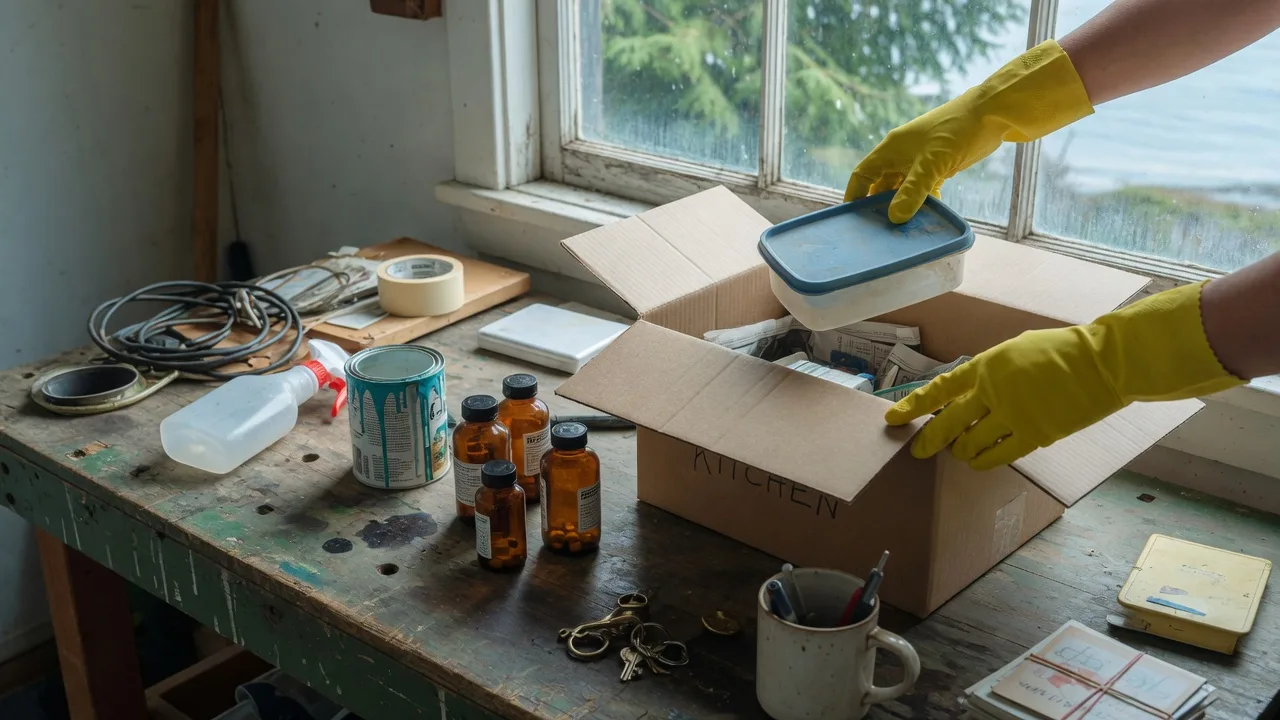
When a family home in Greater Victoria is cleared, whether after a move, an estate, or a parent's transition to a smaller place, the easy instinct is to sort everything into two piles: keep and donate. But every home holds a third pile that needs special care: expired medications, used needles, old paint cans, solvents, garden chemicals, and cleaners that cannot go in the garbage, the recycling, or the donation box. This guide explains how to find those items, where to take them in the Capital Regional District, and what should never leave the house in your hands.
The good news is that Greater Victoria has excellent drop-off options, and most hazardous household waste is accepted free of charge. The key is knowing what you are dealing with before you start, because a slow, labeled sweep is safer for everyone than a fast cleanout.
Start with a room-by-room safety sweep
Hazardous household items hide in predictable places. Before you bag, box, or donate anything, walk the home with this checklist in mind.
- Kitchen and pantry: old cleaners, expired over-the-counter medicines, aerosol cans, and anything with a warning label.
- Bathrooms and bedrooms: prescription bottles, old vitamins, syringes or lancets for anyone who managed diabetes or another condition, and cosmetic chemicals.
- Garage: the highest-risk room. Antifreeze, brake fluid, gasoline, oil and oil filters, car batteries, old paints, thinners, and solvents.
- Garden shed: pesticides, herbicides, fertilizers, and fuel for lawn equipment.
- Basement and storage: batteries of every kind, fluorescent bulbs, old electronic devices, and decades of half-used household chemicals.
A useful habit from the start: anything marked flammable, corrosive, flammable liquid, explosive, or poisonous gets its own box immediately, and its own trip to a proper drop-off spot. It does not wait with the donation pile, and it never goes in the trash.
Medications: return them to a pharmacy
Expired or unused medications should never be flushed, poured down the drain, or put in the garbage. British Columbia's Medications Return Program lets you take them to any participating pharmacy, where they are collected and disposed of properly, free of charge, covering prescriptions and many over-the-counter products.
The practical points for a family cleanout: gather every bottle and blister pack, cross out any personal information on the labels if you like, drop them in a bag, and hand them over at the pharmacy counter. It takes minutes, and most people are surprised by how quickly the pile of a lifetime shrinks once it starts moving out the door.
Sharps: approved containers only
Needles, syringes with needles, and lancets must go in an approved puncture-proof sharps container, never in household garbage or recycling. They can then be returned to a community drop box, a participating pharmacy, or a local public health office. If you uncover needles in a parent's home and no sharps container is available, the pharmacy or public health office can advise on the safe way to transport and drop them off.
If you are clearing the home of a senior who used injectable medication, plan for this from day one. A small sharps container sitting ready in the work area keeps the process safe and calm, and it prevents a very understandable source of stress out of the way early.
Paint and household chemicals: the Hartland depot
The Capital Regional District operates the Hartland Public Drop-off Depot at the Hartland Landfill at 1 Hartland Avenue in Saanich. Household hazardous waste is accepted there free of charge, and the depot accepts a long list of items, including paints, varnishes, stains and solvents; pesticides and garden chemicals; household cleaners; automotive products like antifreeze and motor oil and filters; and many kinds of batteries, including lead-acid, rechargeable, and household batteries.
Because pharmaceuticals, paint, solvents, flammable liquids, gasoline, pesticides, and lead-acid batteries are banned from the landfill, these materials must reach their stewardship programs instead, and the depot is the place that connects them. Check the CRD website for current hours and the accepted-items list before you go, since hours can change with the season.
For families clearing a garage, the advice is simple: keep all liquids upright in their original containers, never mix products together, and transport them upright in a sturdy box on the floor of the car. If a container is unlabelled, leaking, or you are not sure what it is, treat it as hazardous until you know otherwise.
What should never go in the donation box
Thrift stores and donation centres have policies for a reason: they cannot resell anything that could harm a shopper, and most will not accept hazardous or unlabelled products, for the safety of the people sorting donations. As a general rule, keep these out of any donation pile:
- Open or expired containers, unlabelled products, and old medicines of any kind.
- Paint cans, solvents, thinners, aerosols, and anything flammable.
- Garden chemicals, pesticides, and fertilizers.
- Automotive fluids, gas cans, propane cylinders, and batteries.
- Sharps and anything with blood on it.
When in doubt, the depot and the pharmacy are the right answer, and the small effort keeps volunteers safe, matches donations clean, and protects the people who will eventually handle those items next.
Why this matters for the sale of the home
If the cleared home is being prepared for sale, proper disposal is about more than housekeeping. A listing with a garage full of rusting paint cans and mystery jugs worries buyers, slows showings, and can surface during inspections. Veteran home inspectors and buyers' agents in Greater Victoria look closely at environmental red flags, and a clearly cleared property sells with far fewer questions. Our guide to preparing an estate or inherited home for sale walks through the full sequence, and if you uncover old oil tanks or other environmental concerns on the property, our article on oil tanks and environmental disclosures is a useful next read.
Frequently asked questions
Can I throw expired medications in the garbage?
No. Expired or unused medications should be returned to a participating pharmacy through BC's Medications Return Program. Flushing them or putting them in the garbage can release pharmaceuticals into waterways and the environment, which is exactly what the return program prevents.
Where in Greater Victoria can I drop off household chemicals and old paint?
The CRD's Hartland Public Drop-off Depot at 1 Hartland Avenue in Saanich accepts household hazardous waste free of charge, including paints, solvents, cleaners, automotive products, and batteries. Check the CRD website for hours and the accepted-items list, since hours can vary by season.
Why will a donation centre not take open containers or old paint?
Because they cannot safely resell or dispose of them. Open, unlabelled, or hazardous items put donation sorting volunteers and shoppers at risk, and hazardous products like paint are banned from regular waste streams, so they need a proper drop-off instead.
What should I do if I find needles in a parent's home?
Place them in an approved puncture-proof sharps container and return it to a community drop box, a participating pharmacy, or a local public health office. Do not put them in household garbage or recycling, and do not use an ordinary plastic bag for transport.
Can I just leave hazardous items for the estate sale company or movers to handle?
Do not assume anyone else will handle them. Estate sale companies and movers generally will not take hazardous materials, and leaving them behind can delay or complicate a move or a sale. A dedicated box and one trip to the depot is the fastest way to be done with them.
A clear home is a calmer transition.
Clearing a family home is one of the most emotional parts of a housing transition, and doing it safely makes it easier. If you are managing this for a parent, as an executor, or for yourself, I can help you plan the sequence, from the cleanout to the sale. You are not in this alone.
Reach Out AnytimeThis article is for general information only. Confirm current hours, accepted items, and program details with the CRD, your pharmacy, and public health before your drop-off.