
The Cash Offer on Your Family Home: What to Know Before Selling to an Investor in Greater Victoria

Andrew Holenchuk
Victoria Property Group · eXp Realty
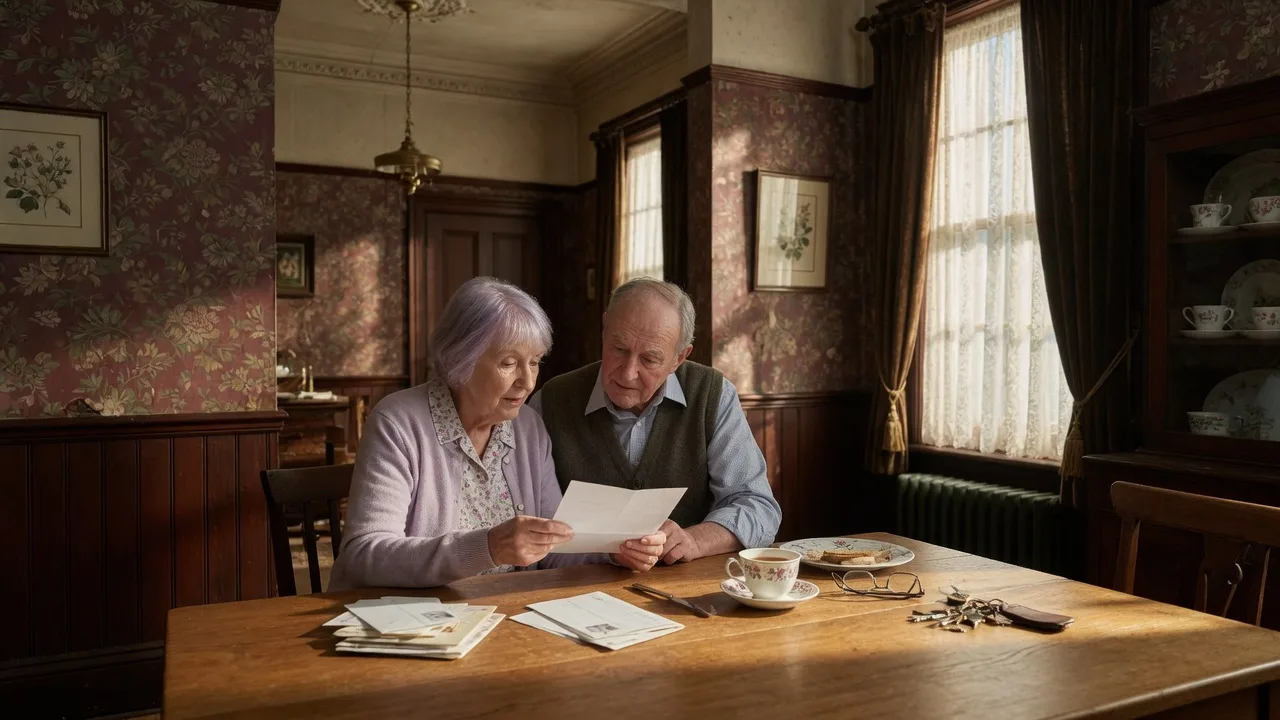
A letter arrives in the mail with an offer to buy your home, cash, no repairs needed, no conditions, and a closing date that works around you. It can feel flattering, convenient, and even reassuring, especially when you have been wondering how on earth you would get the old house ready for the market. Before you respond, it helps to understand exactly what that offer is, who is making it, and what it is worth compared with your other options.
This guide is about one specific question that comes up constantly in my work helping people confidently navigate one of life's biggest housing transitions: should you sell your Greater Victoria home to an investor who makes you a cash offer, or should you sell it on the open market? The honest answer is that both paths are legitimate, and the right one depends entirely on your situation, your timeline, and how much your home is truly worth.
What follows is education, not legal or financial advice. Along the way I will point you to the professionals you should have in your corner, whatever you decide.
Why cash offers are landing in Victoria mailboxes
Greater Victoria has an active investor market. Renovators, developers, and landlords buy homes across the Capital Regional District, and they use a range of strategies to find properties. Some investors work with realtors and buy through the Multiple Listing Service like anyone else. Others use direct marketing: printed letters, door knocking, and phone calls to homeowners whose properties look vacant, dated, or unkept from the street.
The homes most likely to attract this kind of approach are older character homes with evident deferred maintenance, vacant estate homes awaiting probate decisions, rental properties whose owners live elsewhere, and longtime family homes where neighbours have noticed a recent absence or a passing. If that describes your situation, you are not imagining things if the phone seems to ring a little more often.
None of that makes the contact inappropriate on its own. A legitimate investor has every right to make you an offer. Your job is to evaluate it the same way you would any other opportunity, with full information and without pressure.
How a legitimate cash offer works
A genuine investor offer is a real contract, usually prepared by the buyer's own lawyer or notary. There is no financing condition because the buyer intends to pay with cleared funds. There may be a home inspection condition or a "sold as is" clause, and closing can often be set weeks rather than months out, because the buyer is not waiting on a bank.
- No financing condition. The money is the point, so the deal does not depend on the buyer getting a mortgage.
- As-is pricing. The offer will factor in the cost, risk, and time of fixing the home itself, and the investor's own margin.
- A fixed closing date. Often flexible, sometimes very fast, which can be genuinely useful if you need to move on a schedule.
- Fewer moving parts. No showings, no open houses, no staging, no waiting for offers to firm up.
Investors are not behaving badly by asking for a discount. They are buying a problem they plan to solve, and the price has to work for their numbers. That is fine. What matters is that you know your number before you hear theirs.
When selling to an investor genuinely makes sense
In two decades of Greater Victoria real estate, I have seen cash sales work beautifully for some families. The situations where they tend to make sense share a few traits:
- The home needs major work you cannot take on. If the roof, foundation, or systems are beyond the family's budget or energy, a buyer who welcomes that work can be the right match.
- An executor needs certainty and speed. A vacant estate home with carrying costs, insurance, and utilities can drain an estate quickly. A fast, certain close may beat a higher price that takes months and costs money in between.
- A family member is moving into care. When a parent is transitioning to assisted living or long-term care, the priority is often a clean, predictable sale, not maximizing every dollar.
- You live out of the area. Coordinating a full renovation and a traditional sale from across the country is stressful. A straightforward cash sale removes most of that load.
- The property has unique challenges. Complex zoning, environmental concerns, or access issues can narrow the pool of traditional buyers, while an experienced investor already knows how to work with them.
In every one of those scenarios, the right move is still to find out what the home is worth on the open market before you accept anything. You can decide to take the convenience and the discount with your eyes open, but you should never take a discount you did not know you were taking.
The cost of convenience: what a cash offer usually leaves on the table
An investor's offer is a private sale at a price designed around their own returns. By definition, it generally does not reflect what the open market will pay, because the open market includes many buyers who want the home to live in, and those buyers are not expecting half of a reno budget inside the price.
- The gap is real, but it is not the whole story. A traditional sale costs time, effort, possibly some repairs, and realtor and legal fees. Compare apples to apples: net proceeds after every cost, not gross price.
- Competition is what lifts prices. A well-priced listing in a balanced market attracts multiple eyes, and homes still sell for more when two families both want them.
- Your home may be worth more than it looks. Character homes, mature gardens, and quiet South Island locations have real buyer appeal even when dated. You may not need the full renovation at all; some homes sell beautifully with light decluttering and honest marketing.
- Read the fine print. Confirm there are no unusual conditions, no long closing delays, no fees deducted from your side of the deal, and nothing that ties you to the buyer if issues arise.
None of this means a cash offer is a bad deal. It means it deserves the same scrutiny you would give any contract worth tens of thousands of dollars, because that is exactly what it is.
How to evaluate any cash offer, step by step
If an offer has arrived, here is a calm, practical way to work through it:
- Get the market picture. Ask a local realtor for a comparative market analysis of your home. Not the tax assessment, which is a snapshot for taxation, not a price, and not a guess from a website. Recent comparable sales in your specific neighbourhood are the number that matters.
- Understand the "as is" math. Ask what repairs the buyer assumes and how they arrived at their number. A reasonable investor will talk you through it openly.
- Read the contract with a lawyer or notary. For the price of one consultation you will learn exactly what you are signing, what you are warranting, and what happens if something falls through.
- Check the timeline against your needs. Does the closing date work for your move, your care plan, or your estate? If not, ask. Flexibility goes both ways.
- Know that you can say no. A signed offer letter is not a binding agreement until you accept it in writing. You are never obligated to respond to a letter, answer a phone call, or open a door, and no legitimate buyer can pressure you through one.
If the offer matches or beats your net-proceeds number, take it in good conscience. If it does not, walk away without guilt. The letter will still be there if the market tells you otherwise.
Cash offers, investors, and the Greater Victoria market right now
Investor interest in the Capital Regional District tends to rise when the market is balanced and inventory is growing, because there is more to choose from and less bidding drama. That is very much the climate in Greater Victoria in 2026. It means you may well receive approaches. It also means the timing is actually good for you as a seller: a balanced market rewards realistic pricing and good presentation, and homes that are priced and prepared well sell, usually for more than a quick private discount.
For a deeper look at current conditions, see our most recent winter market update for downsizers and our guide to choosing the right realtor.
And if you are weighing an offer because the house needs work, you are not alone: many Victoria families sell homes with decades of deferred maintenance. Our article on selling a family home after 30 years covers exactly that territory.
How an experienced realtor helps you decide
When I meet a family holding a cash offer, my first job is not to sell them on a listing. It is to give them the information they need to compare the offer against reality: what their home is worth, what it would cost to make it market-ready in their situation, how long a traditional sale is likely to take in their neighbourhood, and what it would mean for their move. Some families look at that picture and say "the convenience is worth it," and I support that fully. Others look at it and say "now I want the real value," and we get to work on a plan.
That is the honest version of my business. You should expect the same transparency from anyone you work with, whether that is me or a colleague you trust.
Frequently asked questions
Are cash offers on homes in Greater Victoria legitimate?
Many are. Professional investors buy homes for cash all the time, often through perfectly proper offers reviewed by lawyers and notaries. Legitimacy is not the question. The question is whether the price is fair, and the only way to know that is to compare the offer against real comparable sales for your home.
Should I accept the first cash offer I receive?
Not before you have a market analysis in hand. You can still accept the same offer afterwards; knowing your home's value never removes your ability to take a lower, convenient price. It only makes sure you are choosing it on purpose.
Do investors always pay less than the market?
Generally, yes, because they are buying a home they will repair, renovate, or reposition, and their price accounts for that work and their margin. Occasionally an offer surprises on the high side when the home needs no work and the location is strong. Either way, comparables tell you the truth.
How is a cash offer different from selling on the MLS?
A cash offer is a direct, private transaction with one buyer, no financing condition, and usually a quick close. An MLS listing exposes your home to every buyer in the market, which nearly always produces a higher price but takes more preparation, time, and work. The trade is convenience and certainty versus value and reach.
Do I have to respond to an unsolicited offer letter?
No. You are under no obligation to reply to a letter, answer a call, or open your door to anyone. If you are not interested, a polite "no thank you" is all that is required. If the contact ever turns aggressive or threatening, end it and report it; legitimate buyers do not pressure people.
What should I do if a cash offer feels like a scam?
Slow everything down. Never share personal or banking information, never send money, and never sign anything without your own lawyer or notary reviewing it. Genuine offers survive a cooling-off look; scams do not. Our guide to real estate scams and fraud protection walks through the warning signs in detail.
Thinking about an offer, or an offer letter sitting on the counter?
I am happy to give you a clear, no-obligation read on what your home is realistically worth before you sign anything. Reach out any time to talk it through. This is exactly the kind of decision I help Greater Victoria families make every week.
Talk It Through