
Selling a Home with Unpermitted Renovations or an Unpermitted Suite in Greater Victoria

Andrew Holenchuk
Victoria Property Group · eXp Realty
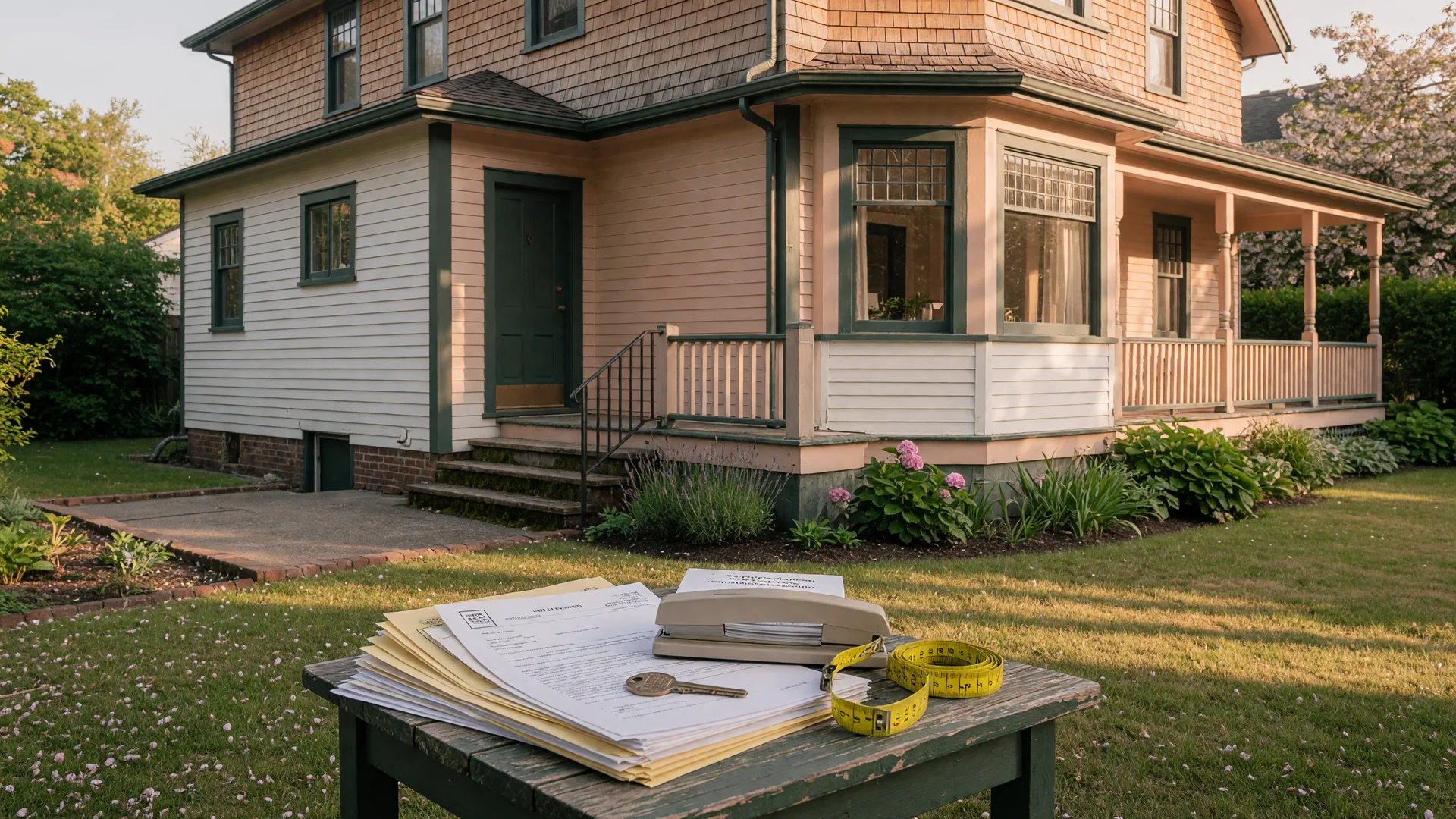
Many older homes across Greater Victoria have had work done over the years without a building permit, from a finished basement to a legal-looking secondary suite. If that describes your home, you are not alone, and it does not have to be a dealbreaker. But how you handle it before you list matters a great deal, because unpermitted work is something buyers, lenders, insurers, and appraisers will all eventually ask about.
This guide explains what unpermitted work means at sale time, what your disclosure obligations are, the realistic options for dealing with it, and how to approach buyers honestly. It is general information to help you plan, not legal advice, and it is not a substitute for talking with your REALTOR®, a lawyer, and your municipal building department about your specific home.
First, understand what you are dealing with
"Unpermitted" simply means work was done without the required municipal building permit, or done in a way that does not match what was approved. It can range from small items that were permitted at the time but never recorded, to substantial additions like a full basement suite, a garage conversion, or a new deck. Some of it will be invisible to a casual visitor, and some of it will be obvious the moment someone walks in the door.
It is worth taking an honest inventory before listing. Which renovations do you have paperwork for, and which are missing? Was the secondary suite ever legally created or registered? Does the work match the official records at your municipality? These questions feel uncomfortable, but answering them now is far easier than answering them after an offer is on the table.
Why it matters at sale time
Unpermitted work affects the sale in several practical ways, and not always the ones owners expect. Buyers and their home inspectors will often flag it. A buyer's lender may refuse to finance a home with significant unpermitted space, especially a suite, because the value cannot be verified and the risk is hard to price. Home insurers may decline coverage or exclude the unpermitted area, which can hold up a purchase. And an appraiser will often assign the suite little or no value without evidence it is legal.
In short, unpermitted work can shrink the pool of buyers, complicate financing, and change what the home is worth. None of this is reason to panic, but it is reason to plan the sale around it rather than hoping it goes unnoticed.
Your disclosure obligations
In BC, sellers complete a Property Disclosure Statement answering questions about the property, and honesty on that form matters. The statement asks directly about renovations, additions, suites, and zoning compliance, and every answer should reflect what you actually know, including the phrase "do not know" when that is the truthful answer. Our detailed guide to the Property Disclosure Statement for BC sellers walks through the full form question by question.
Beyond the form, there is an independent duty to disclose known latent defects, which are issues that a buyer could not discover through a reasonable inspection and that materially affect the property. The courts have treated the absence of required municipal permits as a disclosable issue in its own right, separate from whether the work caused any physical problem. In practice, this means an unpermitted suite should be disclosed even if it is beautifully finished and has caused no trouble.
An "as-is" clause or leaving the form blank does not erase these obligations, so it is never wise to try to hide the work or let a buyer discover it later. Far better to surface it early, explain it clearly, and let buyers factor it into their decision with full information.
Your options before listing
Once you know what is unpermitted, you generally have three paths, and the right one depends on the scope of the work and your timeline.
- Apply for after-the-fact permits. Where the work is safe and can be made to meet current codes, many municipalities allow a permit application for work already done. This usually involves an inspection, possibly some upgrades, and a fee. The payoff is a home that is largely verifiable, which broadens your buyer pool and can protect value.
- Remediate or partially reverse the work. If a structure cannot be permitted, such as an unpermitted suite in a location the municipality will not approve, the realistic option may be to remove or convert it. This is disruptive and can be costly, so it is usually only worth doing when the value difference justifies it.
- Sell as-is with clear disclosure. Many unpermitted homes sell exactly this way, priced to reflect the situation and marketed to buyers who are prepared to deal with it. Transparency is the whole game here: a well-priced home with honest disclosure often sells smoothly to a buyer who sees the opportunity.
A good first step is a phone call to your municipality's building or planning department, who can tell you whether the specific work can be permitted after the fact. Every municipality in the region, from Victoria to Saanich to Langford to Sidney, has its own rules and fee schedules, so the answer is local.
Insurance and financing realities
Home insurance is one of the places unpermitted work most often surfaces, because insurers ask directly about renovations and secondary suites. If a claim later involves unpermitted work and the insurer was not told about it, coverage can be denied. On the buying side, a buyer's lender may require the suite to be legal before lending against its value, which is why buyers sometimes walk away from homes with unpermitted suites even when they love them.
As a seller, the practical move is to be upfront about the situation so the buyer can get accurate insurance quotes and financing before they commit. A buyer who learns about an unpermitted suite on inspection day is a buyer who may waver; a buyer who knew from the start is a buyer who has already planned for it.
How to handle the conversation with buyers
Transparency does not have to mean leading with bad news. In a disclosure-first conversation, the seller or their REALTOR® explains what was done, when, what permits exist and which do not, and what the owner has done to confirm the work is safe. Armed with that, a serious buyer can book their own inspection, ask their lender and insurer, and make an informed decision.
The tone matters as much as the facts. This is a common situation in older Victoria homes, and owners who treat it matter-of-factly and helpfully usually keep the deal moving. Owners who downplay it, get defensive, or wait to be caught erode the trust that every purchase depends on.
Build the right team around the sale
Selling a home with unpermitted work benefits from people who have seen this exact situation before. A REALTOR® who knows how these sales are priced and marketed in Greater Victoria, a lawyer who can advise on disclosure, a contractor who can quote the cost of bringing work up to code, and a good contact at the municipal building department will answer most of your questions. Our guide to choosing the right REALTOR® for a downsizing sale covers what to look for and ask.
The earlier you bring the problem into the open, the more options you have. A home disclosed honestly at the start of a sale is a home with a clear path forward; a home where the issue emerges mid-transaction is where deals get complicated, renegotiated, or lost.
Frequently asked questions
Do I have to disclose an unpermitted renovation when selling in BC?
You should disclose what you know. The Property Disclosure Statement asks directly about renovations, additions, and suites, and there is an independent duty to disclose known latent defects, which can include the absence of required permits. Disclosure protects you and keeps the sale honest, so it is always the right starting point.
Can I get a permit for work that was already done without one?
In many cases, yes. Municipalities in Greater Victoria commonly accept after-the-fact permit applications for work that can be inspected and made to meet current codes. There will usually be fees, and upgrades may be required. The first step is a call to your municipality's building department to find out what applies to your home.
Will an unpermitted suite make my home unsellable?
No. Homes with unpermitted suites sell regularly across Greater Victoria, usually priced to reflect the situation and marketed to buyers who are prepared to deal with it, either by legalizing the suite, using it without financing against it, or converting it. The homes that struggle are the ones where the issue is hidden and discovered mid-deal.
Can a buyer sue after closing if they discover unpermitted work?
Failing to disclose a known material issue can lead to claims after closing, which is why transparency matters so much. A seller who disclosed the unpermitted work clearly and accurately is in a far stronger position than one who concealed it. This is general information, and a lawyer is the right person to advise on your specific situation.
Is it better to fix the unpermitted work or sell as-is?
It depends on the scope and cost. If the work can be permitted with modest fees and upgrades, that often widens your buyer pool and protects value. If remediation would be expensive or impossible, selling as-is with clear disclosure and a price that reflects the situation is usually the sensible path. A REALTOR® with local experience and a contractor's quote will help you weigh it.
Selling a home with unpermitted work?
I help families across Greater Victoria plan and price these sales honestly, so the home sells smoothly and the buyer is never surprised. Helping people confidently navigate one of life's biggest housing transitions is what I do every day, and I'd be glad to help you plan yours.
Let's Talk About Andrew Holenchuk
Andrew is Team Leader of Victoria Property Group at eXp Realty and has been helping people buy and sell homes throughout Greater Victoria since 2006. Together with his team, they have facilitated more than $1 billion in real estate sales while helping families navigate downsizing, estate transitions, and housing moves. This article is general information only and not a substitute for professional financial, legal, or real estate advice for your specific situation.