
When One Partner Wants to Downsize and the Other Doesn't: Navigating the Decision Together

Andrew Holenchuk
Victoria Property Group · eXp Realty
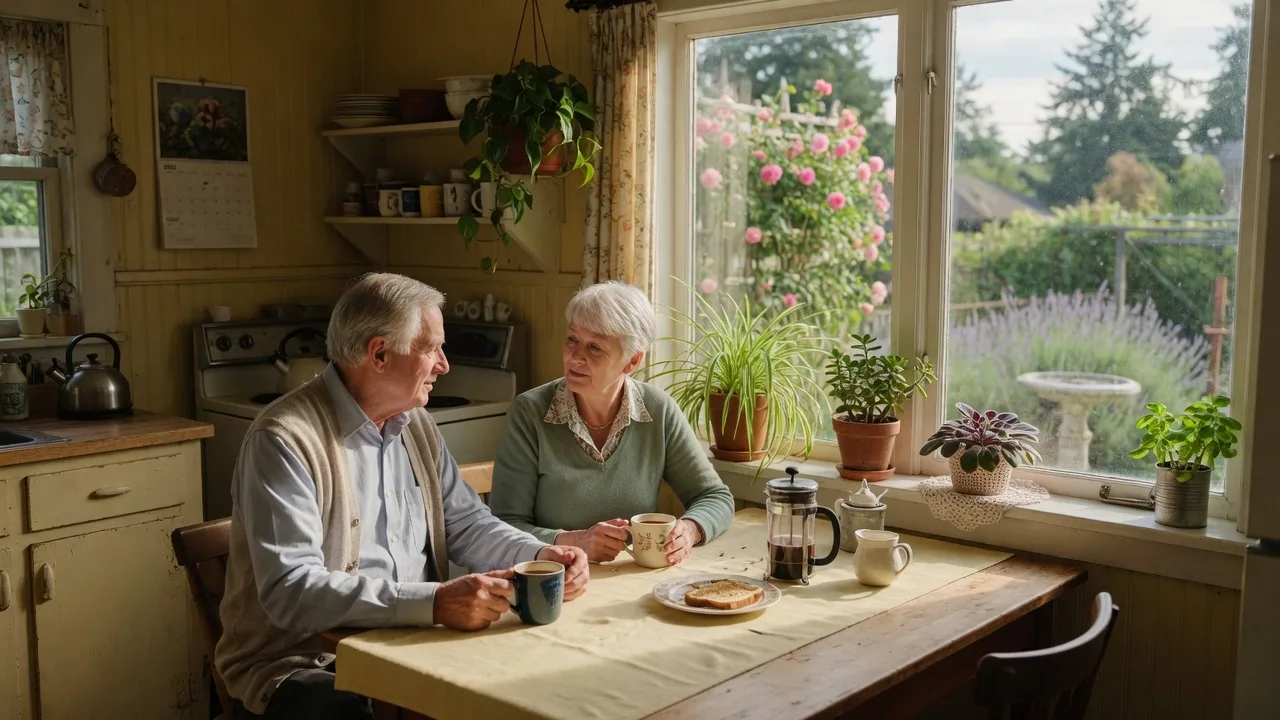
One of the most common and most challenging situations I see in my work with Greater Victoria homeowners is this: one partner is ready to downsize, and the other is not. The first partner sees the logic, the financial benefits, and the freedom that a smaller home would bring. The second partner feels the weight of what would be lost, the disruption, and the uncertainty of leaving a home that has held their family for years.
Neither person is wrong. They are simply seeing the same decision from different angles. And when two people who have built a life together disagree on something as significant as their home, the conversation can feel impossible. It is not just about square footage or maintenance costs. It is about identity, comfort, control, and the future you imagine for yourselves.
This article is for couples who are navigating this exact tension. Whether you live in Victoria, Oak Bay, Saanich, Langford, or any other community in Greater Victoria, the path forward is the same: slow down, understand each other's perspective, and find a way forward that respects both partners.
Why couples disagree about downsizing
The decision to downsize is rarely just a practical one. It touches on deep emotional and personal factors that differ between partners. Here are the most common reasons one partner is ready to move and the other is hesitant:
For the partner who wants to downsize
- They feel the burden of maintenance. The yard work, the cleaning, the repairs, the stairs. They may be tired of spending weekends maintaining a house instead of enjoying life.
- They see the financial opportunity. Equity from the family home could fund a more comfortable retirement, reduce monthly expenses, or allow for travel and experiences.
- They are future-oriented. They want to move while they are healthy enough to choose their next home on their own terms, rather than waiting until a health crisis forces a move.
- They feel the weight of the empty home. With children grown and gone, the large house may feel quiet and empty. They are ready for a new chapter.
For the partner who wants to stay
- The home holds their identity. They may have spent decades making this house a home. The garden they planted, the renovations they oversaw, the memories in every room. Leaving can feel like losing a part of themselves.
- They fear the unknown. A new neighbourhood, new neighbours, a smaller space, a different lifestyle. For some, the thought of change is genuinely frightening.
- They are not ready to be told what to do. If the downsizing conversation feels like pressure or an ultimatum, the natural response is resistance. No one wants to feel pushed into a decision this big.
- They worry about losing independence. Moving to a condo or retirement community can feel like giving up control. They may associate it with aging, dependency, or the loss of their familiar routines.
- They have not processed the grief. The decision to sell a long-time family home requires grieving what is being left behind. If one partner has not had the space to do that grieving, they will resist the decision.
How to have the conversation without creating conflict
The way you talk about downsizing matters as much as the decision itself. Here are approaches that help couples move forward together rather than digging into opposing positions:
Start with curiosity, not persuasion
Instead of trying to convince your partner that downsizing is the right move, start by understanding their perspective. Ask open-ended questions: "What does this home mean to you?" "What are you afraid of losing?" "What would make you feel good about a move?" The goal is not to win an argument. It is to understand each other more deeply.
Separate the decision from the timing
Often, couples are actually closer to agreement than they realize. One partner may agree that downsizing makes sense eventually but is not ready now. Agreeing on the direction while allowing flexibility on the timeline can break the deadlock. "We both agree we will downsize at some point. Let's check in again in six months and see how we feel."
Name the fears out loud
Many unspoken fears drive the resistance to downsizing: fear of making the wrong choice, fear of the financial risk, fear of losing a social network, fear of not finding a suitable new home. Naming these fears takes away their power and makes them solvable. Once you know the fear, you can address it together.
Visit possibilities together, not as a sales pitch
If one partner is hesitant, visiting open houses or touring retirement communities together can feel like pressure. Instead, frame it as exploration: "Let's just look at a few condos to see what is out there. No commitment, just information." Often, seeing a beautiful, well-designed space with the right features changes a hesitant partner's perspective more than any conversation could.
Bring in a neutral third party
Sometimes, couples need a facilitator. A trusted REALTOR who specializes in downsizing can provide data, market context, and real-world examples without taking sides. A financial advisor can lay out the numbers objectively. A counsellor can help navigate the emotional dynamics. Bringing in a third party can take the pressure off the relationship.
Practical compromises that can bridge the gap
In many cases, there is a middle ground that works for both partners. Here are some compromises I have seen work for couples throughout Greater Victoria:
Start with decluttering, not selling
If the home itself feels overwhelming, start by tackling the belongings. Sorting through decades of accumulation can reveal how much space you truly need. Some couples find that after a thorough declutter, the large home feels more manageable, and the urgency to downsize eases. Others find that the process clarifies their desire to move to something smaller. Either way, decluttering is a productive first step that both partners can participate in.
Set a timeline and revisit
Agree to revisit the decision in six months or a year. Use that time to prepare practically: declutter, research neighbourhoods, attend open houses, talk to REALTORS. When the check-in arrives, both partners will have more information and may feel differently. The timeline gives the hesitant partner time to process and the ready partner a sense of forward movement.
Try the new lifestyle before committing
As discussed in our guide on renting before buying, a short-term rental in the type of home and neighbourhood you are considering can be a powerful tool. Rent a condo in James Bay for a month. Stay in an active adult community as a guest. Let the hesitant partner experience the lifestyle before committing to it permanently.
Consider a compromise home
Not every downsizing move has to be a condo in a high-rise. Some couples find that a bungalow in Saanich, a townhome in Langford, or a ground-floor unit in Oak Bay offers a compromise: less maintenance than the family home, more space and autonomy than a condo. The right compromise home can give both partners something they want.
When the decision is not equal: health, safety, and caregiver considerations
In some situations, the decision to downsize is driven by genuine health or safety concerns. One partner may have mobility challenges that make stairs dangerous. A large property may be too much to maintain as a caregiver. The family home may no longer be safe for someone with declining health.
These situations are particularly difficult because the reluctant partner may not recognize or acknowledge the risks. If you are in this position, approach the conversation with compassion. Frame it around care and safety rather than control. "I want to make sure we are both safe and comfortable. Can we look at some options that would make life easier for both of us?" A conversation with a doctor, occupational therapist, or trusted advisor can sometimes carry more weight than a spouse's concerns.
The cost of inaction: what happens when couples cannot agree
It is important to acknowledge that delaying the downsizing decision has its own costs. While waiting for both partners to feel ready, the home may become harder to maintain. A health crisis could force a rushed, expensive move. The market could shift. The equity that could have funded a comfortable transition may be consumed by ongoing carrying costs.
These are not reasons to pressure a reluctant partner. But they are reasons to keep the conversation alive, to keep gathering information, and to keep exploring options together. The cost of inaction is worth acknowledging alongside the cost of moving.
When one partner refuses to engage at all
In some cases, one partner flatly refuses to discuss downsizing. They will not attend open houses, meet with a REALTOR, or look at financial projections. This is a difficult and painful situation for the partner who wants to move forward.
If you are in this position, consider these steps:
- Respect their need for time. Pushing harder will only deepen the resistance. Give the conversation space to breathe.
- Focus on what you can control. You can declutter your own belongings, organize financial records, and research options on your own. Being prepared removes obstacles when your partner is ready to engage.
- Seek professional support. A counsellor or mediator who specializes in later-life transitions can help couples navigate this exact dynamic. Sometimes hearing from a neutral third party opens a door that a spouse cannot.
- Consider a trial separation of living situations. In rare cases, one partner moves to a smaller home while the other stays in the family home temporarily. This is not an ideal solution, but for some couples it provides a way forward that neither partner could find otherwise.
Frequently asked questions
How long should we try to reach agreement before making a decision?
There is no set timeline. Some couples work through the decision in a few months. Others take one or two years. The key is that both partners are actively engaged in the process, even if they disagree. As long as you are talking, visiting properties, and exploring options, you are moving forward. The danger is when one partner withdraws completely and the conversation stops.
What if we downsize and one partner hates it?
This is a real fear, and it deserves to be taken seriously. The best way to mitigate this risk is to choose your next home carefully. Rent first if possible. Choose a home with features that both partners value. Involve both partners in every decision. And remember that most people adapt to a new home more quickly than they expect. The fear of regretting the move is almost always stronger than the regret itself.
Should we sell our family home before we have agreed on where to move?
Generally, no. Selling the family home before you have a clear plan for where you are going adds enormous pressure to a decision that already feels difficult. If you need to sell first for financial reasons, consider a temporary rental to create breathing room. This gives you time to find the right next home without the pressure of a ticking clock.
Can a REALTOR help mediate when couples disagree?
A good REALTOR who specializes in downsizing can be incredibly helpful. We provide market data, real-world examples, and a neutral perspective. We can answer questions about different neighbourhoods, building types, and price points without taking sides. Many couples find that having a third party who understands the local market helps them move past their disagreements and focus on finding a solution that works for both of them.
Are you and your partner navigating the downsizing decision together?
I work with couples every day who are having this exact conversation. I can help you explore options, visit communities, and find a path forward that honours both perspectives.
Let's Talk