Reverse Mortgages, HELOCs, and Home Equity Options for BC Seniors Considering Downsizing

Andrew Holenchuk
Victoria Property Group · eXp Realty
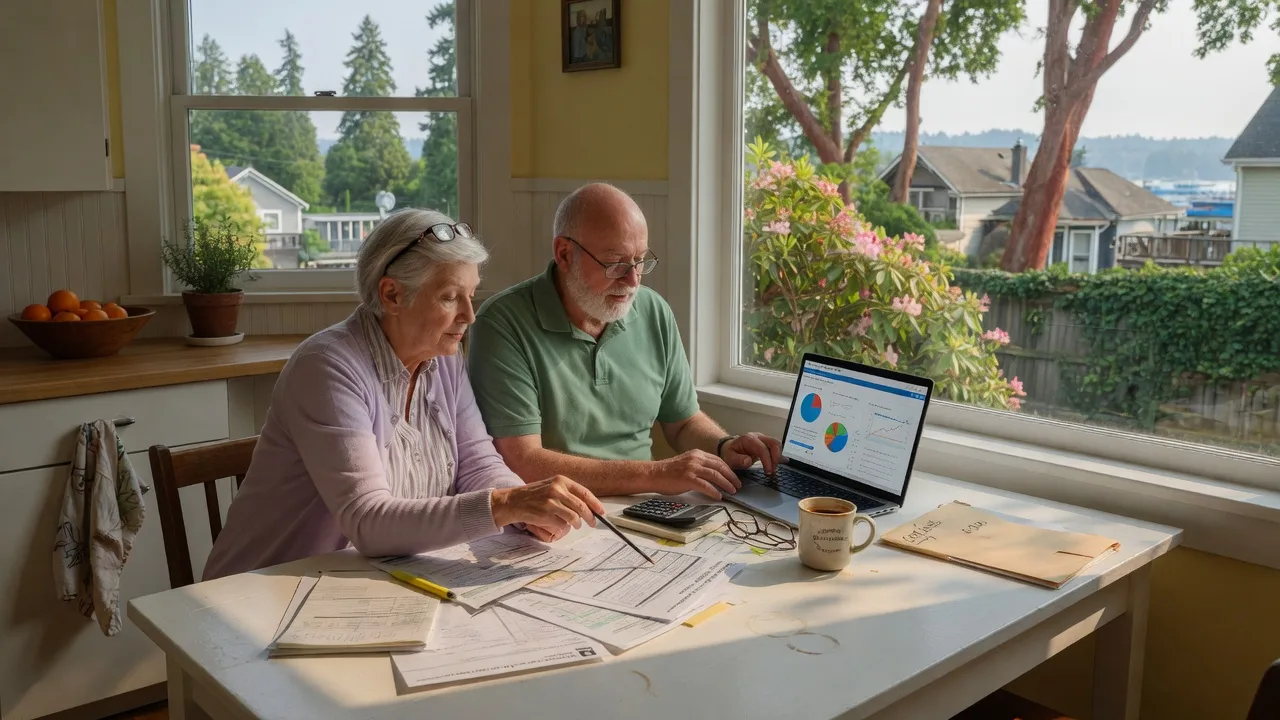
For many homeowners in Greater Victoria, the family home represents the single largest financial asset they own. After decades of mortgage payments and rising property values, that asset may hold hundreds of thousands of dollars in equity. When the question of downsizing arises, the natural next question follows: what is the best way to access that equity?
There are several ways to tap into your home equity, and each one works differently depending on your age, your goals, and whether you plan to sell or stay. This guide explains the most common options available to BC homeowners — reverse mortgages, home equity lines of credit (HELOCs), and selling to downsize — so you can understand the landscape before discussing your situation with a financial advisor or mortgage professional. As with any financial decision, it is important to consult qualified professionals for advice tailored to your specific circumstances.
Understanding home equity
Home equity is the difference between what your home is worth and what you still owe on your mortgage. If your home is valued at $1,000,000 and you owe $150,000 on your mortgage, your equity is $850,000. That equity can be accessed in several ways, but the method you choose affects your monthly cash flow, your tax situation, and what you leave behind for your heirs.
In Greater Victoria, where home values have appreciated significantly over the past two decades, many homeowners find themselves sitting on more equity than they ever expected. Understanding how to use that equity wisely is a key part of planning your housing transition.
Option one: sell and downsize
For many seniors, selling the family home and moving to a smaller, less expensive property is the most straightforward way to access equity. When you sell, the proceeds from the sale are yours to use as you see fit, and because of Canada's principal residence exemption, the sale of your primary home is generally exempt from capital gains tax.
The advantages of selling to downsize include:
- You receive a lump sum of cash that can be invested to generate retirement income
- Your ongoing housing costs typically decrease (lower property taxes, lower utilities, less maintenance)
- You free yourself from the physical and financial burden of maintaining a large property
- The principal residence exemption means no capital gains tax on the sale
The main consideration is that you need to be ready to move. For seniors who want to stay in their current home but need additional income, selling may not be the right first step. But for those who are ready for a housing transition, downsizing offers a clean financial reset.
Option two: the Home Equity Line of Credit (HELOC)
A HELOC allows you to borrow against the equity in your home without selling it. You receive a revolving line of credit that you can draw on as needed, and you pay interest only on the amount you use. HELOCs typically have variable interest rates, which means your payments can change when the prime rate changes.
HELOCs may be useful for seniors who:
- Want to stay in their current home but need to fund home modifications for aging in place
- Need short-term access to funds before selling their home
- Want flexibility to borrow as needed rather than taking a lump sum
Key things to understand about HELOCs:
- You need sufficient income to qualify — lenders assess your ability to make interest payments
- Interest rates are variable, so your payments can increase
- The loan must eventually be repaid, typically when the home is sold
- Borrowing against your equity means less equity remains for your estate
Option three: the reverse mortgage (CHIP Home Income Plan)
A reverse mortgage, known in Canada as the CHIP Home Income Plan through HomeEquity Bank, allows homeowners aged 55 and older to access up to 55 percent of their home's value without making monthly payments. The loan is repaid, with interest, when you sell the home, move into long-term care, or pass away.
Reverse mortgages are designed specifically for older homeowners who want to access equity without selling. They have some unique features:
- No monthly mortgage payments are required — interest accrues and is added to the loan balance
- You remain the owner of your home and can live there as long as you wish
- You can choose to receive the funds as a lump sum, regular payments, or a combination
- You cannot be forced to sell your home as long as you meet the loan terms (pay property taxes, maintain insurance, keep the home in good condition)
Reverse mortgages can be an option for seniors who want to stay in their current home but need to supplement their retirement income, cover home renovations, or help family members financially. However, they are not the right choice for everyone.
Reverse mortgage pros and cons
Potential advantages
- No monthly payments — the loan is repaid when you sell or pass away
- You keep ownership and can stay in your home
- The money you receive is generally tax-free (consult a tax professional)
- You cannot be forced to sell as long as you meet basic obligations
- You can choose how to receive the funds
Important considerations
- Interest rates on reverse mortgages are typically higher than traditional mortgages or HELOCs
- The compound interest means your debt grows significantly over time, reducing the equity left for your heirs
- Upfront costs include appraisal fees, legal fees, and setup costs
- You must keep current on property taxes and home insurance — falling behind could trigger repayment
- If you decide to downsize later, the reverse mortgage must be repaid from the sale proceeds
How reverse mortgages compare to other options
| Sell & Downsize | HELOC | Reverse Mortgage | |
|---|---|---|---|
| Monthly payments | None (no mortgage) | Interest only minimum | None required |
| Affects OAS/GIS? | Depends on investment income | Typically not | Proceeds generally tax-free |
| Must move? | Yes | No | No |
| Interest rate | N/A | Variable (prime +) | Fixed or variable, typically higher |
| Equity for heirs | Full after sale | Reduced by amount borrowed | Reduced by loan plus compound interest |
| Best for | Ready to move, want clean break | Need flexible short-term access | Want to stay, need income |
What about the BC Property Tax Deferment Program?
British Columbia offers a property tax deferment program that allows eligible homeowners to delay paying their annual property taxes until their home is sold. This is not a loan against equity, but it reduces your annual housing costs. For seniors aged 55 and older, this can be a useful tool for managing cash flow while staying in your home. It is worth noting that deferred taxes do accrue interest, so it is not free money, but the interest rate is typically lower than borrowing through a HELOC or reverse mortgage.
The regular program applies to all eligible homeowners, while a separate program exists specifically for families with children. Your local BC government office or a financial advisor can help determine whether you qualify.
How downsizing fits into the picture
For many Greater Victoria seniors, the decision is not simply about which financial product to choose. It is about whether the family home still serves your life. A reverse mortgage lets you stay in place while accessing equity. Downsizing transfers your equity into a new, more manageable home while also reducing your ongoing costs.
Here is a scenario that illustrates the difference. A retired couple living in a four-bedroom home in Saanich valued at $1,200,000 with $200,000 remaining on their mortgage has roughly $1,000,000 in equity. If they take out a reverse mortgage of $300,000, they can use that money for retirement income, but they still carry the costs of the large home -- higher property taxes, higher utilities, and ongoing maintenance. If instead they sell the home, pay off the mortgage, and purchase a two-bedroom condo in Victoria for $650,000, they walk away with roughly $350,000 in cash (after transaction costs) and dramatically lower monthly expenses.
Both choices are valid. The right one depends on how attached you are to your current home, whether it still meets your physical needs, and what kind of lifestyle you want in the years ahead.
Questions to discuss with a financial advisor
- How does accessing home equity affect my eligibility for federal benefits like Old Age Security (OAS) and the Guaranteed Income Supplement (GIS)?
- What are the long-term costs of compound interest on a reverse mortgage if I live another 15 or 20 years?
- Could a HELOC meet my needs more cost-effectively than a reverse mortgage?
- What would my monthly cash flow look like if I downsized versus staying in my current home?
- How does each option affect what I can leave to my children or charitable causes?
Frequently asked questions
Can I get a reverse mortgage if I still have a mortgage?
Yes, but the existing mortgage must be paid off from the reverse mortgage proceeds. The amount you receive will be reduced by the amount needed to discharge your current mortgage.
Will a reverse mortgage affect my pension or benefits?
The funds you receive from a reverse mortgage are generally considered tax-free and should not affect Old Age Security or the Guaranteed Income Supplement. However, if the funds generate investment income, that income could affect your benefits. A financial advisor can help you structure the funds appropriately.
What happens to a reverse mortgage when I pass away?
The loan becomes due when the home is sold. Your estate repays the loan balance from the sale proceeds. If the sale proceeds exceed the loan balance, the remainder goes to your heirs. If the loan balance exceeds the home's value, the reverse mortgage insurer covers the difference.
Can I switch from a reverse mortgage to a traditional mortgage later?
You can repay a reverse mortgage at any time without penalty, though there may be early repayment costs depending on the terms. If you decide to downsize and sell your home, the reverse mortgage is simply paid off from the sale proceeds.
What if I want to downsize in a few years?
If you are planning to downsize within a few years, a reverse mortgage may not be the most cost-effective option, given the upfront costs and compound interest. A shorter-term solution, such as a HELOC or even a personal line of credit, may be more appropriate. Discuss your timeline with a mortgage professional to determine the best fit.
Thinking about your housing options?
Whether you are considering downsizing, renovating, or exploring your equity options, I can help you understand the real estate side of the equation. I work alongside financial advisors, mortgage brokers, and estate planners so you get comprehensive guidance for your specific situation.
Let's TalkAbout the author: Andrew Holenchuk is Team Leader of Victoria Property Group at eXp Realty and has been helping clients buy and sell homes in Greater Victoria since 2006. He has facilitated more than $1 billion in real estate sales and regularly helps seniors and families navigate the financial and practical aspects of housing transitions. This article provides general information for educational purposes only and does not constitute financial, legal, or tax advice. Consult qualified professionals for advice specific to your situation, including a licensed mortgage broker, financial advisor, and tax specialist.