
Moving In With Your Adult Children in Greater Victoria: What to Consider Before You Sell and Move In

Andrew Holenchuk
Victoria Property Group · eXp Realty
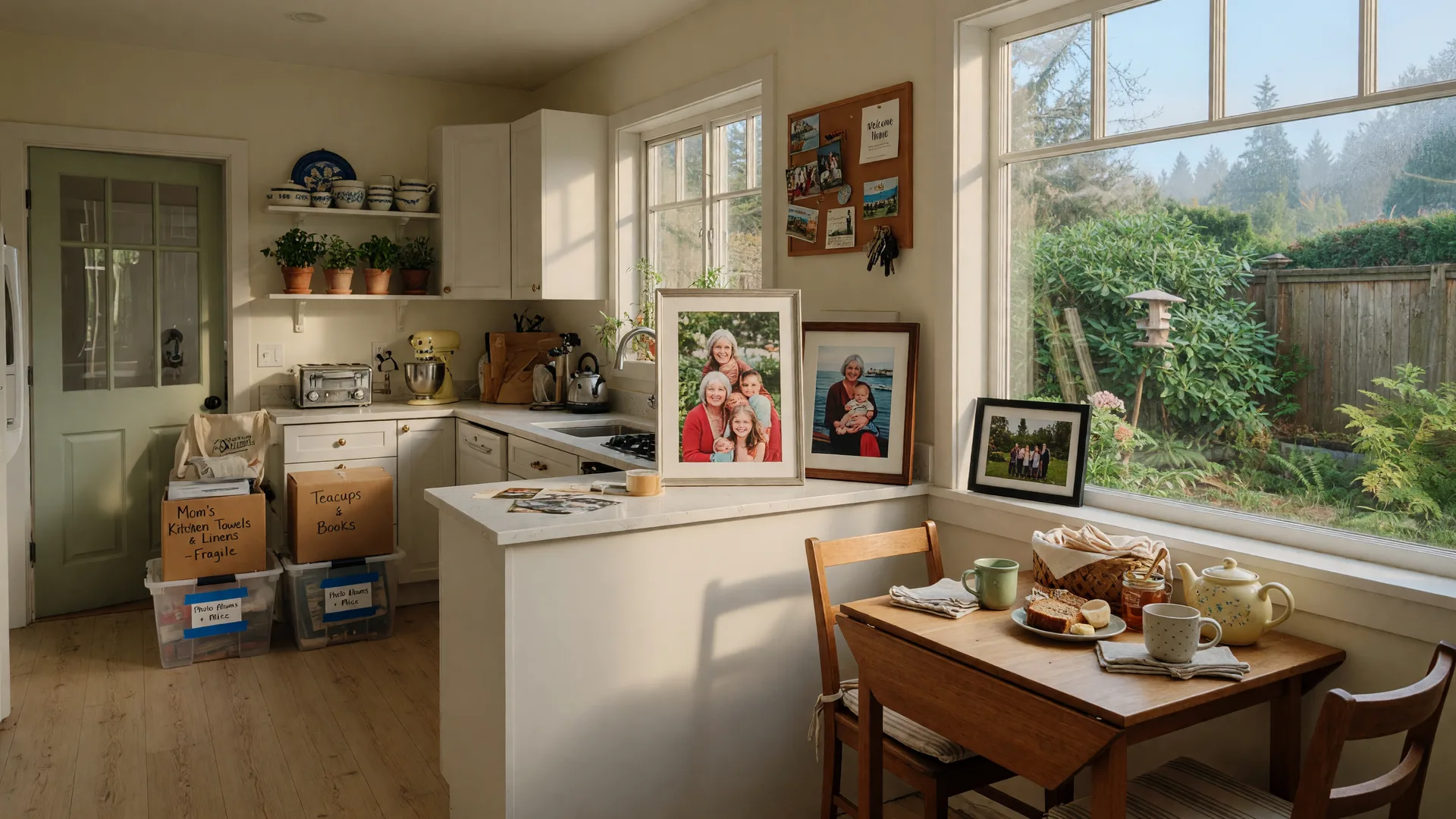
Moving in with your adult children is one of the most significant housing transitions a person can make, and it is more common in Greater Victoria than many people realize. Done well, it can bring daily connection, practical support, and financial relief for everyone. Done without a shared conversation, it can strain the very relationship it was meant to strengthen. This guide walks through the questions to ask, the arrangements to put in place, and the gentle planning that helps a shared household thrive.
There is no single right way to do this. Every family is different, and the goal here is not to tell you how to live, but to help you talk about it honestly before anyone packs a box.
Why families choose this path
The reasons families in Victoria, Saanich, Langford, and beyond choose to share a household are as varied as the families themselves. Some are practical: a parent can no longer manage a large house and garden, and a move brings safety and company. Some are financial: sharing housing costs in an expensive region eases pressure for both generations. Many are emotional: after years of living apart, the chance to be part of everyday life with children and grandchildren is genuinely precious, especially after a loss or a health change.
The housing market has made this path more attractive too. When a parent sells a long-held family home in Greater Victoria, the proceeds can support the family for years, and moving into an existing household can be far simpler than buying a new place in a competitive market.
Start with the conversation, not the boxes
The single most important step happens long before moving day: a calm, unhurried conversation between the people who will actually live together. Talk about what each person hopes for and worries about. Ask what life would look like day to day. Listen more than you speak.
It helps to be specific. Talk about mornings and evenings, meals, visitors, chores, noise, and quiet. Talk about how often the parent wants to be included in family life and how much independence they want to keep. Most of the friction in shared households comes not from big decisions but from dozens of small unspoken expectations.
Money: the conversation everyone avoids
Money is uncomfortable to raise and essential to address. There are several common arrangements, and none is wrong as long as it is clear and fair:
- The parent contributes to shared costs. A regular contribution toward mortgage, utilities, and groceries, whether it is called rent or something gentler.
- The parent pays for specific things. Some families agree the parent covers groceries, utilities, or a portion of the property costs.
- The parent's funds support the household more broadly. In some families the sale of the family home becomes part of the household's resources, perhaps a gift, a loan, or help toward a renovation that creates a private suite for the parent.
- No money changes hands. Some parents and children prefer it this way, and that is fine, as long as everyone genuinely agrees and no one feels quietly resentful.
Whatever arrangement you choose, write it down, even informally, so there are no surprises later. If money from a home sale is involved, whether as a gift or a loan, it is wise to talk to a lawyer about the tax and estate implications, because how money moves within a family can have real consequences years later.
What happens to your home?
For most parents this is the heart of the decision: the home they raised their family in. Selling it frees up equity, ends the upkeep, and funds the next chapter. But it is also a profound goodbye. Give yourself permission to feel that. You do not have to be purely practical about a place full of memories.
Some parents keep the home and rent it out, planning to return if the shared arrangement does not work. Others sell and see the equity as a gift to their grandchildren's future or their own security. Still others transfer the home to a child, which carries its own legal and tax considerations in BC. There is no wrong path, but it deserves a deliberate conversation with your family and, for the legal and tax side, with a qualified professional.
What to bring, what to leave, and what to store
A lifetime of belongings does not fit neatly into a spare room. Moving in with adult children is an exercise in choosing what matters most. Start early, room by room, and ask a simple question of each item: does this earn a place in my new life, or is it a souvenir of my old one?
- Bring the things that carry daily meaning: favourite furniture, photographs, books, a comfortable chair, the dishes you actually use.
- Give or pass along larger furniture early, so everyone can plan the space together.
- Sort keepsakes into a small, treasured collection rather than dozens of boxes.
- Be honest about whether a storage unit is worth its monthly cost for items you may never unpack.
There are trusted estate sale, donation, and moving professionals across Greater Victoria who make this process far gentler. You do not have to do it alone, and you should not feel any pressure to decide everything at once.
Privacy, independence, and a space of your own
The families that thrive in a shared household protect everyone's space and dignity. A private bedroom with a lockable door matters. A bathroom that is genuinely yours, even part time, matters. A corner that is yours to arrange, a chair that is yours, a routine that is yours: these small things preserve the independence that makes togetherness a gift rather than a burden.
Independence is also about daily life. Can you get out on your own? Is the home close to the grocery store, the pharmacy, your friends, your community? A household that shares a kitchen but also supports separate lives is far more likely to last.
Plan a gentle plan B
The hardest conversation, and the most loving one, is about what happens if it does not work out. Health changes, family dynamics, or simply the reality of living together can mean the arrangement needs to evolve. Knowing there is a dignified exit for everyone makes the arrangement feel safer for all concerned.
A plan B does not need to be dramatic. It might be a rental within the same neighbourhood, a small condo that keeps you close but independent, or an agreement to revisit the arrangement every year. The point is that nobody feels trapped. Naming this openly protects the relationship more than any other single step.
The paperwork that protects everyone
Before anyone moves, it is worth updating the practical documents: a will, an enduring power of attorney, and, if health matters are a concern, a representation agreement. If the parent is selling a home and contributing money to the household, a lawyer should review how that money is structured. None of this needs to feel heavy; it is simply the adult version of making sure everyone is looked after.
What shared living can give you
For all the logistics, the reason families attempt this at all is connection. Grandparents who see their grandchildren grow up close, adult children who share meals with their parents again, and parents who find new purpose in a full house. Helping people confidently navigate one of life's biggest housing transitions means honoring that, while also being honest about the work it takes.
When it is chosen freely, planned together, and revisited kindly, moving in with adult children can be one of the most rewarding chapters of all.
Frequently asked questions
Should I sell my home or keep it when I move in with my children?
It depends on your finances, your feelings about the house, and your family's plan. Selling unlocks equity and ends upkeep, while keeping it preserves an asset and a possible fallback. Talk it through with your family and a financial professional before deciding.
Is it better to charge rent or contribute to shared costs?
There is no single right answer. Some families call it rent, some share costs informally, and some prefer no money to change hands. The important thing is that the arrangement is clear, agreed on in advance, and revisited as circumstances change.
How do I keep my independence in a shared household?
Protect the basics: your own space, your own routines, and the ability to get out on your own. A home close to shops, transit, and friends makes a shared household feel far more like independence than confinement.
What if living together does not work out?
Have a gentle plan B from the start, such as a nearby rental or a small condo that keeps you close but independent. Revisiting the arrangement openly every year means no one feels trapped and the relationship stays intact.
Do I need a lawyer before moving in with family?
If a home sale or a significant transfer of money is involved, yes, it is wise. A lawyer can review how the money moves, update your will and power of attorney, and help you understand any tax implications of gifting or lending within the family.
Thinking about a shared household?
I have helped Greater Victoria families think through selling a long-held home, moving in with family, and the many arrangements in between. If you are weighing your options, I am here to help you think it through.
Reach Out AnytimeWritten by Andrew Holenchuk, Team Leader of Victoria Property Group at eXp Realty, helping homeowners in Greater Victoria navigate housing transitions since 2006.
This article is for general information only and is not financial, tax, or legal advice. Gifting, lending, and transferring property within a family can have tax and estate consequences, so confirm the details with a qualified lawyer or accountant.