
How Home Offers Work in BC: Offer Day, Negotiation, and What Happens After

Andrew Holenchuk
Victoria Property Group · eXp Realty
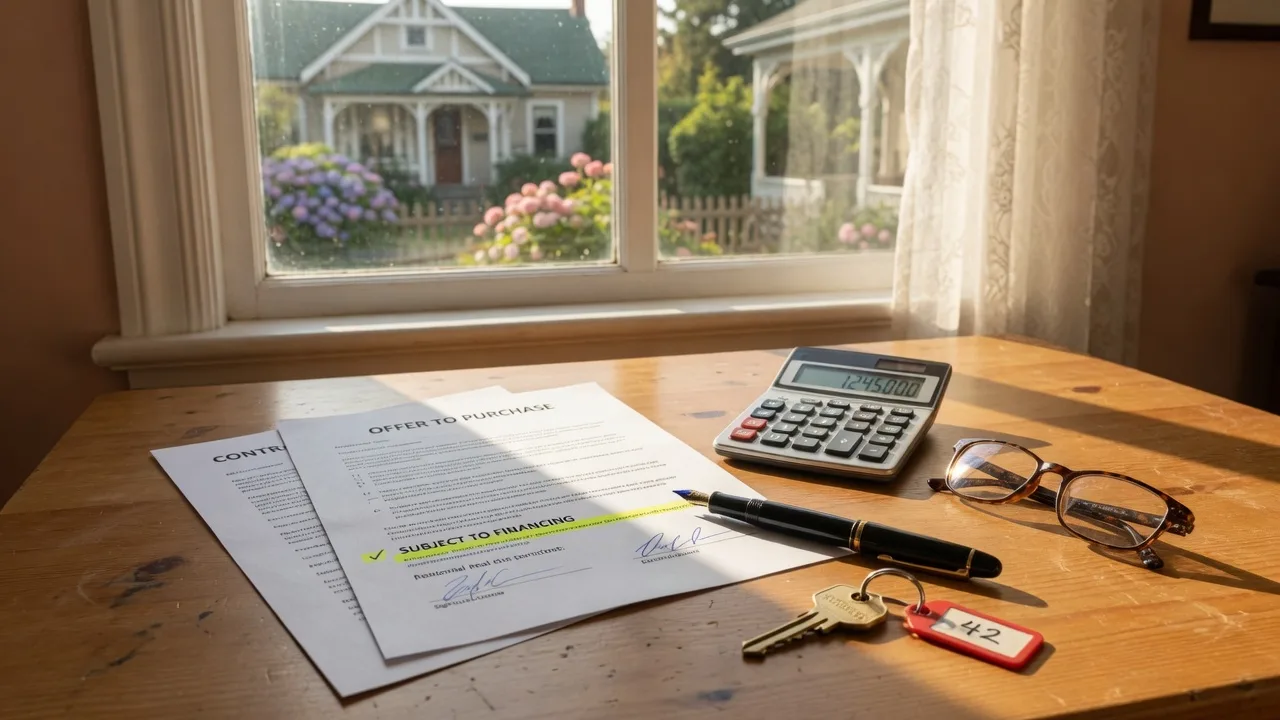
When you sell a home in Greater Victoria, almost everything comes down to the offer: the formal, written document a buyer uses to say "here is what I will pay, and here are the conditions." This guide walks through how offers actually work in BC, from the moment an offer arrives to the day you hand over the keys, so you know what to expect at every step and can make decisions with confidence.
Offers can feel intimidating because they are legal documents, but the process is more understandable than it looks once it is broken down. The goal of this article is to take the mystery out of it: what an offer contains, how it is presented, how negotiation works, what subjects and conditions mean, and what happens between acceptance and closing.
What an offer actually is
In British Columbia, a buyer's offer is a written contract, usually on the standard Contract of Purchase and Sale form used across the province. It is not a handshake, a text message, or a verbal promise. Once the seller accepts the offer, it becomes a legally binding agreement, which is why every element deserves careful attention before anything is signed.
A few things are true of every offer in BC:
- It is in writing. Oral discussions happen, but the binding deal exists only on paper (or its electronic equivalent).
- It has a deadline. An offer carries a date and time by which the seller must respond. If that deadline passes without a response, the offer usually lapses.
- It is presented through your listing REALTOR. The buyer's agent submits the offer to your agent, and your agent brings it to you, walks you through it, and counsels you on your options.
The parts of an offer, explained
An offer has more in it than a price. Understanding each part helps you read an offer like a professional rather than just looking at the number:
- Purchase price. What the buyer proposes to pay. Sometimes it is exactly your asking price, sometimes above, sometimes below.
- Deposit. A sum the buyer pays as a show of good faith, usually held in trust by the listing brokerage or a lawyer or notary until closing, then applied to the purchase price.
- Subjects and conditions. The clauses that must be satisfied before the deal becomes final, such as financing, a home inspection, or the sale of the buyer's own home. More on these below.
- Completion date. The day ownership transfers and the balance of funds changes hands. This is also sometimes called the closing date.
- Possession date. The day the buyer actually gets the keys and can move in. It can be the same as completion or a few days later.
- Inclusions and exclusions. What stays with the home, such as appliances, window coverings, or a specific chandelier, and what goes with you. This is where the fine print of fixtures and chattels lives.
- Other terms. Anything specific the buyer is asking for, such as a longer inspection period or a request that you replace a certain system.
How offers are presented, and what offer day means
How an offer arrives depends on how the home is being marketed. Some listings invite offers anytime, and buyers submit them as they are ready. Others, especially in active markets, set an "offer date": a day and time by which all offers must be submitted, after which the seller reviews them together. This is often called offer day, and it is common in sought-after Victoria neighbourhoods and in popular condo buildings.
On offer day, your REALTOR presents each offer to you in writing, explains the terms, and compares them. It is important to know that you are never obligated to accept the highest price. A slightly lower offer with no subjects can be far more attractive than a higher one that depends on the buyer selling their own home first. Your agent's job is to help you weigh all of it, not just the number at the top.
Multiple offers: how to handle them fairly
When more than one buyer wants your home, you have options rather than a single path. You can accept one offer, decline all of them, or give buyers a chance to improve their terms through a revised offer. REALTORS in BC are bound by rules that require offers to be handled honestly and without deception, so you are never invited to play buyers off each other artificially; instead, you simply review what has been submitted and decide.
In practice, multiple offers often come with similar price levels, so the differences that matter are the conditions: who has financing already arranged, who has sold their own home, how flexible the possession date is, and how large the deposit is. A clean offer with a strong deposit and no subjects can close faster and with fewer surprises than a slightly higher offer that might fall apart.
Negotiation and counter-offers
Very few first offers are accepted exactly as written. When a seller wants to change something, the response is a counter-offer: a written revision that changes one or more terms, such as raising the price, shortening the subject period, or moving the possession date. The original offer is then dead, and the ball is in the buyer's court to accept, reject, or counter again.
Negotiation in BC is done in writing and on the clock. Every counter-offer has its own deadline, and each round either brings the two sides closer or ends the conversation. It can feel like a quiet game of chess, and the practical value of a skilled REALTOR shows up here: knowing what is realistic in the current market, which terms actually matter to you, and when a reasonable compromise keeps a good deal alive.
Subjects and conditions: the clauses that protect buyers
Subjects, also called conditions, are the parts of the contract that let a buyer confirm the deal is right before it becomes final. The most common ones in Greater Victoria are:
- Financing. The buyer must arrange a mortgage, usually within five to ten business days.
- Home inspection. The buyer may have the home inspected by a qualified inspector and must be satisfied with the findings.
- Sale of the buyer's own property. The buyer must sell their current home first, which can add meaningful risk to your timeline.
- Strata document review. For condos and townhomes, the buyer reviews strata minutes, bylaws, and the depreciation report.
- Insurance. The buyer confirms the home is insurable.
Each subject has a deadline, and the buyer removes it in writing once satisfied. If a buyer cannot remove a subject, such as financing falling through, the deal usually ends and the deposit is returned. Understanding which subjects are reasonable and which carry real risk for you is a big part of evaluating an offer.
Between acceptance and closing
Once an offer is accepted and subjects are removed, the transaction moves toward completion. Your lawyer or notary handles the legal side: checking title, preparing the statement of adjustments, and arranging the transfer of funds. On the completion date, ownership formally changes hands and the balance of the price is paid. On the possession date, usually the same day or shortly after, the buyer receives the keys.
This is also the window when you finalize your own move: arranging movers, confirming your new home, and planning the handover of keys. For downsizers, the period between acceptance and closing is often the busiest, because it is when the practical work of the move happens on a fixed calendar.
What can go wrong, and how to protect yourself
Most BC home sales close without drama, but it helps to know where the risk sits. A buyer can fail to obtain financing, an inspection can uncover significant issues, or a buyer waiting on their own sale can be delayed. Some of this risk is managed with the right subjects and deadlines, and some of it is managed by choosing the right buyer in the first place: one who is genuinely qualified and committed.
Your REALTOR and your lawyer or notary are your two main safeguards. Your REALTOR helps you evaluate offers and negotiate terms that protect you, while your lawyer or notary makes sure the paperwork and money transfer correctly. Neither replaces the other, and neither should be skipped when you are selling a home, especially a long-time family home where the details carry extra weight.
Questions to ask your REALTOR about offers
- How many offers have you handled in my neighbourhood this year?
- What should I watch for in the subjects and conditions?
- Is a deposit of this size normal for our market?
- How do you present and compare multiple offers?
- What happens if the buyer cannot remove their subjects?
- How will you keep me informed during negotiation?
These questions do not commit you to anything. They simply make sure that when an offer arrives, you understand it completely and feel supported in your decision.
Frequently asked questions
Do I have to accept the highest offer on my home?
No. In BC you can accept any offer you choose, decline all of them, or counter any of them. Price matters, but so do subjects, deposits, and the reliability of the buyer. A cleaner offer at a slightly lower price can be a better deal.
What does it mean to remove subjects?
Removing a subject means the buyer confirms in writing that a condition, such as financing or an inspection, has been satisfied. Once all subjects are removed, the contract becomes firm and the sale is committed to close.
What happens to the deposit during the sale?
The buyer's deposit is held in trust by the listing brokerage or a lawyer or notary until closing, then applied to the purchase price. If the deal does not close, the terms of the contract determine what happens to the deposit.
How long does the negotiation process take?
It depends. A straightforward offer with no counter-offers can be accepted within hours or days. Multiple rounds of counter-offers, or an offer night with several offers, can take a few days. Every offer and counter-offer carries its own deadline, so the pace is set by the documents.
What is the difference between completion date and possession date?
The completion date is when ownership transfers and the balance of funds is paid. The possession date is when the buyer gets the keys and can move in. They are often the same day, but a sale can set possession a few days after completion.
Want to understand how an offer would work for your home?
Offers read differently once they apply to your own home and neighbourhood. I would be glad to walk you through the process, compare recent sales in your area, and help you feel ready before the first offer arrives. Helping people confidently navigate one of life's biggest housing transitions is what I do every day.
Let's Talk About Andrew Holenchuk
Andrew is Team Leader of Victoria Property Group at eXp Realty and has been helping people buy and sell homes throughout Greater Victoria since 2006. Together with his team, they have facilitated more than $1 billion in real estate sales while helping families navigate downsizing, estate transitions, and housing moves. This article is general information only and not a substitute for professional financial, legal, or real estate advice for your specific situation.