
How to Right-Size Your Home Office When You Downsize in Greater Victoria

Andrew Holenchuk
Victoria Property Group · eXp Realty
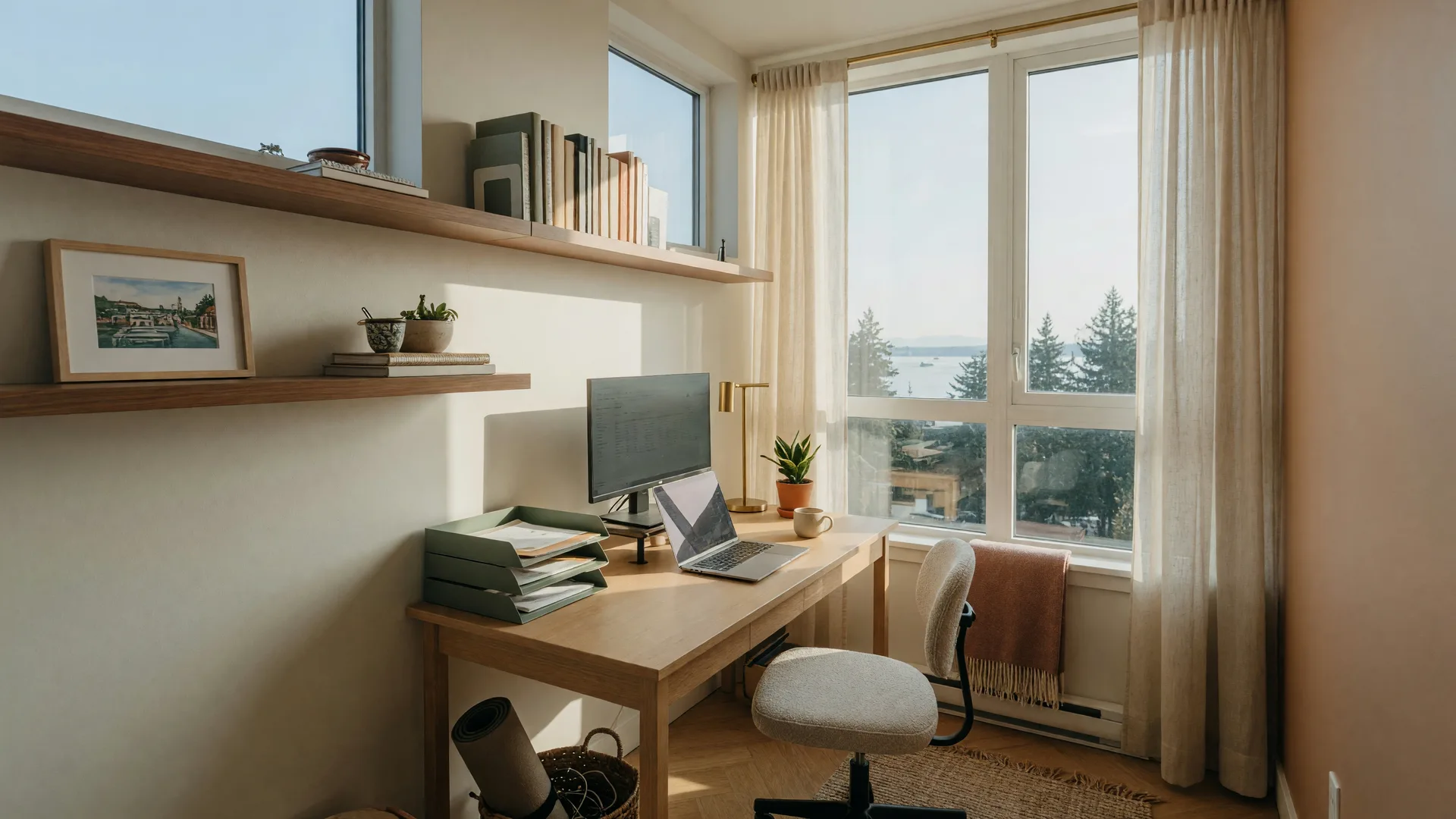
If you work from home, one of the biggest worries about downsizing in Greater Victoria is losing your dedicated workspace. It's a real concern: a smaller condo or townhome can feel as though it leaves no room for the desk, the calls, and the focus that your job depends on. The good news is that with a little planning, a downsized home can support a comfortable, productive home office, often in ways you didn't expect.
This guide walks through what to think about when you downsize with a home office, from choosing a home that works for work, to designing a space in a smaller footprint, to the practical details of meetings, storage, and acoustics. Whether you work full-time remotely or just need a place to pay bills and join the occasional video call, the goal is the same: a home that fits your work and your life.
What kind of workspace do you actually need?
Before you look at homes, it helps to be honest about how you work. Not every home office needs a full separate room. Walk through a typical workday and note what matters most:
- The obvious work zone. Do you need a dedicated desk for a computer and paperwork, or does a sturdy countertop and a laptop do the job?
- Video calls. How often do you need a quiet, presentable spot with decent light facing away from the window so you're not backlit?
- Client or team visits. Do people ever come to your home for meetings, or is everything remote?
- Storage needs. Files, inventory, samples, books. A workspace that can't hold your stuff becomes a cluttered dining table.
- Noise and privacy. Can you be interrupted? Do you need to close a door for confidential calls?
Write your answers down before you view properties. This simple list will guide which features matter in a home, and it will keep you from sacrificing too much space for a "nice to have" you rarely use.
Housing features that make a home office easier
When you're looking at condos and townhomes in Greater Victoria, certain layouts support a home office far better than others. These are worth prioritising:
- A second living space. In a two-bedroom condo, a den, an office nook, or even a generously sized hallway can become your work area, leaving the bedroom purely for rest.
- A usable bedroom that isn't needed for sleeping. If you don't have overnight guests often, the second bedroom can serve as a true office and double as a guest room when family visits.
- Plenty of natural light. Good light makes a smaller space feel larger and is flattering on video calls. Look at the direction the windows face and how the light changes through the day.
- Built-in storage. Floor-to-ceiling closets and cabinets in a condo let you store equipment and files without eating into your floor space.
- Good sound separation. Concrete construction between floors in many newer Victoria towers reduces noise from neighbours, which matters for meetings.
- Nearby coffee and coworking. Many downsizers find a pleasant third place, a library, a cafe, or a coworking space, helpful for variety and focus.
A REALTOR® who specialises in downsizing homes can help you read floor plans and spot the features that will support your work, rather than just counting bedrooms and square footage.
Designing a working corner in a smaller footprint
Once you've chosen your home, the real opportunity begins: setting up a workspace that genuinely works in the space you have. A few practical ideas that downsize well:
- Invest in a quality, compact desk. A wall-mounted floating desk or a slim console takes up barely any floor space and can hold a laptop, a monitor, and a desk lamp. Skip oversized executive desks that dominate a room.
- Choose one good chair and make it ergonomic. You live in your desk chair for hours a day. A comfortable, supportive chair matters more than any other single piece of office furniture.
- Use vertical space for storage. Shelving up the wall keeps files, books, and supplies off your work surface and makes a small corner feel organised.
- Make it easy to tidy away. If your work area is in a living space, use baskets, drawers, and a closed cabinet so you can clear the surface at the end of the day and reclaim the room.
- Place your screen beside, not in front of, the window. For video calls, sit at an angle to the window so your face is lit, not shadowed. It's a small shift that makes a big difference.
- Add light and a plant. Warm, layered lighting and a little greenery soften a compact space and make it a place you actually want to sit in.
What if the new home simply has no office room?
Not every downsizer needs or wants a dedicated room. Many people happily work from the kitchen island, a dining nook, or a corner of the living room, especially if they step out for meetings. If that's you, think about these workarounds:
- Designate one clear spot and keep it consistent, so your brain associates that corner with focus.
- Keep a tidy, semi-portable kit so setup is quick: a laptop sleeve, a headset, a charger, and your notebook in one drawer or basket.
- Consider a coworking membership or library space for days when you need separation from home. Greater Victoria has libraries across Saanich, Victoria, Langford, Sidney, and the Peninsula, and several coworking options in the downtown core and the Westshore.
- Tell family and neighbours your working hours so they respect focus time, especially if you share walls or a landing with others.
Technology, connectivity, and the home office
A downsized home office is more than furniture. For remote work, your internet and setup do the heavy lifting. Before you commit to a home, check these:
- Internet speed and reliability. Confirm the building and neighbourhood can deliver the speed your work needs. Many condo buildings have fibre options, but it's worth verifying the actual service provider available at the address.
- Wi-Fi placement. In a compact space this is rarely an issue, but if your router sits in a closet, a low-cost mesh or extender can fix dead zones.
- Video and audio. Good lighting, a quality webcam microphone, or a simple headset makes you look and sound professional on every call, regardless of room size.
- Backup power for shorter outages. A small UPS for your computer can smooth over the brief power blips that occasionally affect the island, and a charged power bank keeps your laptop going.
- Bills and mail forwarding. Remember to update your home insurance, billing addresses, and work records when you move, and confirm your content insurance covers your equipment.
All of this planning is part of confidently navigating one of life's biggest housing transitions. A home office that supports your work means your downsizing decision supports your whole life, not just your square footage.
A home office that protects your wellbeing
The deeper point of keeping a good workspace when you downsize is your wellbeing. Working from a comfortable, well-lit corner supports your health and your happiness in the new home. A few habits that help:
- Keep the workspace separate from your sleep area where possible, so your bedroom stays a place of rest.
- Schedule breaks and get outside. Greater Victoria's walkable neighbourhoods, trails, and shoreline make it easy to step away from the screen and clear your head.
- Set boundaries on your hours and physically close your laptop at the end of the day. In a smaller home, the work area is closer to the rest of your life, so those boundaries matter more.
Downsizing doesn't have to mean giving up a comfortable way to earn your living. With the right home and a little planning, your smaller space can support your work, your focus, and your life after the move.
Frequently asked questions
Can I really work from home in a one-bedroom condo?
Yes, if you plan for it. A one-bedroom condo can work well when you use a quality compact desk, designate one consistent spot, and use storage to keep your work surface tidy. If you need total separation and frequent confidential calls, a two-bedroom unit or a den, or a nearby coworking space, may be worth the extra cost.
Do I need a separate room for a home office when I downsize?
Not necessarily. Many people work happily from a dining nook, a corner of the living room, or a kitchen island, especially if they don't take confidential calls. A separate room is most valuable when you need privacy, quiet, or space for equipment and files. Match the setup to how you actually work.
What should I check about internet before moving to a Victoria condo?
Confirm which internet service providers actually serve the building and what speed is available at the address. Some newer buildings are wired for fibre, while others may have more limited options. It's also worth asking about building-wide Wi-Fi noise in shared spaces and checking your router placement in the unit.
How do I make video calls look good in a small space?
Place your screen at an angle to the window so your face is lit rather than backlit, add a simple lamp for fill light, use a good microphone or headset, and keep the background tidy or intentionally styled. A tall plant and a small shelf can turn an ordinary corner into a professional-looking backdrop.
Is a home office worth extra square footage when I'm downsizing?
It depends on how much you work from home and how much privacy or quiet you need. For full-time remote workers, a usable second space is often worth more than extra living room size. If you only handle light tasks at home, a well-planned corner may serve you just fine, and you can invest the difference elsewhere in your new home or budget.
Looking for a home that fits your work and your life?
I help Greater Victoria homeowners find the home that fits their next chapter, including the spaces they need to work, rest, and live well. If you're starting to think about downsizing, I'd be glad to talk through your priorities.
Let's Talk