
Navigating Home Care and Community Support Options in Greater Victoria: A Guide for Seniors and Families

Andrew Holenchuk
Victoria Property Group · eXp Realty
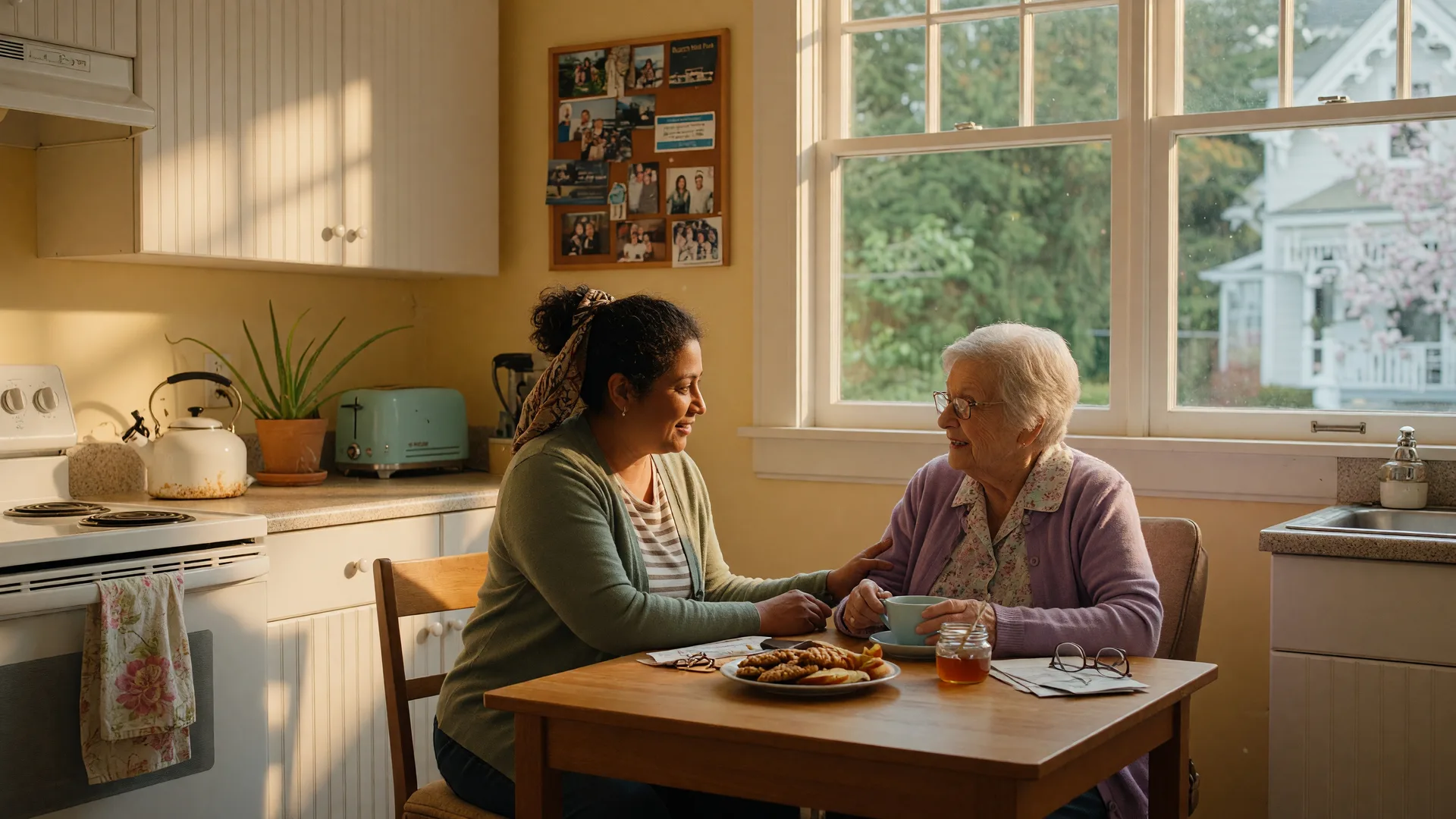
One of the most common questions I hear from families in Greater Victoria is this: "Can Mom or Dad stay in their home with help, or is it time to look at a retirement community?" It is a question that touches nearly every aspect of life — safety, finances, dignity, family relationships, and the deeply personal meaning of home. And the answer, more often than not, starts with understanding what kind of support is actually available.
Greater Victoria has a strong network of home care and community support services, but navigating them can feel overwhelming. Between Island Health programs, non-profit services, private care options, and community-based organizations, it is not always clear where to start or what fits your situation. This guide lays out the landscape of home and community support in the Capital Regional District so you and your family can make informed decisions about whether to age in place with support or begin planning a move.
The first question: Is staying at home with support realistic?
For many seniors, staying in their own home is the preferred path. The familiarity of a long-time residence, the memories embedded in every room, the independence of managing your own space — these are powerful reasons to want to age in place. But staying at home safely requires a realistic assessment of your current and future needs.
Here are the key factors to evaluate when considering home care and support:
- Physical safety. Can you move safely through the home? Are stairs a concern? Is the bathroom accessible? Even with home care, an unsafe physical environment limits what support can accomplish.
- Daily living needs. Do you need help with bathing, dressing, meal preparation, medication management, or transportation? Different levels of support exist for different needs, from a few hours a week to round-the-clock care.
- Social connection. Isolation is one of the biggest health risks for seniors living alone. If your social network has shrunk, community programs can help — but they require the ability and willingness to engage.
- Caregiver availability. If family members are providing support, are they sustainable? Caregiver burnout is real, and a plan that depends on an unpaid adult child who lives an hour away may not work long-term.
- Financial resources. Home care is not free. Understanding what is publicly funded and what you will pay for out of pocket is essential before making decisions.
The good news is that Greater Victoria offers a wide spectrum of support, from light-touch community services to intensive clinical home care. Let us walk through what is available.
Island Health Home and Community Care
The first and most important resource for seniors requiring medical or personal care at home is Island Health's Home and Community Care program. This publicly funded program provides health services to people who need support to remain in their homes or return home after a hospital stay.
Services available through Island Health include:
- Case management: A clinical coordinator assesses your needs, develops a care plan, and connects you with appropriate services. This is the entry point to most publicly funded home care.
- Home health services: Nursing care, wound care, medication management, and clinical monitoring provided in your home by registered nurses and licensed practical nurses.
- Rehabilitation services: Physiotherapy, occupational therapy, and speech-language therapy for seniors recovering from illness, surgery, or injury.
- Home support services: Personal care assistance with bathing, dressing, grooming, toileting, and mobility. These services are provided by community health workers and are typically rationed based on assessed need.
- Palliative and end-of-life care: Comprehensive support for individuals and families navigating the final stages of life, available at home or in hospice settings.
To access Island Health home care, call the Community Access Line at 1-888-533-2273, available seven days a week from 8:30 AM to 10:30 PM. A health professional will complete an initial assessment and determine eligibility. Services are not automatic — they are allocated based on clinical need, and there may be wait times, especially for non-urgent care.
It is important to understand that publicly funded home support is typically limited to personal care tasks (bathing, dressing, toileting) and is not designed to cover housekeeping, meal preparation beyond basic needs, or companionship. For those broader needs, community-based programs and private services fill the gap.
Better at Home: non-medical support through United Way
The Better at Home program, funded by the Government of BC and managed locally by the United Way, provides non-medical support services to help seniors aged 55 and older remain independent in their own homes. This program is designed precisely for the tasks that make daily life manageable but that are not covered by publicly funded health care.
Services vary by community but typically include:
- Light housekeeping and home organization
- Light yard work and snow removal
- Grocery shopping and errands
- Meal preparation
- Friendly visiting and social connection
- Transportation to appointments
- Minor home repairs and safety checks
In Greater Victoria, Better at Home services are delivered through local agencies including Beacon Community Services on the Saanich Peninsula, the Metchosin Seniors Resource Centre, and others depending on the specific community. There is typically a small fee for services on a sliding scale based on income.
For many seniors, Better at Home is the program that makes the difference between staying in their home comfortably and feeling overwhelmed. A few hours of housekeeping help and a weekly grocery run can preserve independence for years.
Meals on Wheels and meal programs
Good nutrition is foundational to health, but cooking for one — or managing dietary restrictions — becomes harder as we age. Greater Victoria has several meal programs that deliver nutritious food directly to seniors' homes.
- Beacon Community Services "More Than Meals" program (250-656-5537): Serves the Saanich Peninsula with freezer-to-table meals delivered weekly. Each meal is nutritionally balanced and can be heated in minutes.
- James Bay New Horizons (250-386-3035): Offers meal programs for seniors in the James Bay and downtown Victoria area.
- Better Meals (1-888-838-1888): A province-wide program delivering frozen meals to seniors in their homes, with no minimum order and no long-term commitment.
- Island Health Area Meals on Wheels: Delivers hot meals with the added benefit of a volunteer visit, which provides social contact and a wellness check for homebound seniors.
Meal programs do more than provide food. The volunteers who deliver meals are often the only person a homebound senior sees that day, and many programs have protocols to alert family or health authorities if a senior misses a delivery or seems unwell. That social connection is as valuable as the meal itself.
Adult Day Programs: engagement and respite
Adult Day Programs are among the most valuable resources for seniors and families navigating the in-between space — when someone needs structure, social engagement, and some supervision during the day but does not yet require full-time residential care.
These programs operate in a homelike setting and provide:
- Therapeutic health and social activities
- Health monitoring by trained staff
- Nutritious meals and snacks
- Social interaction with peers
- Respite for family caregivers
- Bathing programs and foot care clinics
- Community bus transportation to and from the program
One of the best-known providers in Greater Victoria is the Mount Newton Centre Society in Saanichton (250-388-2273), which has been serving seniors in the region for decades. The Centre also offers a medical equipment lending program, a community bath program, and regular foot care clinics. Other Adult Day Programs operate through Island Health at locations across the Capital Regional District.
For family caregivers, Adult Day Programs provide scheduled respite that can make the difference between burnout and sustainability. If you are supporting a spouse or parent with dementia, memory loss, or mobility challenges, having three or four predictable hours of support each week can transform your capacity to keep them at home.
Transportation services for seniors
Losing the ability to drive is one of the most difficult transitions for seniors. In a region like Greater Victoria, where car dependency varies by neighbourhood, transportation options can determine whether a senior remains socially connected and able to access services.
- BC Transit HandyDART: Door-to-door accessible shared-ride service for people who cannot use regular public transit. Registration is required, and rides must be booked in advance. The Taxi Saver Program offers a 50 per cent subsidy on taxi rides for registered HandyDART users.
- BC Bus Pass Program: Free annual bus pass for BC seniors of modest income. Combined with HandyDART, this provides a solid baseline for transportation across the region.
- Volunteer driver programs: Many community organizations, including Beacon Community Services and the Metchosin Seniors Resource Centre, arrange volunteer drivers for medical appointments and essential errands.
When helping a parent or client evaluate whether they can remain at home, transportation is an issue worth taking seriously. A senior who cannot get to medical appointments, grocery stores, or social activities will become isolated, and isolation drives health decline faster than almost any other factor.
Private home care services
For families who need more support than publicly funded programs provide — or who do not qualify for publicly funded care — private home care agencies fill an important role. Greater Victoria has several licensed private home care providers that offer flexible, paid services ranging from a few hours a week to 24-hour live-in care.
Private home care can include:
- Personal care (bathing, dressing, toileting)
- Companionship and supervision
- Medication reminders
- Meal preparation and light housekeeping
- Transportation to appointments
- Dementia and Alzheimer's care
- Palliative care support
Costs vary significantly by agency and level of care. In Greater Victoria, private home care typically ranges from $28 to $45 per hour for basic companion care, and $35 to $55 per hour for more skilled personal care. Live-in care is usually billed at a flat daily rate. Some families supplement publicly funded care with private services to get the right balance of support and cost.
When staying home with support is not enough
As comprehensive as Greater Victoria's home and community services are, there comes a point for many seniors where staying at home is no longer safe or sustainable — even with significant support. Here are some signs that it may be time to consider a housing transition:
- Frequent falls or hospital visits that home care cannot prevent
- Wandering or safety risks related to dementia that cannot be managed at home
- Caregiver burnout or illness that removes the family support system
- Cost of private care exceeding the cost of a retirement community or assisted living facility
- Severe social isolation that programs cannot overcome
- A home that cannot be made safe regardless of modifications
Recognizing these signs is not a failure. It is a sign that you have been paying attention and that your priority — safety, dignity, and quality of life — is guiding your decisions. The goal is never to stay at home at all costs. The goal is to find the right level of support for where you are right now.
How a housing advisor can help
As a REALTOR who works primarily with people navigating one of life's biggest housing transitions, I spend a lot of time helping families weigh the home care versus moving question. My role is not to push anyone into a sale. It is to help you see the full picture — what support is available, what your current home would need to stay safe, what your options look like in a retirement community or condo, and what the financial comparison really adds up to.
If you are in Oak Bay, Saanich, Victoria, Langford, Sidney, or anywhere in Greater Victoria and wondering whether it is time to make a change — or whether you can make your current situation work — a candid, no-pressure conversation can bring clarity. I know the local market, the support services, and the neighbourhoods that work best for each stage of life.
Trying to decide between home care and a housing transition?
I help Greater Victoria families navigate this decision every day. Whether you need help connecting with support services or want to understand what your home is worth and what your options look like in a downsized property, I am here to help.
Book a Private ConsultationFrequently asked questions
How do I access Island Health home care in Greater Victoria?
Call the Island Health Community Access Line at 1-888-533-2273, available 8:30 AM to 10:30 PM, seven days a week. A health professional will assess your needs and determine eligibility for publicly funded home support, nursing care, rehabilitation, and other services. You do not need a doctor's referral to make the initial call, but a referral may be needed for some specific services.
How much does home care cost in Greater Victoria?
Publicly funded home care through Island Health is subsidized based on assessed need and income. There may be a modest co-payment for home support services. Private home care agencies charge $28 to $55 per hour depending on the level of care. Better at Home services through United Way operate on a sliding scale. Meals on Wheels programs charge per meal, typically $7 to $12.
What is the difference between Better at Home and Island Health home support?
Island Health home support focuses on medical and personal care — bathing, dressing, wound care, medication management. Better at Home provides non-medical support — housekeeping, yard work, grocery shopping, friendly visiting, and transportation. The two programs complement each other, and many seniors benefit from both.
Can I get home care if I live in Langford, Sidney, Sooke, or another community outside Victoria?
Yes. Island Health's Home and Community Care serves the entire Capital Regional District, including Langford, Colwood, View Royal, Sooke, Sidney, North Saanich, Central Saanich, Metchosin, Highlands, and the Saanich Peninsula. Better at Home and other community programs also operate across these communities, though specific providers vary by location.
How do I know if I qualify for a retirement community vs. staying home with support?
This depends on your care needs, financial situation, home safety, and personal preferences. A good starting point is to have an assessment through Island Health Home and Community Care, which will clarify what level of publicly funded support you qualify for. From there, compare the cost and practicality of staying at home with support against the cost of a retirement community. A financial comparison that includes home maintenance, property taxes, utilities, and care costs will make the right choice clearer.
Written by Andrew Holenchuk, Team Leader of Victoria Property Group at eXp Realty. Since 2006, Andrew has been helping homeowners in Greater Victoria navigate one of life's biggest housing transitions with confidence. With more than $1 billion in facilitated sales, he brings deep local knowledge and genuine care to every client relationship. He serves clients across Victoria, Saanich, Oak Bay, Esquimalt, View Royal, Langford, Colwood, Sidney, North Saanich, Central Saanich, Sooke, Metchosin, Highlands, Shawnigan Lake, Mill Bay, Cobble Hill, and Duncan.