
The First Holiday Season After Downsizing: A Warm Guide for Greater Victoria

Andrew Holenchuk
Victoria Property Group · eXp Realty
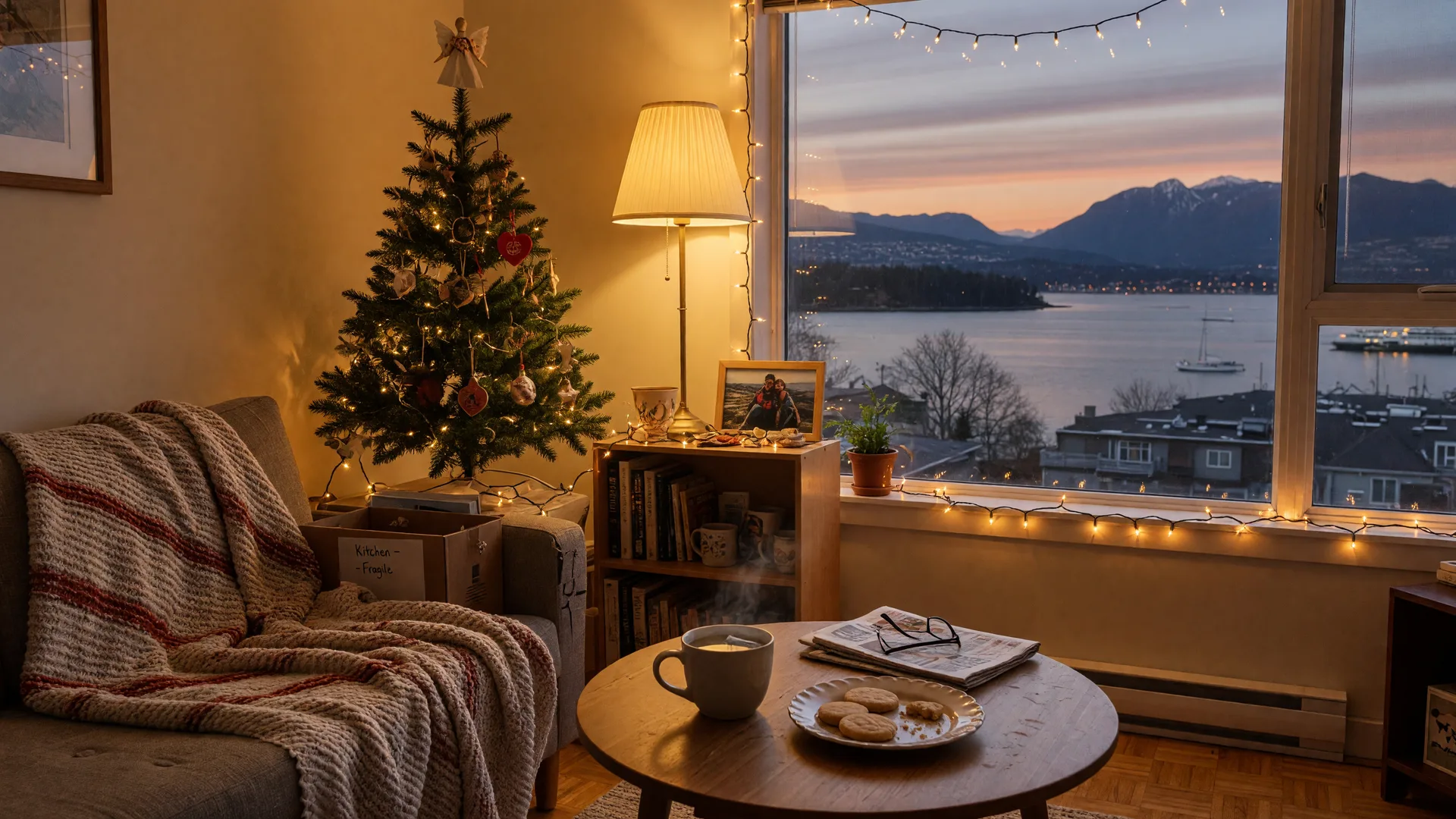
The first holiday season in a newly downsized home is often a mix of joy and quiet loss. The tree that took up half the living room now barely fits a corner, the big dining table is gone, and the china cabinet that held your grandmother's set found a new home months ago. You may be wondering whether the holidays can still feel like the holidays in a smaller space. The honest answer is yes, but they will look different, and planning early is the difference between a season of stress and a season of warmth.
This guide is for everyone marking their first Thanksgiving, Christmas, or New Year after a move in Greater Victoria: couples starting a new chapter, widows finding their rhythm again, and adult children hosting parents in a new place. The goal is not a perfect celebration. It is a meaningful one, shaped around the people you love and the home you have now.
It is normal for the first holiday to feel different
If the holidays this year carry a little grief, you are not alone. A home holds decades of celebrations, and moving means closing that chapter. Give yourself room to feel it. Many people find that naming the feeling, saying out loud that the old house is missed, makes it easier to enjoy what is in front of them.
It can also help to decide, deliberately, what you are leaving behind. You are not obligated to keep every tradition just because it is tradition. Sorting the seasonal decorations during your move was the hard part. Now the simpler question is which handful of them truly make your holidays feel like home. A small collection of meaningful ornaments will make a smaller tree feel intentional rather than bare.
Start planning early, especially for hosting
In a larger home, you could host first, invite everyone, and let the space sort itself out. In a smaller home, the guest list and the venue need to be decided first. Early fall is the time to have the conversation, because community halls, restaurants, and retirement residence dining rooms across Greater Victoria book up well ahead of the holiday season.
- Decide where the gathering happens. Your place, a sibling's home, a restaurant, or a community hall rental are all legitimate choices. Choose the space that fits the group, not the one that matches an old routine.
- Match the size of the gathering to the space. A condo can host four or six people beautifully with a buffet; thirty people need a different plan.
- Ask early. Send the invitation, or make the call, before October in Victoria. Restaurants and halls fill fast for the holiday weeks.
Rethink traditions: keep the meaning, drop the labour
The old holidays often ran on a lot of unpaid work: days of cooking, cleaning, and organizing. A downsized home is a chance to keep the parts that matter and quietly retire the rest.
- If the big sit-down dinner is the heart of your holiday, keep it, but simplify the menu and let guests bring dishes. Potluck is not a compromise; it is how people contribute and connect.
- If the china and silver are gone, embrace a relaxed table. No one at the table is thinking about the plates. They are thinking about each other.
- If the turkey tradition came from the house, consider a turkey breast, a roast, or a wonderful take-out meal from a local shop. The tradition is the gathering, not the oven.
- Build one genuinely new tradition in the new home: a walk by the ocean on Christmas morning, hot chocolate after the lights are lit, a game by the fire. A new tradition gives the new house its own memory.
Hosting a gathering in a small home: practical strategies
A smaller home can absolutely host a warm celebration. The trick is designing the evening around the space instead of fighting it.
- Buffet-style food. A self-serve table lets people move at their own pace and frees you from a parade of plated courses through a small kitchen.
- Make every seat work. Folding chairs, cushions on the floor for kids, and a small card table extend seating without permanent furniture.
- Keep the flow open. Push furniture against the walls, keep the entryway clear for coats, and let the meal wander toward the living room after dinner.
- Check the building's amenities. Many condos and retirement communities have a common room or party room residents can book. That can turn a cramped 12-person dinner into a comfortable one, often for a small fee or free.
- Use the community. For larger gatherings, a local community centre hall in Victoria, Saanich, or Langford is a practical, affordable venue with tables and chairs provided.
Gifts that take up less space
One of the quiet freedoms of a smaller home is a smaller Christmas. Gifts no longer have to be things, and that can be a relief for everyone.
- Experiences: tickets to a local theatre or concert, a ferry day on the Island, a cooking class, or a round of golf.
- Consumables: good coffee, wine from a local vineyard, a bakery gift card, or a monthly fruit basket.
- Contributions: a donation in someone's name to a Victoria charity they care about, or a contribution to a family trip fund.
- Memory keepsakes: a small framed photo, a digitized family album, or a handwritten letter. These take up almost no space and hold the most meaning.
If your family is used to exchanging physical gifts, have the conversation in advance. Most people quietly welcome the change when it is framed as a choice, not a loss.
Finding the season around Greater Victoria
One of the joys of living here is that the holidays are visible all around the region. The festive lights around the Inner Harbour and the Legislature, the decorated streets downtown, and the seasonal displays in communities like Sidney by the Sea all make for lovely walks, with no hosting required. Local farmers' markets and craft fairs in the weeks before the holidays are wonderful places to buy gifts made by Island makers and to run into neighbours.
For anyone who has moved to a new community, the season is also a gentle way to build roots: walk the same lights route twice, say hello to the same neighbours in the hallway, and show up to one local event. Small, repeatable rituals turn a new neighbourhood into home faster than almost anything else.
Holding space for people who are finding it hard
For many families, this is also the first holiday season after losing someone, after a spouse moved into care, or after the family home was sold. Those losses can surface most sharply right around the holidays. If you are hosting, make room for the quieter moments: a chair saved for the missing person's memory, a moment of gratitude before the meal, or simply a low-key plan that does not demand constant cheer. If you are the one grieving, be gentle with yourself and say yes to the invitation only if it genuinely serves you. There is no rule that says the holidays must be celebrated a certain way.
A small checklist for your first holiday in a smaller home
- Decide where the main gathering happens and book the venue or restaurant early.
- Choose the seasonal decorations that matter most and let the rest go.
- Agree on the menu with guests and divide the dishes early.
- Plan seating and buffet flow around your actual space.
- Have the gift conversation with family before shopping starts.
- Schedule one new local tradition and put it in the calendar.
- Leave room in the season for quiet, rest, and the feelings that come up.
Frequently asked questions
How do I fit holiday guests in a small condo or townhome?
Plan the gathering around the space before the guest list. Use a buffet instead of a sit-down dinner, bring in folding chairs, push furniture to the walls, and consider booking the building's party room or a local community hall for larger groups. Twelve people around a well-planned buffet will have a better evening than six people squeezed around a cramped table.
What do I do with heirloom decorations that no longer fit?
Keep the ones that hold meaning for you, display a few in a shadow box or on a shelf, photograph the rest for the family album, and pass the others to family members who want them. A single meaningful ornament can matter more than a full-box collection, and letting go is easier when you know the pieces are going to people who will cherish them.
How do I tell family that we cannot host the big dinner anymore?
Frame it as a change, not a loss, and offer alternatives in the same breath: "We would love to have everyone, but our new place seats six, so how about we book the community hall this year?" Most families adapt quickly when the alternative is clear and the invitation is still warm.
Can I host a holiday meal with a small kitchen?
Absolutely, if you plan for it. Cook or order ahead, keep the menu simple, and let guests bring dishes from home. Many holiday meals work beautifully as a potluck, and the shared cooking actually brings people closer than a single exhausted host producing everything alone.
When should I start planning for the holidays after a move?
Start in early fall, especially for anything that involves booking: restaurant meals, community halls, or a visit from out-of-town family. In Greater Victoria, popular holiday venues and services book weeks ahead. Starter plans in September and October leave you relaxed by December, which is the whole point.
About the author
Andrew Holenchuk is the Team Leader of Victoria Property Group at eXp Realty. Since 2006, he has been helping people confidently navigate one of life's biggest housing transitions in Greater Victoria, and he believes the first holidays in a new home should be a chapter to enjoy, not a season to survive.
Let's Talk