
The First 30 Days After Your Downsizing Move: Settling Into Your New Home

Andrew Holenchuk
Victoria Property Group · eXp Realty
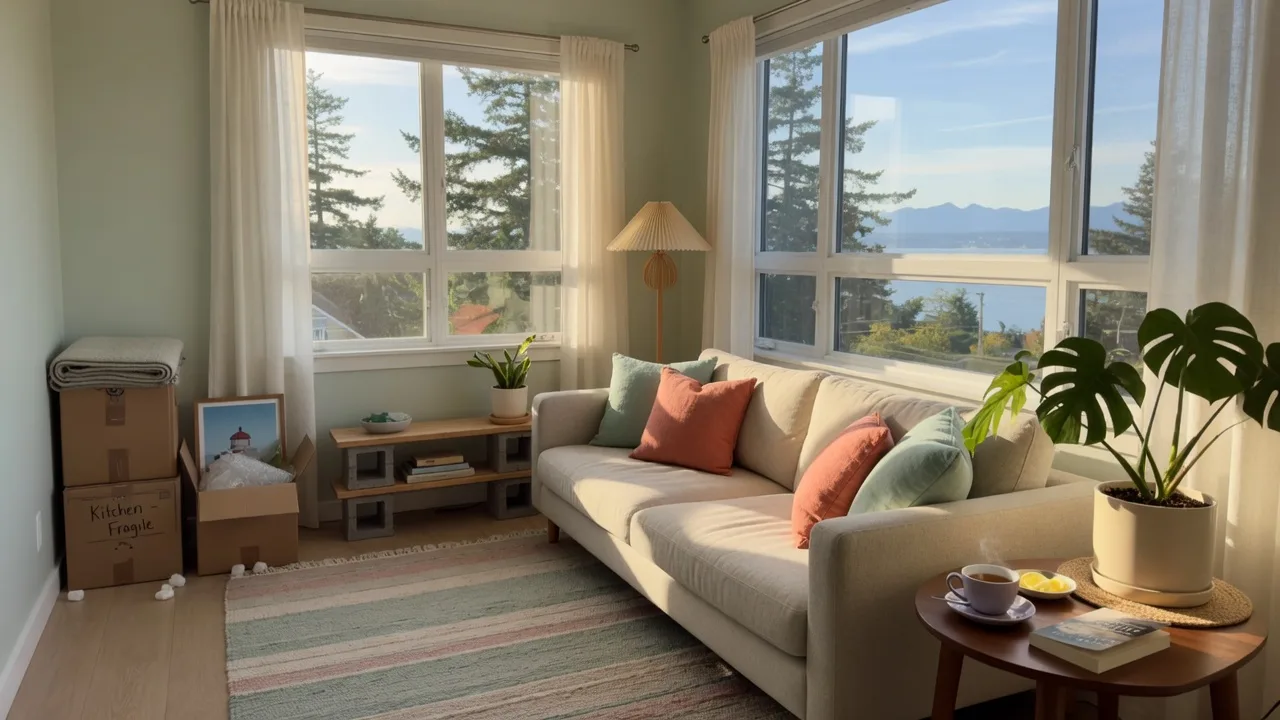
You have made it through the sorting, the packing, the emotional goodbye to your family home, and moving day itself. The boxes are in your new space, the keys to your old home have been handed over, and now you are standing in the middle of your next chapter. The first 30 days in your new home after downsizing can feel disorienting. But with a thoughtful approach, this period can also be deeply rewarding.
In my work with families across Greater Victoria — from Oak Bay to Langford, Sidney to Sooke — the ones who transition most smoothly are the ones who give themselves permission to settle in gradually. Here is a week-by-week guide for the first month in your new downsized home.
Week 1: Survive and prioritize
The first week is not about being organized. It is about getting the basics in place so you can function comfortably. Focus on these essentials:
- Make the bedroom usable first. Set up your bed, unpack your essentials (bedding, clothing, toiletries), and arrange a lamp and a phone charger on the nightstand. A good night's sleep in your new space makes everything else easier.
- Set up the kitchen for basic cooking. Unpack the dishes, pots, and utensils you use every day. Leave specialty items for later. Stock the pantry with a week's worth of simple meals. In Greater Victoria, that might mean stopping at Thrifty Foods, Quality Foods, or a local farmers' market for fresh essentials.
- Find the critical items. Medications, important documents, phone chargers, glasses, toiletries, and a change of clothes should be accessible without digging through boxes.
- Locate your building's amenities. If you have moved into a condo or retirement community, find the laundry room, garbage and recycling area, parking stall, storage locker, and mailboxes. Knowing where these are reduces the small frustrations that add up in the first few days.
- Test everything. Make sure your phone, internet, and television services are working. Test the smoke detectors. Check that your stove, dishwasher, and hot water tank function properly. It is much easier to address issues in the first week than the first month.
Give yourself permission to eat takeout, use disposable plates, and sleep with boxes in the corner. Week 1 is about survival, not perfection.
Week 2: Create your essential spaces
Once you can sleep and eat comfortably, shift your focus to creating spaces that support your daily routines. The goal is not to have every room fully decorated. It is to have the rooms you use most feel functional and welcoming.
- The living room. Arrange your seating so it invites conversation, reading, or television. Place your favourite lamp, a few meaningful photos, and a plant or fresh flowers in the space. These small touches immediately make a new home feel familiar.
- A comfortable chair by a window. This is one of the most important pieces to place early. Having a spot where you can sit with a cup of tea and watch the neighbourhood go by helps you feel connected to your new surroundings.
- A dedicated spot for mail and paperwork. Many downsizers moving into a condo or apartment find that mail accumulates quickly on kitchen counters. A small tray or basket near the entryway keeps it contained.
- Your daily walking route. Take a short walk every day during week two. Explore your immediate neighbourhood. Find the nearest grocery store, pharmacy, coffee shop, and bus stop. In Victoria, this might mean discovering a hidden path, a pocket park, or a local café you did not know existed.
Week 3: Tackle the remaining boxes room by room
By week three, you have enough of a routine that you can begin unpacking the rest of your belongings systematically. The key is to work room by room, not box by box.
- Set a timer for 45 minutes per session. Stop when the timer goes off. This prevents burnout and decision fatigue.
- For each box, make a quick decision: does the item belong in this room, in another room, in storage, or out of your home entirely? Be honest with yourself. If you have not needed it in three weeks, you may not need it at all.
- Keep a donation box or bag in a visible spot. As you unpack, add items you no longer want. Once the bag is full, drop it off at a Victoria thrift store — Value Village, WIN, or the Salvation Army on Pandora Avenue all support local causes.
- If you find items that belong in your old life but have no place in your new one, consider passing them to family members who will appreciate them. That set of china your daughter always admired, the garden tools your son-in-law covets — letting them go to people who will use them is a gift for everyone.
Remember that your new home does not have to hold everything your old home did. That is the whole point of downsizing. If you are struggling to let go of items during this week, revisit the question: "Does this item serve the life I am living now, or the life I used to live?"
Week 4: Build your new routines and connect
The fourth week is when your new home starts to feel like home. Use this week to build the routines and connections that will make your downsized life fulfilling.
- Meet your neighbours. In a condo building or retirement community, introduce yourself to the people on your floor. A simple hello in the elevator or a knock on a neighbour's door can lead to lasting friendships. Many Victoria condo buildings have social events, book clubs, or walking groups.
- Explore your new community. Visit the local recreation centre, library branch, and nearby parks. If you have moved to a new part of Greater Victoria, explore the local shops and services. A new neighbourhood in Langford, Sidney, or Oak Bay each has its own character and community rhythm.
- Join a local group or class. Many 55+ activity centres, community centres, and recreation programs across Greater Victoria welcome new members year-round. The Saanich Commonwealth Place, Oak Bay Recreation Centre, West Shore Parks and Recreation, and Sidney's SHOAL Centre all offer programs for active older adults.
- Revisit your healthcare connections. If you have moved to a new community within Greater Victoria, confirm that your family doctor still works for you or find a nearby walk-in clinic. Update your address with MSP, Pharmacare, and any specialists you see regularly. Locate the nearest pharmacy and hospital — Victoria General Hospital in View Royal and Royal Jubilee Hospital in Victoria serve most of the region.
- Establish a new daily rhythm. Whether it is a morning walk along the waterfront, coffee in your new favourite café, or an afternoon reading on your balcony, find small daily rituals that ground you in your new space.
What to do with the emotions that surface
It is completely normal to feel a mix of emotions during the first month. Excitement and relief often sit alongside moments of doubt, grief, or loneliness. You have left a home filled with decades of memories. Even when the move was entirely your choice, the adjustment takes time.
Here are a few ways to manage the emotional side of settling in:
- Acknowledge your feelings without judgment. "I feel sad today, and that is okay because I just left a home I loved." Giving yourself permission to feel does not mean you made the wrong decision.
- Stay connected. Call old friends and family. Invite them to visit your new home. Hosting even one person for tea can shift how you feel about your space.
- Celebrate small wins. Every unpacked box, every new walking route discovered, every neighbour met is a step forward. Acknowledge your progress.
- Give it three months. Most people who downsize in Greater Victoria tell me it takes about three months before their new home truly feels like home. You are not behind schedule if it does not happen in 30 days.
Adjusting to smaller space logistics
Moving from a house to a condo or apartment comes with some practical adjustments that can catch you off guard:
- Strata rules. Every building has bylaws about noise, pets, guest parking, balcony use, and garbage disposal. Read your strata rules early so you do not accidentally break them. For Victoria condo dwellers, common restrictions include no barbecues on wooden balconies and limits on visitor parking duration.
- Garbage and recycling. Many multi-unit buildings in Victoria have specific rooms or chutes for waste. Some buildings sort recycling themselves, while others require residents to take bins to the curb on collection day. Ask your strata manager or building concierge about the system.
- Elevator bookings. If you still have large furniture or boxes to move in, your building may require you to book the freight or passenger elevator. Check with the strata council or property manager.
- Noise from neighbours. Shared walls, floors, and ceilings mean you will hear your neighbours and they will hear you. Area rugs help dampen sound in your unit. Noise-cancelling headphones are a worthwhile investment if you are sensitive to sound.
When to ask for help
If you are feeling overwhelmed, isolated, or regretful after your move, you are not alone. These feelings are common and usually temporary. Reach out to a trusted friend or family member who can listen without judgment. Many retirement communities and condos in Greater Victoria have social coordinators or welcome committees who can connect you with other residents.
If feelings of sadness or anxiety persist beyond a few weeks, consider speaking with your family doctor or a counsellor who specializes in life transitions. Vancouver Island has excellent mental health resources, including the Vancouver Island Counselling Centre for Seniors.
Frequently asked questions about settling in after downsizing
I feel regret after my move. Did I make a mistake?
Post-move regret is incredibly common, even when the decision was well thought out. You have left a familiar environment, routines, and possibly a neighbourhood you loved. Give yourself at least three months before concluding it was the wrong choice. In my experience, most people who stick with it find their new home becomes exactly what they needed.
How do I make a smaller space feel less cramped?
Strategic furniture placement makes a significant difference. Keep walkways clear, use vertical space for storage, and choose furniture that is appropriately scaled for the room. Mirrors, good lighting, and a consistent colour palette all make a small space feel larger. Avoid the temptation to fill every wall and corner.
What if I am lonely in my new neighbourhood?
Loneliness is one of the most common challenges after a move. Start by exploring your immediate surroundings and introducing yourself to neighbours. Join a local recreation program, volunteer with a community organization, or attend neighbourhood events. Greater Victoria has a strong sense of community in most neighbourhoods, but it takes effort to build connections.
Should I store boxes I cannot bring myself to unpack?
Try to avoid storing unpacked boxes for more than a few months. They tend to stay sealed indefinitely, wasting the space you downsized to gain. If you cannot bring yourself to open a box, ask a trusted friend or family member to sit with you while you go through it. Often the anticipation of the task is worse than the task itself.
Your downsizing journey does not end on moving day.
The first month in your new home sets the foundation for everything that follows. If you are planning a downsizing move in Greater Victoria and want guidance from someone who has helped hundreds of families through this process, I would be glad to help you think through your timeline and priorities.
Reach Out AnytimeAbout the Author
Andrew Holenchuk is Team Leader of Victoria Property Group at eXp Realty and a lifelong Victoria resident. Since 2006, he has helped hundreds of families across Greater Victoria confidently navigate their housing transitions, including downsizing, estate sales, and retirement moves. He can be reached at andrew@victoriaproperties.com or 1-250-589-2897.