
Earthquake Preparedness After Downsizing: Ready Tips for Smaller Homes in Greater Victoria

Andrew Holenchuk
Victoria Property Group · eXp Realty
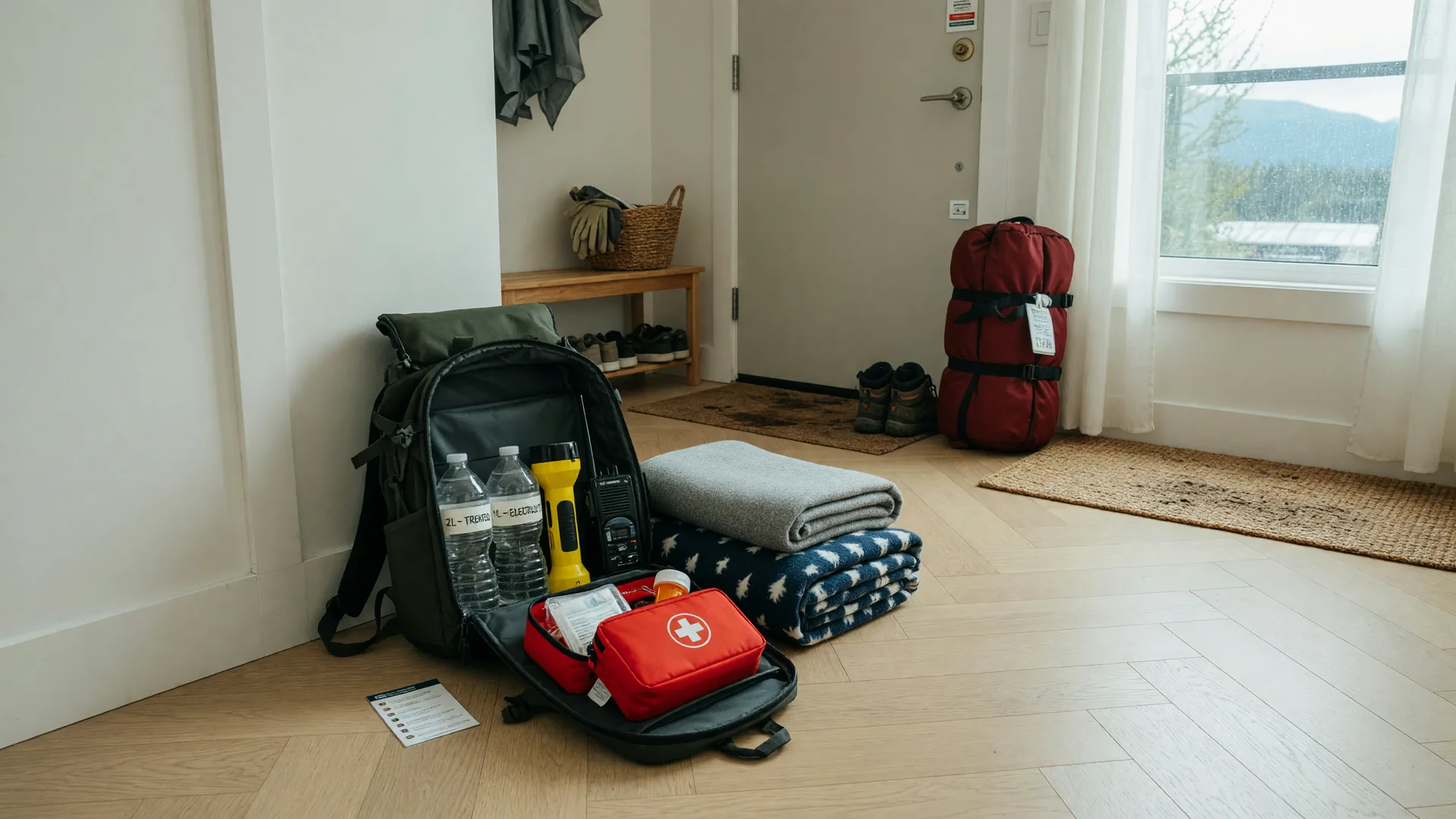
Moving into a smaller home in Greater Victoria is a natural moment to think about the future, including your safety. This region carries some of the highest earthquake risk in Canada, sitting on or near the Cascadia Subduction Zone, and official guidance from Emergency Management British Columbia and the Capital Regional District asks every household to be prepared to be self-sufficient for at least 72 hours, and ideally up to seven days. Downsizing gives you a clean slate to build that readiness into your new home.
This guide explains why earthquake readiness matters in Greater Victoria, what to prepare before a major event, and how to set up your new condo, townhome, or smaller home to be ready. It's practical, reassuring, and geared to a life in a smaller footprint.
Why earthquake preparedness matters in Greater Victoria
It can be tempting to think a major earthquake won't happen here, but the experts are clear that it could. Greater Victoria is one of the closest large Canadian population centres to the Cascadia Subduction Zone, and scientists estimate roughly a one-in-three chance of a magnitude 7.1 or larger earthquake in the region within the next 50 years. A megathrust event along the Cascadia zone could reach magnitude 9 or higher.
This isn't meant to scare you. It's meant to guide you. Because the risk is real and documented, the responsible, helpful response is to prepare calmly and practically. The good news is that a smaller home is often easier to make emergency-ready than a large, cluttered house: fewer rooms to secure, less to anchor, and a more manageable footprint to outfit with supplies.
Throughout Victoria, Saanich, Oak Bay, Langford, Sidney, and the rest of the Capital Regional District, households are encouraged to register with the regional public alert system and to take part in practices like the annual earthquake drill. Preparedness is a community habit.
Building these preparations into your new home is really about confidently navigating one of life's biggest housing transitions, so your fresh start is also a ready and secure one.
Know the two kinds of local risk
Being prepared means understanding what to plan for. In Greater Victoria there are two main earthquake types to keep in mind:
- Inslab earthquakes occur deeper within the subducting plate and can strike closer, with stronger shaking felt nearer to Victoria. These can happen with little warning.
- Megathrust earthquakes occur along the Cascadia Subduction Zone itself and can last much longer, possibly several minutes of shaking, followed by the risk of a tsunami on exposed coastlines.
In both cases, the actions are the same: drop, cover, and hold on during the shaking, then follow your household plan. Knowing which coastlines are tsunami-exposed matters if you live near the water, for example in parts of Sidney or along the Sooke shoreline. Your local authority provides tsunami zone maps and guidance.
Start with a written household plan
Supplies are important, but a plan comes first. A written plan helps everyone in your household know what to do. Keep it simple and keep a copy somewhere everyone can find it.
- Agree on a reunification spot inside the building and a meeting place outside, in case you're separated when shaking starts.
- Choose an out-of-area contact who lives far from Greater Victoria, someone everyone can text or call to say they're safe. Long-distance lines often work when local networks are jammed.
- Know how you'll receive warnings. Register with the Capital Regional District's public alert notification system and keep a battery or crank radio, since cell and internet networks may be unreliable after a major event.
- Note how to shut off utilities if needed, including your unit's water and gas, and confirm where the strata or property manager points you for whole-building systems.
Build your emergency kit and grab-and-go bags
Official guidance asks households to be self-sufficient for at least 72 hours, and the Capital Regional District suggests planning for up to a week. A downsized home can still store a solid kit if you use space wisely. Start with the essentials:
- Water: at least four litres per person per day for drinking and basic hygiene, for a minimum of three days. In a smaller home, this can live in an under-bed bin or a deep closet.
- Food: non-perishable items that don't need cooking, plus a manual can opener. Think energy bars, canned goods, dried fruit, and nut butters, rotated before they expire.
- Medication and first aid: at least a one-week supply of prescription medications, plus a first aid kit and any personal supplies.
- Light and communication: flashlights, extra batteries, and a battery-powered or crank radio. Consider a power bank for your phone.
- Comfort and cash: warm clothing, a blanket, sturdy shoes, and some cash, since debit and card networks can be down.
- Pets and family needs: water and food for a pet, and supplies for any baby, older adult, or person with mobility needs in your household.
Divide your supplies into a home kit that stays put and a smaller grab-and-go bag you could take if you needed to leave quickly. Label everything and replace expired items on a routine schedule, for example when the clocks change.
Secure a smaller home to reduce hazards
A compact home is easier to secure than a large one, but it still needs attention. During shaking, unsecured furniture and heavy objects cause most injuries. In your new home:
- Anchor tall furniture like bookcases, shelving, and entertainment units to the wall, and keep heavy items low. In a downsized space, tall shelving is common, so anchoring matters.
- Secure your water heater and appliances where possible, and check that the water heater is strapped, as it's a source of injury and water loss after quakes.
- Use safety latches on kitchen cabinets that hold glassware and heavy items.
- Move heavy items away from beds, sofas, and doorways where you're most likely to be when shaking starts.
- Keep exits clear. In a smaller unit, tidy storage near the door ensures a safe, quick path out if you need to leave.
If you live in a strata building, ask the property manager or strata council about the building's emergency plan, seismic upgrades, and evacuation procedures, and where the nearest assembly area is. Knowing the building's plan is part of your household plan.
Practice, then review your plan after you've settled in
A plan only helps if everyone remembers it. Practise "drop, cover, and hold on" with everyone in your household so it becomes automatic: drop to your hands and knees, cover your head and neck under a sturdy table or desk, and hold on until the shaking stops. Join community drills like the annual Great BC ShakeOut so the habit feels familiar.
Once you've unpacked, review what's changed. Confirm you have a clear safe spot, that your kit is where you said it would be, and that your out-of-area contact still works. Then write the date you'll refresh your kit and set a simple reminder.
Frequently asked questions
Is Victoria at risk of a major earthquake?
Yes. Greater Victoria is one of the closest large Canadian population centres to the Cascadia Subduction Zone, and scientists estimate a roughly one-in-three chance of a magnitude 7.1 or larger earthquake in the region within the next 50 years. A Cascadia megathrust event could be much larger, which is why official guidance from Emergency Management BC and the Capital Regional District urges household preparedness.
How long should my emergency supplies last?
Official guidance asks households to be self-sufficient for at least 72 hours, and the Capital Regional District suggests planning for up to a week. Aim for a minimum of four litres of water per person per day, non-perishable food, medication, a first aid kit, a battery or crank radio, and warmth and lighting supplies.
What is the safest thing to do when an earthquake starts?
Drop, cover, and hold on. Drop to your hands and knees, cover your head and neck under a sturdy table or desk, and hold on until the shaking stops. Avoid doorways and running outside during the shaking. If you're near an exposed coastline and shaking is strong or long, know the tsunami guidance for your area and move to high ground after the shaking ends.
Where should I store an emergency kit in a small condo?
Use the spaces a smaller home does have: an under-bed bin, a deep closet, a top pantry shelf, or a storage locker if your building has one. Keep your everyday essentials and grab-and-go bag somewhere convenient, and remember that your kit is only useful if you can reach it and remember it.
Should I ask about seismic safety before buying a condo?
It's a reasonable question. Ask your REALTOR® and the building's property manager about the age and construction type of the building, any engineering or seismic reports, the building's emergency plan, and whether upgrades have been done. Reviewing a depreciation report and talking with the strata can give you useful information about the building's condition and upkeep.
Ready to find a safe, prepared home for your next chapter?
When you downsize in Greater Victoria, I help you think through the practical details that make a new home work, including the safety and comfort of the building itself. Let's talk about what matters for your move.
Let's Talk