
Downsizing a Workshop, Studio, or Hobby Space in Greater Victoria

Andrew Holenchuk
Victoria Property Group · eXp Realty
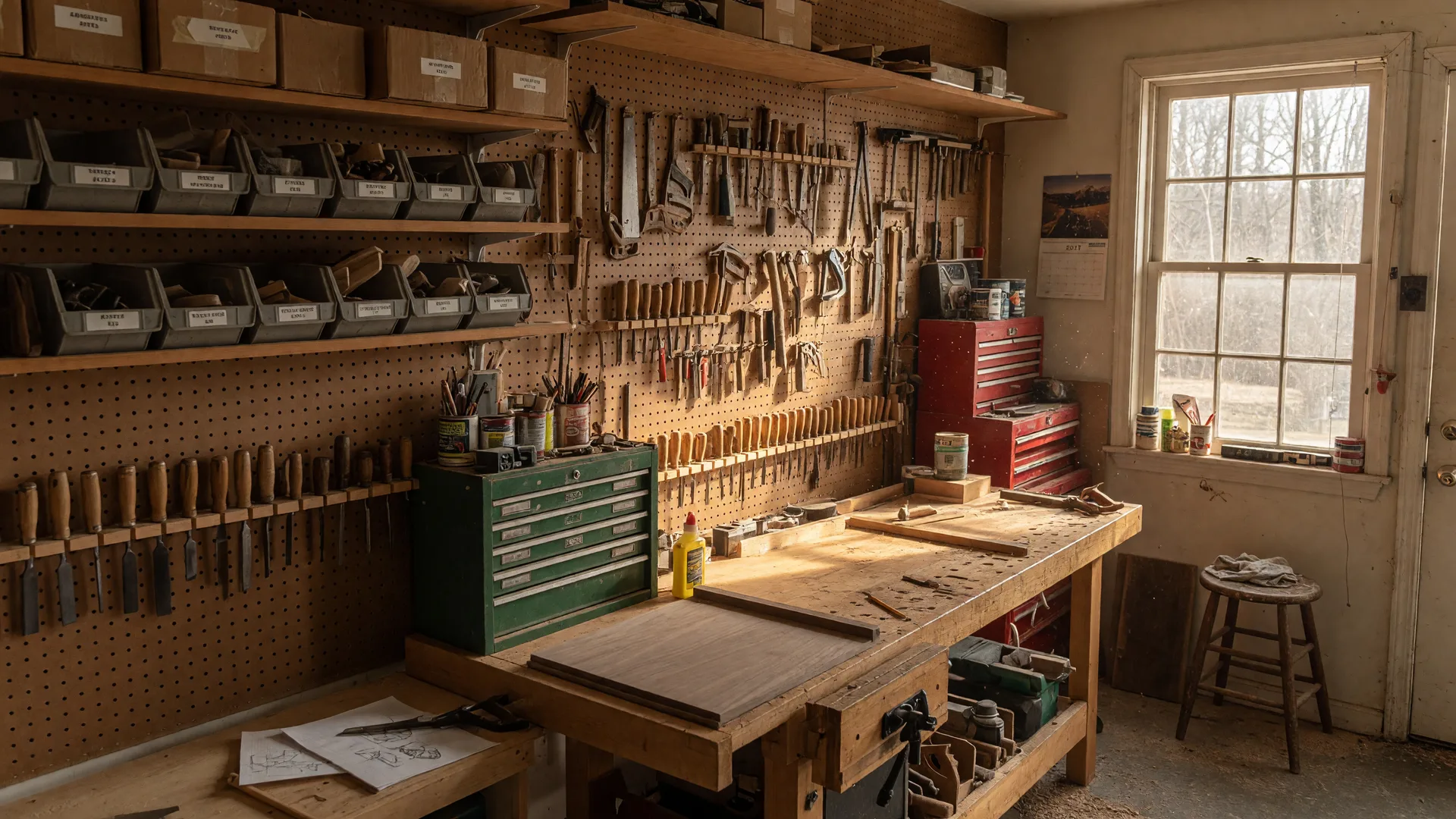
When you have spent years building a woodworking shop, filling an art studio, or curating a sewing and craft room, the idea of downsizing can feel not just impractical but painful. Your workshop or studio is where you create, unwind, express yourself, and maintain a sense of purpose. It might be a detached garage filled with table saws and chisels. A spare bedroom turned into a watercolour studio. A basement workshop where you restore furniture. A potting shed where you start seedlings each spring.
Downsizing a hobby space is different from downsizing the rest of your home. The tools and materials in these spaces are not clutter — they are the infrastructure of your creativity and wellbeing. The challenge is not simply getting rid of things. It is figuring out how to preserve the heart of your hobby while transitioning to a smaller space that still supports the activities you love. This guide covers exactly how to approach that challenge in Greater Victoria, where the move to a condo, townhome, or smaller house does not have to mean the end of your creative life.
Start with honest questions about your hobby's future
Before you touch a single tool or tube of paint, take time to think about how your hobby will fit into your next chapter. The goal is not to force yourself into a smaller version of your current practice. It is to design a creative life that works in your next home.
- How often do you actually use this space? If you spend three hours in your workshop every day, preserving a comparable space may be a priority worth paying for. If you visit it twice a month, a condensed version may serve you just as well.
- What parts of the hobby bring you the most joy? Maybe you love the design and planning phase more than the physical construction. Maybe the social side of crafting with friends matters most. Understanding what you truly value helps you decide what to keep and what to let go of.
- How will your health and energy change? A woodworking shop that requires heavy lifting, sawdust management, and standing for hours may become less practical over time. An art studio that requires fine motor control may still be accessible. Be honest about your trajectory so your new space serves you for years, not just for next month.
- Is there a community option? Victoria has shared workshops, pottery studios, and maker spaces where you can access equipment and community without owning it all yourself. This may be the right solution if your hobby is social or if you only need certain tools occasionally.
Sorting your workshop or studio: a phased approach
Hobby spaces tend to accumulate materials, tools, and half-finished projects over decades. Sorting through them requires a different system than decluttering a kitchen or closet. Here is a phased approach that works:
Phase one: identify what is essential
Start by identifying the core tools and materials you actually use on a regular basis. These are your essentials. For a woodworker, that might be your table saw, a set of good chisels, clamps, and the project currently on the bench. For an artist, it might be your favourite brushes, your go-to palette of colours, and the canvas you are currently working on. Everything else is negotiable.
Phase two: evaluate and categorize the rest
Go through your space systematically and sort items into five categories:
- Keep for the new space: Items you use regularly and that will fit in your new home. Be realistic about storage constraints.
- Sell: Tools and equipment that have resale value. Greater Victoria has a strong market for quality used tools, art supplies, and craft equipment. Consider Facebook Marketplace, Kijiji, used book and art supply stores, and tool-specific buy-and-sell groups.
- Donate: Community centres, schools, and non-profit organizations in Victoria often accept donations of tools, art supplies, and craft materials. The Victoria Tool Library and Art Supplies on Yates are both excellent options.
- Pass on to family or friends: A grandchild who is getting into woodworking, a friend who is starting to paint, a neighbour who loves gardening — these connections give your items a meaningful second life.
- Discard: Dried-out paints, broken tools, rusted equipment, half-empty containers of chemicals. Dispose of hazardous materials (solvents, stains, paints) through the Capital Regional District's hazardous waste program, not in your regular garbage.
Phase three: handle the half-finished projects
Every workshop and studio has them — the chair you started restoring three years ago, the quilt squares you cut but never sewed, the painting you lost confidence in halfway through. These half-finished projects carry emotional weight. Give yourself permission to either finish them before you move or let them go. If you have not touched a project in more than a year, it is unlikely you will finish it after the move. Be kind to yourself about this. The point is not that you failed to finish the project. The point is that the project served its purpose in that moment of your life, and now it is okay to release it.
Choosing your new space for maximum creativity
When you are looking at condos, townhomes, or smaller houses in Greater Victoria, a dedicated hobby space may not be listed in the property features. But with some thoughtful searching, you can find homes that work:
A spare bedroom as a studio
A standard spare bedroom in a Victoria condo or townhome offers 10 by 12 feet of space on average. This is enough room for a desk or worktable, shelving, and storage for a focused hobby such as painting, drawing, jewellery making, sewing, or writing. Look for a room with good natural light if your hobby requires colour accuracy, or with a window that opens for ventilation if you work with paints or adhesives.
A den or bonus room
Many townhomes and some larger condos include a den or bonus room that can serve as a dedicated hobby space. These rooms vary in size and configuration. A den without a window works well for activities that do not require natural light — electronic work, beading, model building, or writing. Bonus rooms in townhomes often have more space and natural light, making them suitable for a wider range of activities.
A garage or storage room conversion
Some townhomes in Greater Victoria include a single-car garage or a dedicated storage room on the ground level. These can be converted into a workshop space with proper lighting, ventilation, and shelving. If you are a woodworker, metalworker, or potter — activities that create dust, noise, or require heavier equipment — a ground-floor garage space is often the best option. Check strata bylaws before converting a garage to ensure your intended use is permitted.
A balcony or patio for outdoor hobbies
For gardeners, outdoor painters, and those who work with messy materials, a balcony or patio can become an extension of your workspace. A small potting bench, a folding table for outdoor painting, or a portable work surface can turn even a compact balcony into a functional creative zone during Victoria's mild months.
Community options in Greater Victoria
If your new home simply cannot accommodate the full scope of your hobby, or if you want to downsize your equipment while keeping access to tools, Greater Victoria offers several community options:
- Victoria Tool Library: Borrow tools for home projects, woodworking, and gardening without owning them. A membership supports access to a wide range of equipment.
- Maker spaces: Shared workshop spaces with woodworking equipment, 3D printers, laser cutters, and more. The Victoria Community Studio and other local maker spaces offer membership-based access.
- Community arts centres: The Victoria Arts Council, Cedar Hill Recreation Centre, and other community centres offer pottery studios, painting classes, and shared creative spaces.
- Community gardens: If gardening is your passion but you are moving to a condo without outdoor space, community garden plots are available in many Greater Victoria neighbourhoods through municipal programs.
Making the transition easier: practical tips
Photograph your old space
Before you dismantle your workshop or studio, take photographs. Document how you organized your tools, where your materials were stored, and how the space functioned. These photographs serve two purposes: they preserve the memory of a space that meant a lot to you, and they give you a reference for recreating the best parts in your new home.
Prioritize ventilation and light
When setting up your new hobby space, prioritize good lighting and ventilation. A bright, airy space feels more inviting and supports better work. Install task lighting over your work area. If your hobby produces fumes, sawdust, or odours, ensure your space can be ventilated — either through a window, a ventilation hood, or an air purifier.
Set up your new space before you need it
When you move into your new home, set up your hobby space as one of the first rooms. Having a functional creative space gives you a sense of normalcy and purpose during the transition period. It also ensures that your tools and materials do not sit in boxes for months, gathering dust and dampening your motivation to create.
Consider a portable or foldable setup
In a smaller home, flexibility is your friend. A folding workbench, a rolling tool chest, or a desk on casters can be moved aside when you need the space for other activities. Wall-mounted shelving and pegboards keep tools accessible but off the floor. A foldable sewing table or a tabletop easel allows you to tuck your hobby away when guests come over.
When downsizing your hobby space is the right call
There is no rule that says you must continue every hobby you have ever pursued. Some people find that downsizing their living space creates a natural moment to shift focus to a new interest, to travel more, or to spend time with family in ways that a solo workshop did not allow. Letting go of a hobby space does not mean letting go of the joy it gave you. It means making room for whatever comes next.
If you decide to wind down a hobby rather than relocate it, do so deliberately. Take time to appreciate the pieces you created. Celebrate the skills you built. Share your equipment with someone who will use it. And give yourself permission to mourn the loss of a space that mattered. That is not failure — it is a thoughtful closing of a meaningful chapter.
Frequently asked questions
Where can I sell my tools and equipment in Greater Victoria?
Facebook Marketplace and Kijiji are the most active online markets for used tools and hobby equipment in Greater Victoria. For specialized items, consider consignment at used tool and art supply shops, or selling through specialty Facebook groups such as Victoria Woodworkers or Victoria Artists. If you have high-end equipment, an estate sale company or auction house may help you reach a targeted audience. Price items fairly and be prepared for negotiation.
Can I run a noisy workshop in a condo or townhome?
Noise is the most common friction point between hobbyists and their neighbours in strata buildings. Before you set up a workshop in a condo or townhome, review your strata's noise bylaws. Most buildings have quiet hours and restrictions on activities that create persistent noise. If your hobby involves power tools, consider limiting their use to daytime hours and investing in sound-dampening mats. Some hobbies — wood carving, hand sewing, drawing, jewellery making, electronics — are naturally quiet and rarely cause issues.
How do I dispose of hazardous materials from my workshop?
The Capital Regional District operates several hazardous waste depots where you can safely dispose of paints, solvents, stains, adhesives, batteries, and other hazardous workshop materials. The Saanich and Hartland depots accept these materials free of charge for residents. Never put hazardous materials in your regular garbage or pour them down the drain. Check the CRD website for current hours and accepted materials.
What should I keep if I am moving from a house to a one-bedroom condo?
In a one-bedroom condo, your hobby space will likely be limited to a corner of the living room, a balcony, or part of your bedroom. Prioritize equipment that supports the small, focused version of your hobby. Keep your best tools and your current project materials. Let go of large equipment that requires dedicated floor space, duplicate tools, and materials you have not touched in years. This is a good moment to embrace the principle that constraints often fuel creativity.
Are there shared workshop spaces in Victoria that I can join?
Yes. Options in Greater Victoria include the Victoria Tool Library for borrowing equipment, maker spaces for accessing larger tools, and community arts centres for studio time. Some retirement communities and 55+ housing developments also offer shared hobby spaces as part of their amenities. If shared space is important to you, mention it during your home search so I can prioritize properties near these facilities.
Your creativity deserves a home that supports it.
I help downsizers in Greater Victoria find homes that work with their lifestyle — including the spaces that matter most to them. Whether you need a den for a studio, a garage for your workshop, or easy access to community maker spaces, I can help you find the right fit.
Let's Find Your SpaceAbout the author: Andrew Holenchuk is Team Leader of Victoria Property Group at eXp Realty and has been helping families in Greater Victoria navigate housing transitions since 2006. He has facilitated more than $1 billion in real estate sales and is a trusted resource for homeowners helping people confidently navigate one of life's biggest housing transitions.