
Rightsizing Your Vehicles: Cars, Boats, and RVs When You Downsize in Greater Victoria

Andrew Holenchuk
Victoria Property Group · eXp Realty
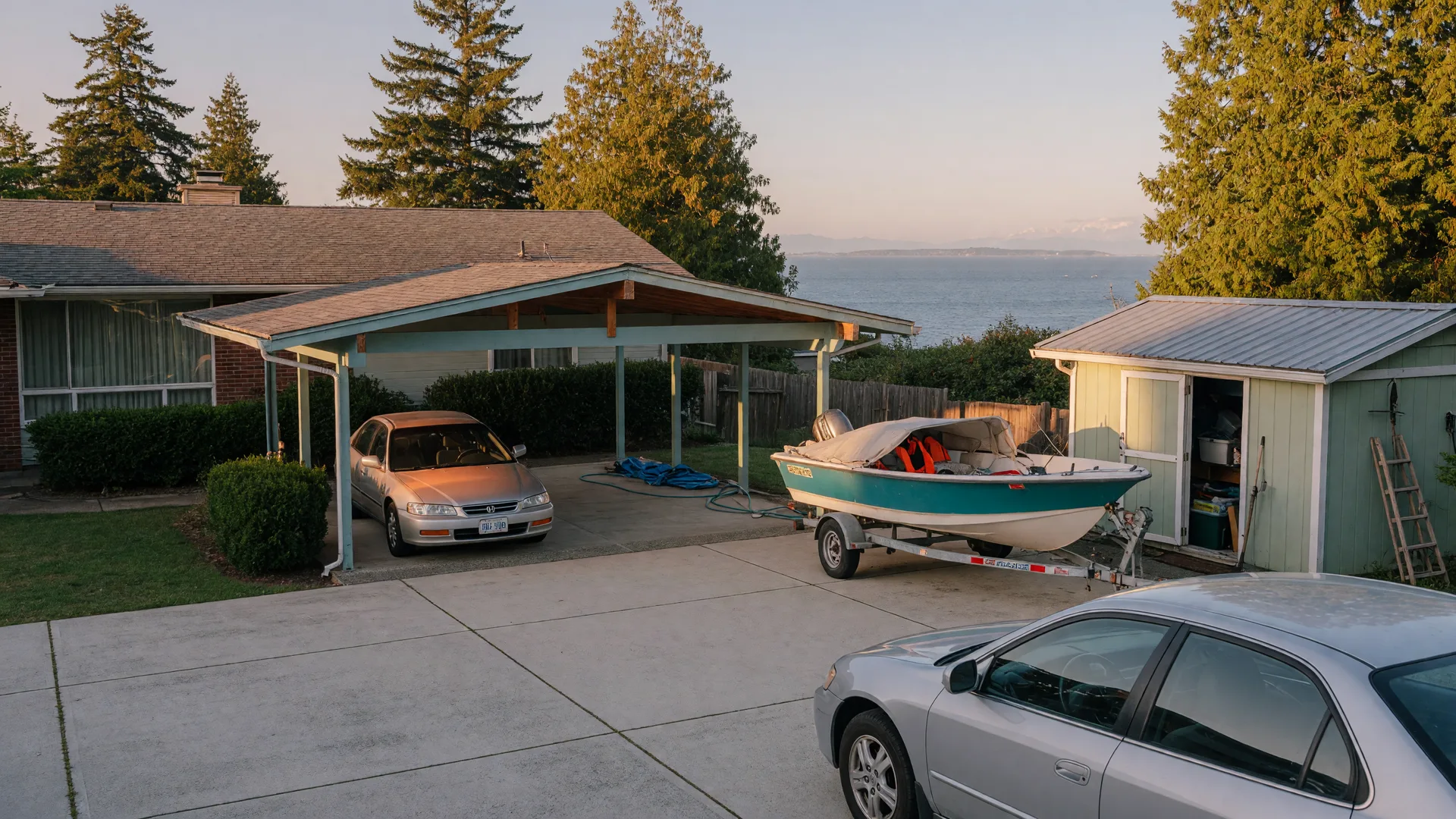
On Vancouver Island, vehicles are often part of the lifestyle: a second car, a boat for the summer, an RV for road trips, a trailer for camping, or a classic vehicle that's been in the family for years. When you downsize your home, you're often also facing the quieter question of what to do with the vehicles that came with it.
This guide looks at the real costs of keeping vehicles, how parking and storage change in a smaller home, the practical and emotional side of letting a vehicle go, and how to time the decision so it fits your housing transition. It's education to help you decide with clarity, not pressure to sell everything you own.
Why vehicles deserve a place in your downsizing plan
Vehicles are easy to overlook when you're focused on the house. But they're a meaningful part of both your budget and your daily life. A second car, boat, RV, or trailer can represent thousands of dollars a year in insurance, licensing, maintenance, moorage, storage, and fuel, and they take up space that a condo or smaller home may not have.
The question isn't always whether you should give up a vehicle. It's whether each vehicle still fits the life you're moving toward. Some people downsize their home and happily keep a boat for the island summers. Others find the maintenance and storage no longer match their priorities. Both are legitimate, and the right answer depends on your circumstances.
The real cost of keeping each vehicle
Before deciding, it helps to write down what each vehicle actually costs you per year. A simple list might include:
- Insurance, which varies widely by vehicle type and how you use it.
- Licensing and registration through ICBC.
- Maintenance, repairs, and seasonal prep, such as winterizing a boat or storing an RV.
- Storage or moorage, if you don't have room at your new home.
- Fuel and usage costs.
- Depreciation, for newer vehicles.
When you add these up, you'll often find that a vehicle you use a few times a year is costing more than its place in your life. That's not a judgement, it's simply useful information for your decision.
Parking and storage in a smaller home
Condos and townhomes in Greater Victoria often come with a single parking stall, a carport, or limited street parking. Boats, RVs, trailers, and extra cars may not fit at all. Before you choose a new home, it's worth asking:
- How many parking spots come with the unit, and are they assigned or first-come?
- Are boats, RVs, and trailers allowed on the property or in strata parking areas?
- Is there storage for seasonal gear, and what does it cost?
- Are there local storage or moorage options nearby, and at what price?
These details can genuinely shape which home is the right fit. A home that looks perfect on paper but has nowhere for the boat you love can create tension you didn't anticipate. Understanding your vehicle situation before you buy helps you choose a home that works with your lifestyle, not against it.
The emotional side of letting a vehicle go
Vehicles carry memories too. A family cottage is tied to the boat that took you across the bay. A classic car is a connection to a parent or a younger self. Letting one go can feel like closing a chapter, even when you know it's the right practical call.
That's worth honouring. If a vehicle is part of your identity and your enjoyment, keeping it can be a reasonable and joyful choice, especially if the costs are manageable and you have a place for it. If the maintenance and storage have become a burden, you're not failing anyone by simplifying. Many people find that letting go of a vehicle they rarely used frees up both money and mental space for the life they actually want now.
How to sell a car, boat, or RV in Greater Victoria
If you decide to let a vehicle go, you have several options, and the right one depends on the vehicle and your timeline:
- Private sale through local classifieds or online marketplaces often gets the best price but takes the most effort and time.
- Dealer consignment or trade-in is convenient, and some dealers accept boats and RVs.
- Specialist brokers and consignment yards handle boats, RVs, and trailers, marketing them for you in exchange for a commission.
- Auction or donation can be an option for older vehicles, and donated vehicles to a registered charity may come with a charitable receipt, though there are rules around how that value is determined.
Before selling, gather the ownership, make sure the vehicle is in a presentable state, and have it washed and detailed. Photograph it in good light, and be realistic about pricing based on comparable local listings. For boats and RVs, a recent service or inspection can make them easier to sell.
Timing the decision with your move
There's no single right time to decide about a vehicle, but coordinating it with your housing transition avoids last-minute scrambling:
- Start the conversation early, ideally while you're still sorting what to keep and what to let go.
- Sell ahead of moving day so you're not paying to move a vehicle you've already decided to release.
- Confirm parking and storage at your new home before you commit, so you know what fits.
- If you need time to decide, temporary storage or moorage can buy you a season rather than a hasty choice.
As with the home itself, the goal is a decision that reflects your priorities, made calmly and with good information, rather than one forced by a deadline.
The whole picture, in one place
Your home, your parking, your storage, and your vehicles all need to fit together. When I help a family downsize, I look at the whole picture, including what a smaller home means for the things they love. If you're weighing these decisions, I'm glad to talk it through with you.
Reach Out AnytimeFrequently asked questions
How do I know whether to keep my boat or RV after downsizing?
Add up the annual cost of insurance, licensing, maintenance, storage or moorage, and fuel, then weigh it against how much you use and enjoy it. Check whether your new home can park or store it. If the cost outweighs the use, or there's no place for it, letting it go may simplify your life without losing what you love.
Can I keep a boat or trailer at a condo in Greater Victoria?
It depends on the building. Many strata complexes restrict boats, RVs, and trailers in parking areas. Ask about the rules before you buy, and look into nearby storage or moorage options if keeping the vehicle matters to you.
What's the best way to sell a car, boat, or RV?
Private sale can get the best price but takes the most effort. Dealers, specialist brokers, and consignment yards handle boats and RVs for a commission, and auction or donation are options for older vehicles. Gather your ownership documents, present the vehicle well, and price it against comparable local listings.
How many parking spots should I look for in a new home?
Start from your actual needs. If you have one car, a single assigned stall is usually fine. If you have multiple vehicles or a boat, look for a home with additional parking or nearby storage, and confirm the strata rules allow what you need.
Should I sell my vehicles before or after I move?
If you've decided to let a vehicle go, selling ahead of moving day avoids paying to move or store it. If you're not sure, temporary storage can buy time. The key is deciding from your priorities rather than letting a move deadline force the choice.
About the author: Andrew Holenchuk is the Team Leader of Victoria Property Group at eXp Realty and has been helping people in Greater Victoria confidently navigate one of life's biggest housing transitions since 2006. For current ICBC licensing, insurance, and vehicle transfer requirements, check the official ICBC resources.