
Downsizing and Tax Considerations in BC: What Homeowners Need to Know

Andrew Holenchuk
Victoria Property Group · eXp Realty
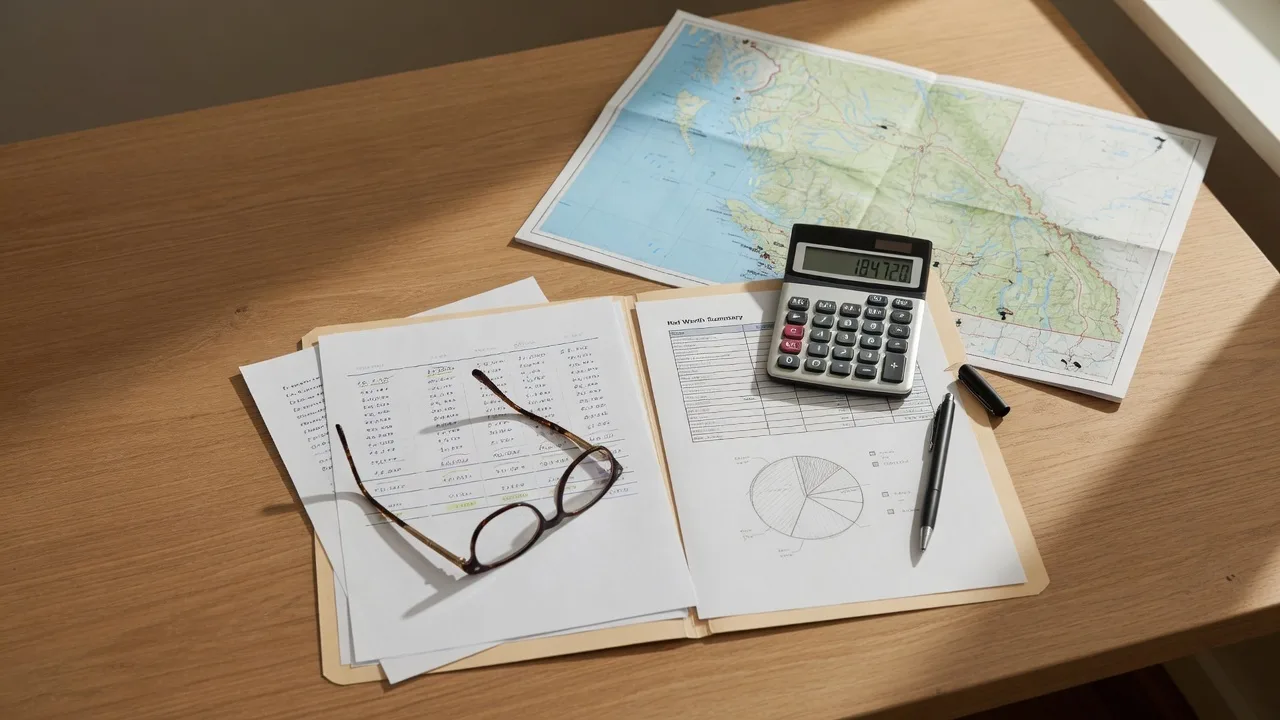
Downsizing in Greater Victoria isn't just a lifestyle decision — it's a financial one. Whether you've owned your home for ten years or forty, the tax implications of selling your principal residence and purchasing another property in British Columbia can significantly affect your net outcome. Understanding these implications before you list helps you plan with clarity and avoid costly surprises.
This guide covers the key tax and financial considerations that Victoria homeowners should be aware of when downsizing. It's not a substitute for professional tax or legal advice — every situation is unique, and the rules change. But knowing the right questions to ask your accountant and lawyer can save you thousands of dollars and considerable stress.
The principal residence exemption
For most Greater Victoria homeowners, this is the most important tax concept to understand. The principal residence exemption (PRE) allows you to sell your principal residence without paying capital gains tax on the profit. Given the significant appreciation Victoria homes have seen over the past two decades, this exemption can represent tens or even hundreds of thousands of dollars in tax savings.
Key points about the principal residence exemption:
- One property per family unit per year. You and your spouse or common-law partner can designate only one property as your principal residence for any given tax year.
- Years of ownership matter. The exemption is calculated based on the number of years you owned and lived in the property, with a formula that considers total years of ownership. The final year of ownership is always included automatically.
- You must have ordinarily inhabited the home. You don't need to live there every day, but the home must have been your regular residence at some point during each year you claim the exemption.
- Vacant land may have separate rules. If you own adjacent vacant land, it can generally be designated as part of your principal residence, but there are specific conditions. Discuss this with your accountant.
If you've lived in your Victoria home since 1990 and are selling in 2026, the PRE should fully protect your capital gain. But if you've ever used part of the property for income-producing purposes — a rental suite, a home office claimed for business — the exemption may be reduced. An accountant can calculate this precisely.
Property transfer tax when buying your next home
When you purchase a new home in BC, you'll pay the Property Transfer Tax (PTT) at closing. This provincial tax is calculated as:
- 1% on the first $200,000 of the property value
- 2% on the portion between $200,000 and $2,000,000
- 3% on the portion above $2,000,000
For example, if you purchase a condo in Victoria for $650,000, the PTT would be approximately $11,000. If you buy a home for $1.2 million, the tax rises to approximately $22,000.
There are important exemptions and reductions to be aware of:
- First-time buyer exemption: Not typically relevant for downsizers, but worth noting that first-time buyers in BC can receive a full exemption on properties up to $500,000 and a partial exemption up to $525,000.
- Newly built home exemption: If you purchase a newly built home (from a builder), you may qualify for a PTT exemption on the full value up to a certain threshold. The current thresholds for newly built homes are higher — up to $750,000 for a full exemption and $800,000 for a partial exemption. This can be significant if you're buying a new condo or townhome.
- Principal residence exemption on the sale side: While this doesn't reduce the PTT on your purchase, it ensures you're not paying capital gains tax on the sale — freeing up more equity for your next home.
Does downsizing affect your capital gains?
This is one of the most common questions I hear from clients considering downsizing. The short answer: if you're selling your principal residence and buying a less expensive property, the principal residence exemption typically means you owe no capital gains tax on the sale. The equity difference — what you sell for minus what you buy for — becomes cash in your pocket.
However, there are situations where capital gains become relevant:
- If you've rented out part of the home: A portion of the gain attributable to rental use may be taxable, even if the property was your principal residence for most of the ownership period.
- If you've claimed a home office: A portion of the home used exclusively for business may trigger a recapture of previously claimed capital cost allowance (CCA) and a partial capital gain.
- If you own a second property: If you have a vacation property or rental property in addition to your principal residence, the interaction between the PRE and capital gains on the second property requires careful calculation.
- If you delay the purchase: The PRE applies to the year of sale, not the year of purchase. If you sell in 2026 but don't buy a new home until 2027, the exemption still applies to the 2026 tax year. But if you sell and don't purchase another home for an extended period, the tax implications of investment income on the proceeds become relevant.
Impact on retirement income and government benefits
Downsizing often results in a significant increase in liquid assets. While this is generally positive, it's important to understand how additional income or assets may affect your government benefits and retirement income planning.
Old Age Security (OAS)
OAS benefits are subject to a clawback when your net income exceeds certain thresholds. In the current tax year, the OAS clawback begins when your net income exceeds approximately $93,454. If the proceeds from selling your home push your income above this threshold in the year of sale — for example, if you realize capital gains on a secondary property — the clawback may apply. Since the PRE typically protects the sale of a principal residence, this is usually not an issue for straightforward downsizing, but it's worth reviewing with your accountant.
Guaranteed Income Supplement (GIS)
For lower-income seniors, GIS benefits are income-tested. If downsizing generates additional taxable income — such as capital gains from a non-principal-residence property — it could temporarily affect GIS eligibility. Again, for most principal-residence downsizers, this isn't a concern, but it's worth verifying.
RRSP and RRIF considerations
If you use downsizing proceeds to maximize RRSP contributions before converting to a RRIF, you can potentially defer taxes on those funds. The deadline for final RRSP contributions is December 31 of the year you turn 71. This strategy should be discussed with a financial planner who understands the interaction between registered accounts and property transactions.
Strata fees vs. home maintenance costs: the real financial picture
One of the most important financial comparisons for downsizers is the ongoing cost difference between a detached home and a strata property. While strata fees can feel like an additional expense, they often replace a range of costs you're currently paying separately:
- Strata fees typically cover exterior maintenance, landscaping, building insurance, common area upkeep, and sometimes utilities and cable.
- What you stop paying: Property maintenance (roof, siding, gutters), yard care, exterior insurance premiums, and the unpredictable costs of major repairs.
- What you gain: Predictable monthly costs that are easier to budget for on a fixed income, and the peace of mind that comes with professional building management.
In Greater Victoria, strata fees vary significantly by building size, age, and amenities. A modest condo in Saanich or View Royal might have fees of $250–$400 per month, while a luxury building in Victoria with extensive amenities could charge $600–$1,000 or more. Understanding what's included — and the financial health of the strata's reserve fund — is essential before purchasing.
The financial advantages of unlocking equity
For Greater Victoria homeowners who purchased before 2015, the equity in their home may represent the single largest financial asset they own. Downsizing converts that equity into accessible cash, which can be used to:
- Supplement retirement income
- Pay off remaining mortgage or debt
- Build a financial cushion for healthcare or long-term care needs
- Invest in lower-risk income-producing assets
- Help children or grandchildren with education or housing costs
- Fund travel, hobbies, or lifestyle goals in retirement
The key is to plan how those funds will be deployed. A financial planner can model different scenarios and help you determine the optimal strategy for your situation.
Estate planning and downsizing
Downsizing is an ideal time to review and update your estate plan. When you sell your home, the asset distribution in your will changes, and your overall financial picture shifts. Consider the following:
- Update your will. If your will references a specific property address, it needs to be updated after the sale and purchase.
- Review powers of attorney. Ensure your enduring power of attorney and representation agreement are current and reflect your wishes.
- Consider the tax implications for your estate. While the PRE protects capital gains during your lifetime, it's important to understand what happens to your assets after death. Consult with an estate lawyer to ensure your plan is optimised.
- Document your wishes. If you're gifting funds to family members as part of the downsizing process, do so with clear documentation to avoid confusion or disputes later.
Timing your move for maximum benefit
The timing of your sale and purchase can have meaningful tax implications. Here are some factors to consider:
- Tax year alignment: If possible, coordinate the sale and purchase within the same calendar year to simplify your tax filing.
- Market timing: Spring and early summer typically see the strongest buyer activity in Greater Victoria, which can mean higher sale prices and more competitive offers.
- RRSP contribution timing: If you're planning to contribute proceeds to an RRSP, coordinate the sale with the contribution deadline.
- Seasonal strata fees: Strata fees are typically monthly regardless of when you move in, so starting mid-month can save you a partial month of fees at your old property.
Working with the right professionals
The financial and tax implications of downsizing are too important to navigate alone. A strong professional team should include:
- A REALTOR® experienced with downsizers: Someone who understands the local market and the specific needs of clients transitioning from a long-term family home. They can help price accurately, negotiate strategically, and coordinate the logistics of buying and selling.
- A chartered professional accountant (CPA): Essential for calculating the tax implications of your sale, maximising your exemptions, and planning for the income changes that come with downsizing.
- A financial planner: Helps you develop a comprehensive plan for deploying your equity, managing retirement income, and ensuring your financial security for decades to come.
- An estate lawyer: Updates your will, powers of attorney, and other legal documents to reflect your new circumstances.
Frequently asked questions
Will I pay capital gains tax when I sell my home in Victoria?
In most cases, no. If the home you're selling is your principal residence and you've lived in it during your period of ownership, the principal residence exemption typically eliminates any capital gains tax on the sale. However, if you've used part of the home for income-producing purposes or if you own additional properties, the calculation may be more complex. Consult your accountant to confirm.
How much is the Property Transfer Tax when I buy my new home?
The Property Transfer Tax in BC is 1% on the first $200,000, 2% on the portion from $200,000 to $2,000,000, and 3% on anything above $2,000,000. If you're buying a newly built home, you may qualify for a higher exemption threshold. Your lawyer or notary will calculate the exact amount at closing, but you can estimate it in advance.
Should I sell first or buy first?
This depends on your financial situation and risk tolerance. Selling first gives you certainty about your budget and avoids carrying two properties. Buying first gives you more time to find the right home but requires you to carry the financial risk of two properties if your home doesn't sell quickly. Many downsizers in Victoria sell first with a long closing period, giving themselves time to find the right next home.
Can I use the principal residence exemption if I rent out my home?
If you've converted your principal residence into a rental property, you may still qualify for the PRE for the years you lived in it, but the years it was rented out may not qualify. The exact calculation depends on your specific situation, and your accountant will need to determine the taxable portion of the gain.
What happens to my taxes if I invest the proceeds from the sale?
Any investment income — interest, dividends, or capital gains from investments purchased with downsizing proceeds — is taxable in the year it's earned. This is different from the principal residence exemption, which protected the gain on your home. The structure of your investments (registered vs. non-registered accounts) will determine the tax impact. A financial planner can help you structure this efficiently.
Do I need to report the sale of my principal residence on my tax return?
Yes. Even though the principal residence exemption typically eliminates the tax, you must report the sale on your tax return. Your accountant will file the appropriate designation (Form T2091) to claim the exemption. Failing to report the sale can result in penalties and complications down the road.
Ready to understand your numbers?
I work alongside experienced accountants, financial planners, and estate lawyers to help Victoria homeowners understand the full financial picture of downsizing. Let's talk about your specific situation — no pressure, just clarity.
Get Expert Guidance