
Downsizing After a Spouse Enters Long-Term Care: Housing Decisions for Couples in Greater Victoria

Andrew Holenchuk
Victoria Property Group · eXp Realty
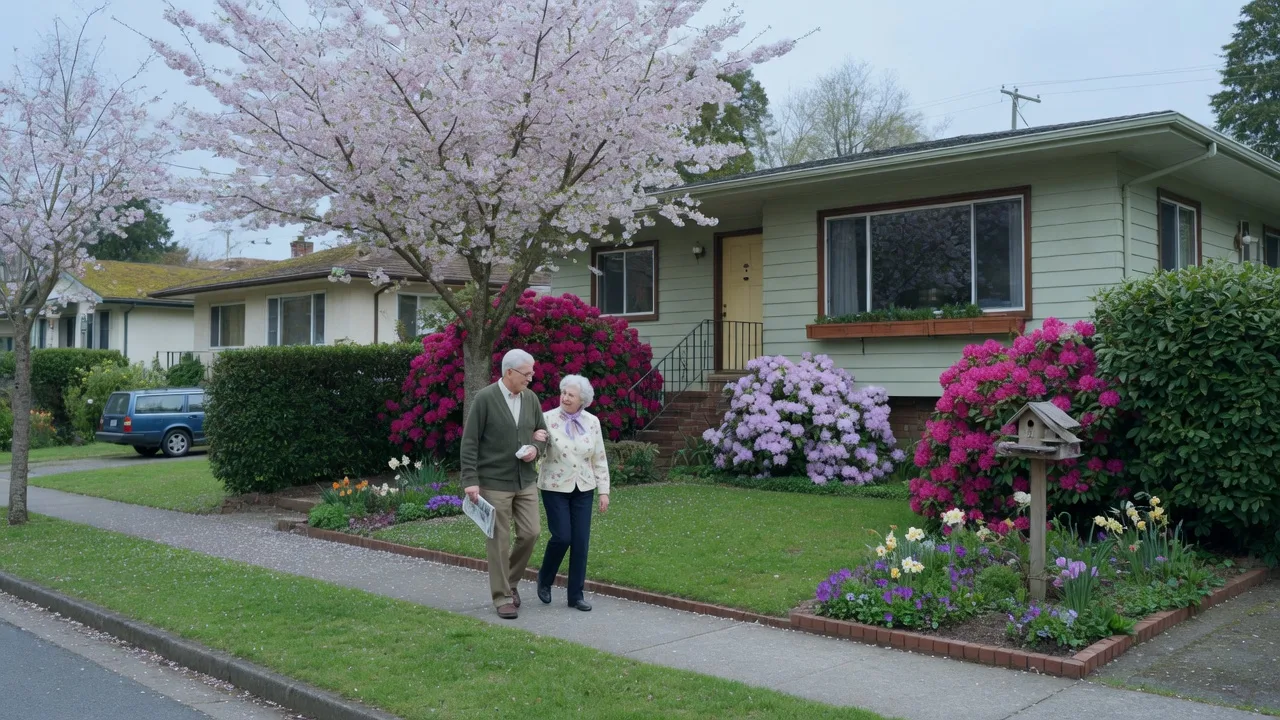
When a spouse enters long-term care, the family home can become a complicated place. It holds decades of shared memories, yet it may now feel too large, too quiet, or too full of tasks for one person to manage alone. The decision about what to do with the home is rarely easy, and it arrives during a time that is already emotionally and logistically demanding.
In Greater Victoria, where long-term care options range from residential facilities in Victoria and Oak Bay to community care homes in Langford, Sidney, and Sooke, families face unique decisions about housing, finances, and the changing shape of their lives. This article is written for the spouse who remains at home, as well as for adult children supporting a parent through this transition. It offers practical guidance, financial context, and compassionate support for one of the most challenging housing decisions a couple can face.
Understanding the timeline: when one spouse moves to care
The transition to long-term care is rarely a single moment. It often unfolds over weeks or months. A hospital stay leads to a rehabilitation stay, which leads to a conversation about whether it is safe to return home. Or a gradual decline in mobility, cognition, or health eventually reaches a point where full-time care is the safest and kindest option.
During this period, the well spouse is managing a great deal. Visiting the care facility, coordinating with healthcare providers, managing finances, and maintaining the home alone. The question of downsizing or selling the family home may feel premature at first, and then suddenly urgent. There is no one right timeline, but there are some helpful milestones to be aware of.
Your housing options after a spouse enters care
Every situation is different, but most couples in this position consider one of three paths:
Stay in the family home for now
Many well spouses choose to remain in the family home, at least initially. The home provides comfort, familiarity, and continuity during a time of significant change. If you are physically able to maintain the home, financially comfortable with the ongoing costs, and not feeling isolated or overwhelmed, staying may be the right choice for the short or medium term.
The key is to reassess regularly. What feels manageable today may feel different in six months. Set a check-in point every three to six months to evaluate honestly how things are going.
Downsize to a smaller, more manageable home
For many well spouses, the family home becomes more burden than blessing after a partner moves to care. A condo, townhome, or smaller single-level home in a walkable neighbourhood can offer freedom from yard work, fewer stairs, lower utility bills, and a stronger sense of community. Downsizing while your spouse is still alive also means the home equity can be used to support both of you, rather than waiting until after a death to unlock it.
Move closer to the care facility
If the long-term care home is in a different part of Greater Victoria, some spouses choose to move closer to make visiting easier. A condo within walking distance or a short drive from the care facility can reduce the strain of travel, especially for older adults who may no longer drive at night or in poor weather. This is a factor worth considering, especially if the care arrangement is expected to be long-term.
Financial considerations when a spouse enters long-term care in BC
British Columbia's long-term care system has specific financial rules that affect housing decisions. Understanding them is an important part of planning.
Long-term care fees in BC
BC's residential care facilities charge a standard rate based on the resident's after-tax income. As of 2026, the maximum monthly rate is set at 80% of the resident's after-tax income, up to a legislated cap. This means the spouse in care contributes most of their income toward the cost of their stay, while the well spouse keeps their own income and a portion of the couple's combined income.
Importantly, the family home is generally exempt from the financial assessment for long-term care fees. This means you can own a home and have a spouse in care without being forced to sell it to cover care costs. However, if the home is sold and the proceeds are held as cash, those proceeds may affect the assessment in the future. This is an area where professional financial and legal advice is essential.
The spousal protection rules
BC's long-term care financial assessment includes spousal protection provisions designed to ensure the well spouse is not left without adequate resources. As a general principle, the well spouse is entitled to keep their own income plus a portion of the couple's combined income, up to a maximum that is adjusted annually. The family home and a reasonable amount of liquid assets are also protected.
If you are considering downsizing, it is worth understanding how the proceeds from the sale will interact with this assessment. In many cases, downsizing and reinvesting the equity into a new home for the well spouse is perfectly compatible with the rules, but every situation is unique.
Navigating the emotional side of this decision
The decision to downsize after a spouse enters care is not only financial. It is deeply personal, and it touches on themes of identity, independence, and the meaning of home.
Many well spouses feel ambivalent. Part of them wants to stay in the home where they raised their family and lived their life. Another part recognizes that staying might be a form of waiting, rather than living. There is no rush to decide, but there is value in acknowledging the complexity of those feelings.
Here are some things that can help:
- Talk to a counselor or social worker who specializes in aging or caregiving transitions. Many are available through Island Health or community organizations in Greater Victoria.
- Involve adult children in the conversation, but only to the extent that you are comfortable. Some parents find their children's input invaluable. Others prefer to make their own decisions and inform their children afterward. Both approaches are valid.
- Visit potential new homes before making a decision. Sometimes the idea of downsizing feels abstract and frightening until you walk into a bright, well-located condo or townhome and imagine yourself living there.
- Give yourself permission to change your mind. The decision to stay or downsize is not permanent. Many people downsize, adjust to their new home, and discover it was exactly the right move.
Practical steps for moving forward
If you decide that downsizing is the right path, here is a practical sequence of steps:
- Talk to a financial advisor who understands BC's long-term care rules. Before making any housing decision, understand exactly how it will affect your income, your spouse's care costs, and your long-term financial picture.
- Consult a real estate lawyer. If the home is owned jointly, understand how the sale works and how to structure the purchase of a new home to protect your interests and your spouse's interests.
- Assess what you need in a new home. Proximity to the care facility, walkability to amenities, single-level living, access to public transit, and a connection to your existing community are all important factors.
- Declutter at a manageable pace. Sorting through a family home alone is emotionally draining. Enlist help from family, professional organizers, or estate liquidation services in Greater Victoria.
- Make the new home your own before you move. Choose colours, furniture, and layout that reflect your new chapter. A home that feels like yours from day one makes the transition smoother.
- Stay connected to your spouse's care routine. Moving does not mean visiting less. Plan your new home's location with visiting in mind, and build a routine that keeps those important connections strong.
Frequently asked questions
Will selling the family home affect my spouse's long-term care fees?
The family home is generally exempt from BC's long-term care financial assessment while the well spouse continues to live in it. If you sell the home, the proceeds may be treated as liquid assets and could affect the assessment depending on how they are held and used. Reinvesting the proceeds into a new primary residence for the well spouse is generally a protected use. This is an area where professional advice is essential, as rules can change and individual circumstances vary.
Can I sell the home if my spouse is in long-term care and unable to consent?
If your spouse has been declared incapable of managing their legal affairs, you will need authority under a power of attorney, representation agreement, or court order to sell jointly owned property. If no legal authority is in place, you may need to apply to the BC Public Guardian and Trustee for assistance. A real estate lawyer can guide you through the specific requirements.
Should I downsize now or wait until my spouse passes?
There is no single answer. Waiting may feel more respectful, but it can also mean staying in a home that has become too large and isolating for several years. Downsizing while your spouse is still alive means you can use the equity to improve your quality of life now, and your spouse can be part of the process in whatever way their condition allows. Many families find that a gradual transition works better than waiting for a single, overwhelming change.
What if my adult children want me to stay in the family home?
Adult children often have strong opinions about the family home. They may see it as their childhood home, their future inheritance, or a source of stability. Their feelings are valid, but your wellbeing comes first. An honest conversation about what you need, what you are capable of, and what would make you happiest can help everyone get on the same page.
Are there supportive housing options where I can live independently but stay connected to a care community?
Yes. Several retirement communities in Greater Victoria offer independent living units within the same campus as a long-term care facility. This arrangement allows the well spouse to live independently while being steps away from their partner in care. Examples can be found in Victoria, Oak Bay, and Langford. This option is worth exploring if proximity to your spouse is a priority.
Facing a housing decision after a spouse enters care?
I help families in Greater Victoria navigate these transitions with compassion and practical expertise. Whether you need time to explore your options or are ready to take the next step, I can help you move forward with clarity and confidence.
Let's TalkWritten by Andrew Holenchuk, Team Leader of Victoria Property Group at eXp Realty. Andrew has been helping people in Greater Victoria confidently navigate one of life's biggest housing transitions since 2006. Licensed REALTOR in British Columbia #162994.