
Downsizing for Snowbirds in Greater Victoria: Managing Two Homes and One Transition

Andrew Holenchuk
Victoria Property Group · eXp Realty
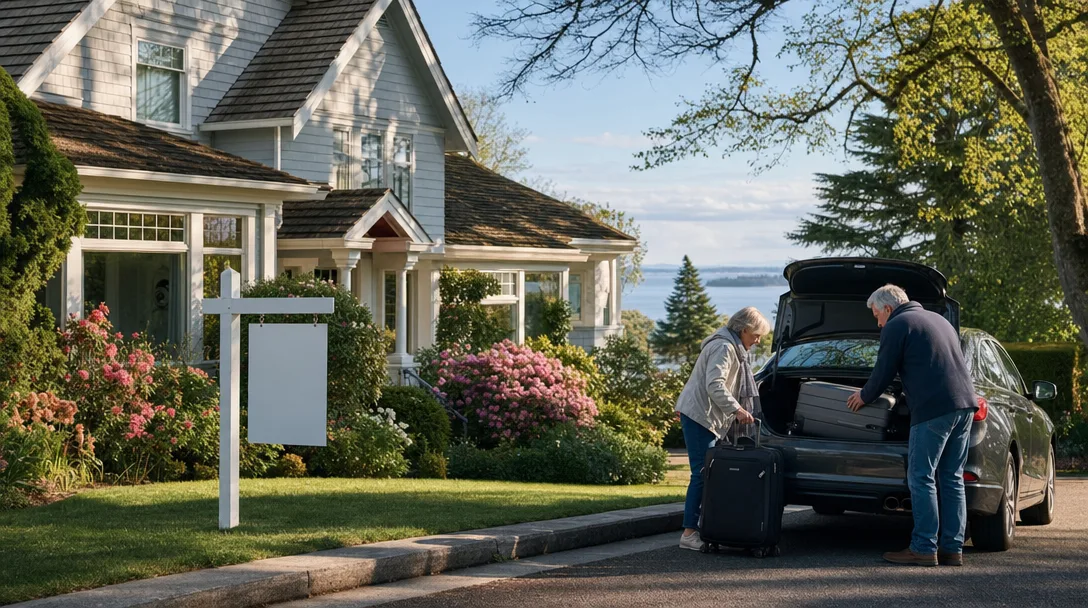
Greater Victoria is home to thousands of snowbirds — retirees and semi-retired homeowners who spend part of the year on Vancouver Island and the rest in warmer climates such as Arizona, California, Mexico, or the Gulf Islands. The snowbird lifestyle offers the best of both worlds: mild Victoria summers and escapes from the wettest months. But when it comes time to downsize, snowbirds face a unique set of questions that full-time residents do not.
Do you keep a smaller home in Victoria and maintain your seasonal base in the south? Sell the Victoria property entirely and move full-time to your warmer destination? Or find a middle path that lets you enjoy both locations without the burden of maintaining two large properties? This guide is designed to help Greater Victoria snowbirds navigate one of life's biggest housing transitions with clarity, confidence, and a plan that fits your actual lifestyle.
The snowbird downsizing dilemma: why it is different
For most homeowners, downsizing means going from one home to a smaller home. For snowbirds, the equation is more complex. You may own a house in Victoria and a condominium or home in Arizona, California, or Mexico. You may be spending five or six months of the year away from your Victoria property. And you may be paying for two sets of utilities, insurance, property taxes, and maintenance on two homes that may both be larger than what you actually need.
The question is not simply whether to downsize. It is how to restructure your living situation so that both locations work for the life you actually live, not the life you used to live. That might mean keeping two smaller homes instead of two large ones. It might mean selling one and upgrading the other. It might mean transitioning from a house in Victoria to a condo, while keeping your seasonal home as your primary winter residence.
Each path has different financial, practical, and emotional implications. The right choice depends on where you spend most of your time, how your health is evolving, and what matters most to you in this chapter of life.
Option one: downsize your Victoria home and keep your seasonal property
For many snowbirds, the ideal arrangement is a smaller, low-maintenance Victoria home that is easy to leave for months at a time, paired with a comfortable seasonal property where you spend the winter. This path makes sense if you still love the snowbird rhythm and want to maintain your connection to both communities.
What to look for in a downsized Victoria home as a snowbird
- Lock-and-leave living: A condo, townhome, or patio home where you can close the door and walk away without worrying about garden maintenance, snow clearing, or security. Strata properties with managed grounds are ideal.
- Low-maintenance finishes: Tile or laminate flooring rather than carpet that needs deep cleaning. Quartz or solid-surface counters instead of stone that needs sealing. Minimal exterior upkeep.
- Good security: A building with secure entry, camera systems, or a responsive strata that watches over common areas while you are away. A unit with a door person adds even more peace of mind.
- Seasonal storage: Enough space to store your seasonal items — winter coats when you are away, summer patio furniture when you return. A storage locker or a unit with a den can serve this purpose well.
- Airport or ferry proximity: If you travel frequently, being close to Victoria International Airport or the Swartz Bay ferry terminal reduces the hassle of each departure and return.
Managing your Victoria home while you are away
When you spend part of the year in another country, your Victoria home needs to be cared for in your absence. Here is what experienced snowbirds recommend:
- Arrange for mail forwarding or holding: Canada Post can hold your mail for up to 30 days, or you can have it forwarded. A trusted neighbour who collects your mail weekly is another option.
- Set up automated payments: Strata fees, insurance, utilities, and property taxes should all be on pre-authorized payment so nothing lapses while you are away.
- Arrange for a property check-in: A friend, neighbour, or property manager can check on your home every week or two to ensure nothing is amiss. They can also water plants, adjust thermostats, and ensure the home looks occupied.
- Adjust your thermostat and water: In winter, keep the heat above 10 degrees Celsius to prevent pipes from freezing. Consider shutting off the main water supply if you will be away for several months.
- Arrange snow removal: If your property has a walkway or driveway, have someone clear snow even if you are not there. It keeps your property looking cared for and prevents municipal fines in some areas.
- Notify your insurance provider: Most home insurance policies require you to have someone check on the property every 72 hours during winter months. If you do not, your coverage may be affected.
Strata considerations for snowbirds
If you choose a condo or townhome, your strata may have rules about absentee owners. Some strata require that units be occupied for a minimum number of months per year. Others have restrictions on short-term rentals that could affect your plans if you wanted to rent out your unit while away. Review the strata bylaws carefully before purchasing, or ask me to review them with you.
Option two: sell both homes and buy one property that works year-round
Some snowbirds reach a point where the travel between two homes starts to feel more like an obligation than a pleasure. The flights become tiring. The packing and unpacking feels heavier each year. The cost of maintaining two households begins to outweigh the joy of having a winter escape.
If this resonates, selling both properties and buying a single home — either in Greater Victoria or in your winter destination — can simplify your life dramatically. The financial benefits include eliminating one set of property taxes, one set of insurance premiums, and one set of ongoing maintenance costs. The equity from two sales can buy a very comfortable property in one location, with significant money left over for travel, hobbies, or gifting to family.
The emotional side of this decision should not be underestimated. Choosing one location means letting go of the other, and both may hold deep meaning for you. Give yourself time to grieve the loss of your second home base. Many former snowbirds tell me that they eventually enjoy visiting their former winter destination on vacation rather than feeling tied to a property there.
Option three: keep a smaller home in both locations
For snowbirds who truly love the bi-coastal lifestyle but want less burden, a third path is possible: downsize both homes. Sell the large Victoria house with its big garden and high maintenance, and buy a smaller, more efficient condo. Do the same with your winter property. The result is two smaller, more affordable homes that each demand less of your time and money, while still giving you a base in both of the communities you love.
This option is particularly attractive for snowbirds who are not yet ready to give up either location but want to simplify. The key is choosing properties that are genuinely low-maintenance and easy to manage from a distance.
Tax and residency considerations for BC snowbirds
This section provides general information only and does not constitute legal or tax advice. Always consult a qualified accountant or cross-border tax specialist familiar with Canadian snowbird issues.
Canadian residency status
Spending more than 183 days per year outside Canada can affect your residency status for tax purposes, as well as your eligibility for provincial healthcare (MSP in BC). Most snowbirds manage their time to stay within MSP residency requirements while still enjoying extended winters abroad. The general guideline for MSP is that you must be physically present in BC for at least six months of the calendar year. If you are considering spending more than half the year outside Canada, speak with an accountant who understands snowbird tax planning.
Principal residence exemption
When you sell your Victoria home, you may be eligible for the principal residence exemption, which exempts the capital gain from taxation. If you own two homes — one in Canada and one abroad — only one can be designated as your principal residence for any given year. A cross-border tax specialist can help you determine which property to designate and whether your situation allows you to claim the exemption on your Canadian property even while living abroad part of the year.
US estate tax for Canadian snowbirds
Canadian snowbirds who own US real estate should be aware that US estate tax may apply to their global assets if their total estate exceeds certain thresholds. The Canada-US Tax Treaty provides some relief, but the rules are complex. A cross-border estate planning specialist can help structure your holdings to minimize exposure.
Health considerations for snowbirds downsizing
As snowbirds age, healthcare becomes an increasingly important factor in housing decisions. Before you downsize, consider:
- Medical coverage while abroad: Provincial health insurance does not cover you outside Canada. Private travel medical insurance becomes more expensive with age and pre-existing conditions. Review your coverage annually.
- Access to care in both locations: As you age, having a primary care provider in both Canada and your winter destination becomes more important. Victoria's healthcare system is excellent but family doctors are in high demand. Plan ahead.
- The future of your travel lifestyle: Consider what happens if your health changes and you can no longer travel. Would your Victoria home still work for year-round living? Would you be able to access the care you need? A home that can serve as your full-time residence if needed offers valuable flexibility.
Greater Victoria neighbourhoods that work well for snowbirds
Some communities in Greater Victoria are particularly well-suited to the snowbird lifestyle. Here is what to consider when choosing where to buy your downsized Victoria home:
- Victoria proper (Downtown, James Bay, Fairfield): Walkable, close to the Inner Harbour, with easy access to shops, restaurants, and cultural amenities. Highly walkable for the months you are home. Condo inventory is strong, with many buildings offering secure entry and managed grounds.
- Sidney and the Saanich Peninsula: Close to Victoria International Airport and the Swartz Bay ferry terminal — ideal for snowbirds who fly or drive to their winter destination. The town offers a walkable waterfront, excellent library, and a strong sense of community.
- Oak Bay: Quiet, elegant, and close to Victoria. A popular choice for downsizers who want a village atmosphere with good services. Condo and townhome options are available but inventory is limited.
- Saanich: A wide range of housing types at various price points. Close to both Victoria and the airport. Good transit and access to healthcare. Many newer condo and townhome developments suit lock-and-leave living.
- Langford: More affordable than Victoria proper, with newer buildings that often include modern security features and low-maintenance finishes. Growing amenities include shopping, recreation centres, and healthcare.
Preparing your Victoria home for your time away
Once you have downsized, you will want a system for closing your Victoria home when you head south and reopening it when you return. Here is a practical checklist:
- Before you leave: Clean the home thoroughly. Empty the refrigerator of perishables. Set thermostats to a safe temperature. Arrange for mail collection. Notify your strata or property manager. Test your security system. Turn off the water supply if you will be gone more than 30 days. Arrange for lawn or garden care if applicable.
- While you are away: Arrange for a weekly or bi-weekly check-in. Keep a small emergency fund with someone local who can handle unexpected issues. Monitor your strata communications remotely. Stay in touch with neighbours who can alert you to problems.
- When you return: Turn on the water and let it run for a few minutes before using. Check smoke and carbon monoxide detectors. Restock your refrigerator. Reconnect with your community. Take a walk around your neighbourhood to see what has changed.
Frequently asked questions
Is it worth keeping a Victoria home if I am only there half the year?
For many snowbirds, yes. The emotional and practical value of maintaining a base in Greater Victoria — close to family, healthcare, and a community you love — outweighs the costs of keeping a second home. The key is ensuring that the home you keep is the right size and type for your actual needs: low-maintenance, secure, and affordable to carry while you are away. A downsized condo or townhome often works better for this lifestyle than a detached family home.
How does downsizing affect my MSP coverage?
MSP (Medical Services Plan) in BC requires you to be physically present in the province for at least six months of the calendar year. If you maintain a primary residence in Victoria and spend the rest of the year travelling, you generally retain your MSP coverage as long as you meet the residency requirement. If you are considering spending more than half the year outside BC, contact MSP directly or speak with a health benefits advisor to understand the implications.
Should I rent out my Victoria condo while I am away?
Renting out your Victoria home while you are away can generate income that offsets your carrying costs, but it comes with complexities. Your strata bylaws may restrict rentals, and managing tenants from another country is challenging. If you choose to rent, work with a professional property manager who handles tenant screening, maintenance calls, and lease enforcement. Some snowbirds prefer the simplicity of leaving their home empty and secure, valuing peace of mind over rental income.
What is the best month to sell my Victoria home as a snowbird?
Spring and early summer (April through June) are typically the most active months for Victoria real estate. If you plan to sell your Victoria home, timing your sale to coincide with the spring market while you are still in BC can be advantageous. Fall is also a viable window. I work with snowbirds to plan their sale around their travel schedule so they can be present for key milestones without disrupting their seasonal plans.
Do I need a Canadian mortgage for a downsized condo if I own a US property?
Canadian lenders consider your full financial picture, including assets, income, and debts held in other countries. If you own a US property, the associated costs may affect your debt-to-income ratio. However, many lenders also view foreign assets positively when they demonstrate financial stability. Mortgage pre-approval before you start shopping gives you clarity on your budget. A mortgage broker familiar with snowbird situations can help navigate any cross-border complexities.
Thinking about your next chapter as a snowbird?
I help Greater Victoria snowbirds find homes that work for the life they actually live. Whether you need a lock-and-leave condo, advice on selling while you travel, or help planning a full transition, I am here to guide you through one of life's biggest housing transitions with clarity and care.
Let's Talk About Your PlanAbout the author: Andrew Holenchuk is Team Leader of Victoria Property Group at eXp Realty and has been helping families in Greater Victoria navigate housing transitions since 2006. He has facilitated more than $1 billion in real estate sales and works extensively with snowbirds who are helping people confidently navigate one of life's biggest housing transitions.