
Downsizing Before Retirement: Planning Your Housing Transition in Greater Victoria

Andrew Holenchuk
Victoria Property Group · eXp Realty
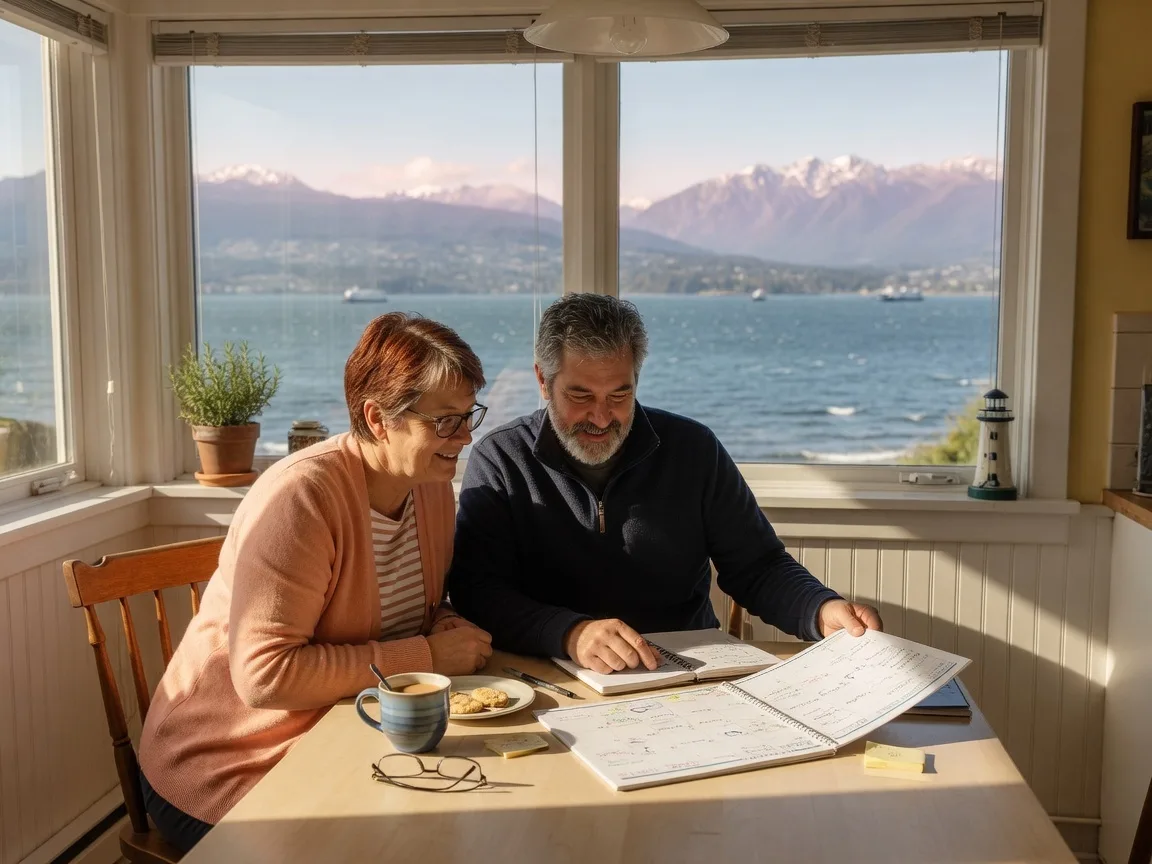
Most people think about downsizing as something you do after you retire — once the pension kicks in, the mortgage is paid, and the family home feels too big for two people. But there's a compelling case for making the move earlier, during the final working years, when you have more control over the timing and more options to shape the outcome.
In Greater Victoria, where real estate values have risen dramatically over the past two decades, downsizing before retirement can unlock equity, reduce costs, and position you for a more comfortable financial future — all while you're still earning an income and have the energy to manage a move. This guide explores the strategic benefits, the practical steps, and the questions you should ask yourself if you're considering downsizing ahead of retirement.
Why consider downsizing before retirement?
The conventional timeline — work until 65, then sell the family home — is a valid approach, but it carries some risks. Here's why more homeowners in Victoria and across Greater Victoria are choosing to downsize earlier:
Financial timing advantages
When you downsize while still employed, you're making a housing change from a position of financial strength. You have employment income that supports mortgage qualification for your next home, and you can sell your current property when the market is right for you, rather than under pressure. The equity you unlock can be invested during your remaining working years, compounding returns that will supplement your retirement income.
Consider a typical scenario: a couple in Saanich sells their four-bedroom family home for $1.2 million and purchases a two-bedroom condo in Victoria or Langford for $650,000. The $550,000 in freed equity, invested conservatively at 4–5% for five years before retirement, could grow to $670,000–$700,000 — providing meaningful additional income in retirement.
Lifestyle and energy advantages
Moving is physically and emotionally demanding at any age. Doing it in your late 50s or early 60s — when you're still active, healthy, and adaptable — is generally easier than waiting until your mid-70s. You have more energy to manage the process, more flexibility to adjust to a new neighbourhood, and more time to build community connections before the social networks of work fade away.
Mortgage qualification flexibility
If you're planning to carry a small mortgage on your downsized home, having employment income makes qualification straightforward. Once you're retired, lenders typically use pension income, RRIF withdrawals, and investment income to qualify — which can be more restrictive. Downsizing before retirement means you can approach the move with your full borrowing capacity intact.
The ideal timing window: 55 to 65
The years between 55 and 65 represent a sweet spot for downsizing in Greater Victoria. Here's why:
- You're still earning. Employment income supports mortgage qualification and provides cash flow during the transition.
- You can test your retirement lifestyle. Moving to a condo or townhome before retirement lets you experience the lifestyle — strata living, reduced maintenance, walkability — while you still have the option to change course if it doesn't suit you.
- You can lock in lower housing costs. A smaller home with lower utility, insurance, and maintenance costs reduces your monthly expenses during your peak earning years, freeing up income for savings, travel, or investments.
- You avoid the stress of a later-life move. Health changes, mobility challenges, and the loss of a spouse can make a move in your 70s or 80s far more difficult. Doing it earlier means you're in control.
- You can build equity in your new home. Even if you buy a less expensive property, if you purchase five to ten years before retirement, that property will likely appreciate, adding to your net worth when you're ready to fully retire.
What to consider before making the move
Downsizing before retirement isn't right for everyone. Here are the key factors to weigh:
Your mortgage situation
If you still have a significant mortgage on your current home, downsizing may not reduce your housing costs as much as you expect. Run the numbers carefully: what will your new mortgage payment be? What will strata fees add? Will the equity you free up justify the transition costs (real estate commissions, legal fees, moving costs, property transfer tax)?
In BC, property transfer tax applies to purchases over $500,000, and first-time buyers' exemptions typically don't apply if you've owned property before. However, if you're buying a less expensive home, the tax may be lower than what the buyer of your current home pays. Factor this into your financial planning.
Your employment location
If you're still working, your new home's location needs to work for your commute. Greater Victoria offers excellent options: condos and townhomes in Victoria proper put you close to downtown jobs; Langford and Colwood offer newer developments near the Westshore employment centres; and communities like Sidney and Saanich offer good access to the Peninsula and the University of Victoria.
Moving farther from work — to Shawnigan Lake, Mill Bay, or Sooke — may save money on housing but adds commuting time and cost. Consider whether the trade-off is worth it, especially if you're still working full-time.
Your retirement vision
The home you choose now should also work for the retirement you envision. A downtown condo with a short walk to shops and restaurants is ideal if you plan to travel, enjoy cultural amenities, and value walkability. A townhome in Langford or Colwood with a small garden might suit you if you want space for hobbies and proximity to nature. A condo in Sidney offers a quieter, coastal lifestyle with strong community connections.
Think about where you'll want to be in 10, 15, and 20 years — not just where you want to be next year. Consider accessibility features, proximity to healthcare, and whether the community will continue to serve you as your needs evolve.
The financial picture: a realistic example
Let's look at a realistic scenario for a Victoria couple considering downsizing before retirement:
- Current home: 4-bedroom detached house in Saanich, valued at $1,150,000, mortgage-free
- Downsized home: 2-bedroom condo in Victoria, purchased for $650,000
- Equity unlocked: Approximately $450,000 after transaction costs (real estate fees, legal fees, property transfer tax, moving costs)
- Monthly savings: Lower property taxes ($200/month less), lower utilities ($100/month less), no maintenance ($300/month vs. typical upkeep), lower insurance ($50/month less), no strata fees difference (if moving from a paid-off home to a condo with fees, net this carefully)
- Investment potential: $450,000 invested at 4% for 5 years = approximately $547,000 at retirement
The numbers will vary based on your specific situation, your neighbourhood, and the market at the time of your move. But the principle holds: downsizing before retirement can meaningfully improve your financial position.
Greater Victoria communities for pre-retirement downsizers
Each community in Greater Victoria offers a different balance of lifestyle, cost, and convenience for those downsizing before retirement:
- Victoria: Urban living at its best. Walkable, transit-friendly, close to healthcare and cultural amenities. Higher purchase prices but lower transportation costs. Ideal for those who want to be in the middle of everything.
- Saanich: A balanced option with established neighbourhoods, good schools (if grandchildren visit), and a mix of condos and townhomes. Strong community feel and excellent parks.
- Oak Bay: Prestigious, walkable, and serene. Higher price points but exceptional quality of life. Strong community connections and beautiful waterfront.
- Langford and Colwood: Newer construction, more affordable price points, and growing amenities. Popular with pre-retirees who want modern finishes, good value, and proximity to outdoor recreation.
- Sidney and North Saanich: A quieter, coastal lifestyle with strong community connections. Excellent for those who value walkability, the ocean, and access to the Gulf Islands.
- View Royal and Esquimalt: Underrated options close to Victoria with slightly more affordable pricing. Good transit access and growing neighbourhood amenities.
- Central Saanich: Rural feel with urban convenience. Larger properties available at lower prices than Victoria proper. Ideal for those who want space for gardening or hobbies without the full maintenance of a detached house.
The right community depends on your work location, your lifestyle preferences, and what you want your retirement years to look like. Visiting neighbourhoods, walking the streets, and talking to residents can help you decide.
Practical steps to plan your pre-retirement downsizing
1. Start with a financial review
Before looking at properties, work with a financial advisor to understand your current position, your retirement goals, and how a housing transition fits into both. Understand the full costs of selling and buying, including the BC Property Transfer Tax, legal fees, real estate commissions, and moving expenses.
2. Get a current market assessment
Have your home professionally evaluated. Knowing your property's current market value — and how it compares to the type of home you're considering — gives you a solid foundation for decision-making. Market conditions in Greater Victoria vary by neighbourhood and property type, so localized knowledge matters.
3. Define your must-haves
Make a list of what your new home absolutely needs: single-level living? A spare bedroom for guests? Proximity to transit? A balcony or garden? Walkability to groceries? A home office for the remaining working years? Prioritize these before you start looking.
4. Consider a phased approach
Some families choose to downsize in stages. For example: sell the family home, move into a rental for a year, explore different neighbourhoods, and then buy. This approach reduces pressure and allows you to test different communities before committing. It also gives you time to declutter without the stress of coordinating two real estate transactions simultaneously.
5. Build your team early
Assemble the professionals you'll need: a REALTOR® who specializes in downsizing and housing transitions, a financial advisor, a mortgage broker (even if you're buying without financing, it's good to understand your options), and a lawyer. Having these relationships in place early means you can move decisively when the right opportunity arises.
Common concerns about downsizing before retirement
"What if I move and then regret it?"
This is a real concern, and it's worth taking seriously. One way to mitigate it is to rent in your target community for a year before buying. Another is to choose a home that could work for multiple scenarios — a condo or townhome that's suitable for a couple, but also has a den that could be used as a guest room, home office, or hobby space. The more flexible your new home, the less likely you are to regret the move.
"What if property values keep rising and I miss out on appreciation?"
This is a valid consideration in Greater Victoria, where real estate has historically appreciated strongly. However, a smaller home in a desirable location will also appreciate, and the equity you unlock can be invested in the market, which may outperform real estate appreciation. A financial advisor can help you model the different scenarios.
"What if I still need space for adult children or grandchildren?"
A two-bedroom condo or townhome with a den can accommodate visits from family. If you need more space, consider a three-bedroom townhome or a duplex. Some communities in Greater Victoria offer homes with secondary suites or in-law spaces, which can provide flexibility for family visits while maintaining privacy.
"Should I pay off my mortgage or invest the equity?"
There's no single right answer. Some homeowners prefer the peace of mind of being mortgage-free in retirement. Others prefer to invest the equity and continue carrying a small mortgage, especially if they can lock in a low rate. Your decision should reflect your risk tolerance, your income needs, and your overall financial plan.
Frequently asked questions
How much money can I save by downsizing before retirement?
Savings vary significantly based on your current home, your target home, and your lifestyle. In Greater Victoria, many downsizers reduce their monthly housing costs by $500–$1,500 by moving from a detached house to a condo or townhome. This includes savings on utilities, insurance, property taxes, and maintenance. The equity unlocked can range from $200,000 to $700,000 or more, depending on the property values involved.
What is the best age to downsize before retirement?
There's no perfect age, but the 55–65 window is generally ideal. You're still earning, still healthy enough to manage the transition, and you have time to adjust to your new lifestyle before fully retiring. However, the best age is ultimately the one that aligns with your personal circumstances, financial goals, and readiness.
Will downsizing affect my pension or government benefits?
Downsizing itself doesn't directly affect CPP or OAS benefits, which are based on your work history and residency. However, the equity you unlock and the investment income it generates could affect GIS (Guaranteed Income Supplement) eligibility if you're relying on GIS in retirement. A financial advisor can help you structure your finances to maximize benefits.
Should I buy or rent after downsizing?
Both options have merit. Buying gives you stability, equity growth, and control over your living space. Renting offers flexibility, lower upfront costs, and freedom from maintenance responsibilities. For pre-retirees, buying is often the better long-term financial decision, but renting for a year or two as a transition strategy can be wise if you're unsure about your target community.
How do I know if I'm ready to downsize before retirement?
You're likely ready if: your current home feels larger than you need, you're spending significant time and money on maintenance you don't enjoy, you've identified a community or neighbourhood you'd rather live in, and you've run the numbers and the financial picture works. If you're still unsure, try spending a weekend in a rental in your target area — it can clarify your thinking faster than months of analysis.
Thinking about downsizing before retirement? Let's talk through your options.
I've helped hundreds of Greater Victoria homeowners plan their housing transitions — whether they're retiring next year or five years from now. I'll help you understand your equity, explore your options, and find a home that works for both your working years and your retirement.
Start the Conversation