Cohousing and Co-op Living: A Downsizing Option in Greater Victoria

Andrew Holenchuk
Victoria Property Group · eXp Realty
When you downsize in Greater Victoria, cohousing and co-op living offer a middle path between a private home and a retirement residence: your own smaller home, plus shared spaces and a built-in community. This guide explains how these communities work, what they cost, and how to decide whether shared living fits the life you want after your housing transition.
Both options appeal to downsizers who want less maintenance and more connection, without giving up the privacy of their own home. They are not the same thing, though, and the differences in ownership, cost, and day-to-day life matter a great deal when you are choosing where to land.
What cohousing is
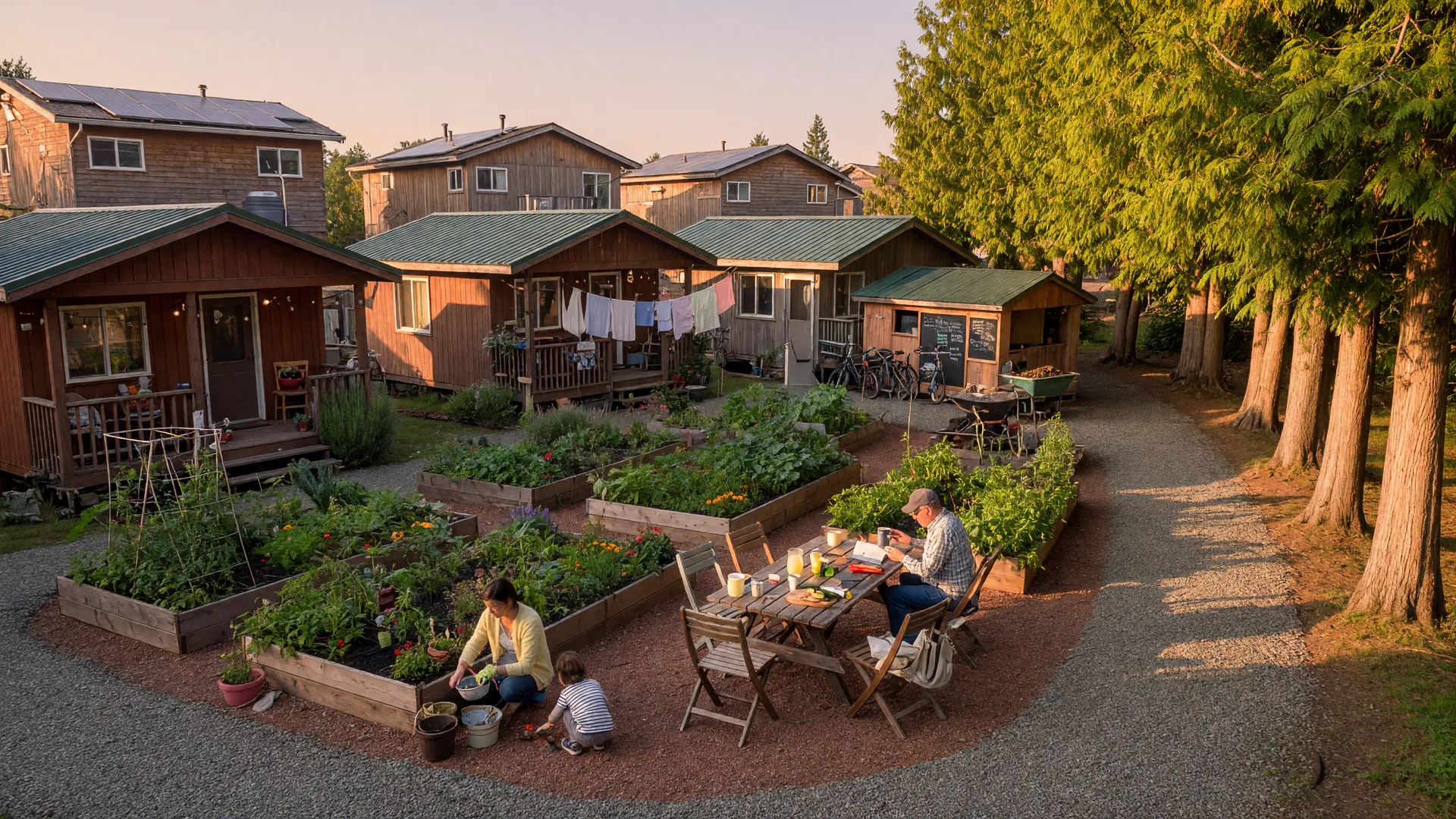
Cohousing is a community of private homes clustered around shared spaces, designed and run by the residents themselves. Each household owns its own home, typically a condo or townhome, and shares common facilities such as a common house, gardens, laundry, workshops, and guest rooms. Residents make decisions together, often by consensus, and share some meals and activities.
The appeal for downsizers is clear. You own a smaller home with far less to maintain, and you gain neighbours who know you and look out for you. For someone moving from a large family house, cohousing can replace the sense of belonging that a quiet suburban street sometimes lacks. It is a deliberate community, not a random collection of neighbours.
What a co-op is
A housing co-op is different. In a co-op, you do not own your unit. Instead, you buy a share in the co-op corporation and pay a monthly housing charge that covers the mortgage, maintenance, and operating costs. You hold the right to live in your unit as a member, and you participate in running the building. When you leave, you typically get back the value of your share.
Co-ops are often more affordable than buying, because the share is usually far less than a down payment on a condo, and the monthly charge can be lower than a comparable mortgage plus strata fees. They also tend to be stable, member-run communities. The trade-off is that you do not build equity in a property you own, and membership rules and waitlists vary widely.
Cohousing vs co-op: the key differences
- Ownership. In cohousing you own your home. In a co-op you own a share in the corporation, not the unit itself.
- Equity. Cohousing owners build equity as their home appreciates. Co-op members generally get back their share, not a market gain.
- Cost to enter. Cohousing requires buying a home, like any condo or townhome. A co-op share is typically much smaller.
- Decision-making. Both are member-run, but cohousing communities often use consensus and shared meals, while co-ops focus on shared ownership and governance.
- Community. Cohousing is designed around social connection. A co-op is a community of owners, but it may not have the same shared facilities or activities.
Who cohousing and co-ops suit best
Shared living is not for everyone, and that is fine. It tends to suit downsizers who value connection, are comfortable with shared decision-making, and enjoy being part of a community rather than living in isolation. It can be especially appealing to people who have recently lost a partner, who want to age in place among people who know them, or who simply find a single-family home more lonely than they expected.
It is less well suited to people who want complete privacy, who are not interested in meetings or shared responsibilities, or who prefer to keep their social life entirely outside their home. Be honest with yourself about this. A community you do not participate in is just a building with extra rules.
What it costs and how to evaluate it
Costs vary widely across Greater Victoria. A cohousing unit is bought and sold like any condo, so the price depends on the community, its location, and its size, and you will pay strata fees on top. A co-op requires a share purchase and a monthly housing charge, and both the share and the charge differ by community.
Before you commit, spend time in the community. Attend an open house or a shared meal, talk to residents about how decisions are made and how conflicts are handled, and read the governing documents. Ask about the age mix, the waitlist, the rules around pets and guests, and how the community supports members as they age. Our guide to retirement communities in Greater Victoria and the overview of senior housing options can help you compare shared living with the other choices available.
How shared living compares to other downsizing choices
Cohousing and co-ops sit between owning a private condo and moving into a retirement residence. A private condo gives you the most independence and the least community, unless you build it yourself. A retirement residence offers care and services but less independence and often higher monthly costs. Shared living offers community and reduced maintenance while keeping your own home and your independence.
If your priority is connection and you are comfortable with shared responsibility, it can be a genuinely wonderful fit. If your priority is simply a smaller, easier home, a condo or townhome may be the simpler path. Our guide to condo living after downsizing walks through what private condo life is really like, so you can compare the two honestly.
Questions to ask before you choose shared living
- Do I want a built-in community, or do I prefer to choose my own social life?
- Am I comfortable with shared decision-making and regular meetings?
- How much of the common life will I actually participate in?
- What does the community cost to enter, and what are the monthly charges?
- How does the community support members as they age or need more help?
- Are there waitlists, and how long are they?
Answering these honestly will tell you whether shared living is the right home for this chapter of your life. A REALTOR® who works regularly with downsizers can help you compare the communities across Greater Victoria and understand the ownership and cost differences before you decide.
Frequently asked questions
What is the difference between cohousing and a co-op?
In cohousing you own your own home and share common facilities with neighbours who make decisions together. In a co-op you buy a share in the corporation rather than your unit, pay a monthly housing charge, and participate in running the building. Cohousing owners build equity; co-op members generally get their share back when they leave.
Is cohousing cheaper than buying a condo?
Not necessarily. In cohousing you buy your home like any condo, so the price depends on the community and location. A co-op can be more affordable because the share is typically much smaller than a down payment, but you do not build property equity.
Can I age in place in a cohousing community?
Many cohousing communities support members as they age, with neighbours who know them and can help. But cohousing is not a care facility, so it is important to ask how the community supports members who need increasing help, and to plan for care needs separately.
Is cohousing right for someone who values privacy?
Probably not. Cohousing is designed around community, shared spaces, and collective decision-making. If you prefer complete privacy and no shared responsibilities, a private condo or townhome is likely a better fit.
Where can I find cohousing and co-ops in Greater Victoria?
Cohousing and co-op communities exist across the Capital Region, and new ones are occasionally in development. Attend open houses, visit the communities, and ask residents about the age mix, waitlists, and how decisions are made. A local REALTOR® who works with downsizers can help you identify and compare the options.
Wondering whether shared living is the right fit for your next chapter?
I've helped many Greater Victoria downsizers compare cohousing, co-ops, condos, and retirement communities to find the home that matches the life they want to live. I'd be glad to talk through your priorities and help you see the options clearly. Helping people confidently navigate one of life's biggest housing transitions is what I do every day.
Let's Talk About Andrew Holenchuk
Andrew is Team Leader of Victoria Property Group at eXp Realty and has been helping people buy and sell homes throughout Greater Victoria since 2006. Together with his team, they have facilitated more than $1 billion in real estate sales while helping families navigate downsizing, estate transitions, and housing moves.